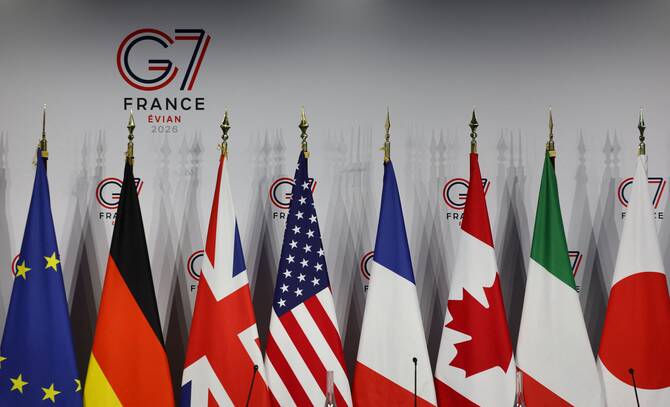

DUBAI: The upcoming G7 foreign ministers’ meeting, scheduled for March 26-27, will feature structured sessions with a strong emphasis on international security, reconstruction efforts and reform of global governance systems, according to a French diplomat.
The meeting will open with what officials have described as a foundational discussion on the “reform of world governance,” setting the tone for the broader agenda.
The ministerial gathering will be organized into six working sessions with the first three including not only G7 members but also invited partners — Saudi Arabia, South Korea, Brazil, India, and Ukraine — before moving to G7-only discussions for the final three sessions.
“The G7 ministerial meeting will consist of six sessions over two days,” the French diplomat confirmed, noting the structure is designed to balance inclusive dialogue with internal coordination among G7 members.
Day one: Governance, reconstruction and regional security
The first session will focus on reforming global governance systems, including the efficiency of peacekeeping missions and efforts to “rationalize humanitarian aid logistics to reduce costs and improve efficiency.”
The second session will address reconstruction challenges across multiple regions, with a major focus on the restoration of the Chernobyl confinement arch. The diplomat said: “As we reach the 40th anniversary of the Chernobyl explosion, we will work on our capacity of repairing this arch.”
The European Bank for Reconstruction and Development will play a significant role, with the presentation of a comprehensive cost assessment for the first time, with estimates reaching “hundreds of millions at least,” he added.
The same session will also examine efforts to combat captagon drug trafficking in Syria and the broader Middle East, as well as initiatives to promote regional economic integration. The diplomat stressed “a tremendous need for reconstruction in the region.”
Day two: Sovereignty threats and global crises
On March 27, with the arrival of US Secretary of State Marco Rubio, discussions will continue with a session dedicated to horizontal threats and sovereignty. This includes the launch of a G7 task force aimed at building a coordinated network of harbors to counter narcotrafficking.
Additional initiatives include the upcoming Caribbean regional security conference in Martinique in July, which will focus on narcotrafficking, as well as the fifth “No Money for Terror” conference scheduled for May 19. The agenda will also include discussions on critical mineral security, involving U.S. and Canadian initiatives.
The final three sessions, exclusively for G7 members, will address some of the most sensitive geopolitical issues.
Ukraine, Iran and global hotspots
Session four will focus on Ukraine, covering energy, economic, and military support, as well as sustained pressure on Russia. It is expected the Ukrainian foreign minister will take part, and the discussion will also revisit the Chernobyl arch project and broader energy resilience support.
Session five will address Iran, including nuclear and ballistic programs, maritime security and freedom of navigation.
The final session will cover global peace and security challenges across multiple regions, including the Indo-Pacific, Sudan, Haiti, Gaza, Venezuela and Cuba.
The French diplomat emphasized the importance of flexibility in diplomatic engagement, saying: “We favor … as much as we can, free exchanges and informal exchanges, which is in the spirit of the G7.”
Journalists will not have access to working sessions but will be able to follow proceedings from a dedicated press center. The French presidency is expected to hold two press conferences, scheduled for Thursday at 6:45 p.m. and Friday at 4 p.m. Both will be live-streamed on the French Ministry of Foreign Affairs’ social media channels.
Among the expected outcomes are the creation of a coordination committee for peacekeeping missions and the launch of a G7 task force targeting narcotrafficking through maritime port networks. Regional follow-up conferences are also planned, including security meetings in the Caribbean and on captagon trafficking in the Middle East.
The fifth “No Money for Terror” conference will take place on May 19, focusing on disrupting financial flows to terrorist organizations.
Further political coordination is expected through informal meetings in September during the UN General Assembly and in November in Marseille, as well as ahead of the G7 leaders’ summit scheduled in Evian from June 15 to 17, 2026.
The French diplomat framed the agenda as one aimed at delivering “concrete results” across security, reconstruction and governance reform, while reinforcing the G7’s tradition of both formal coordination and informal diplomacy.
- This article was first published in French on Arab News en Français