

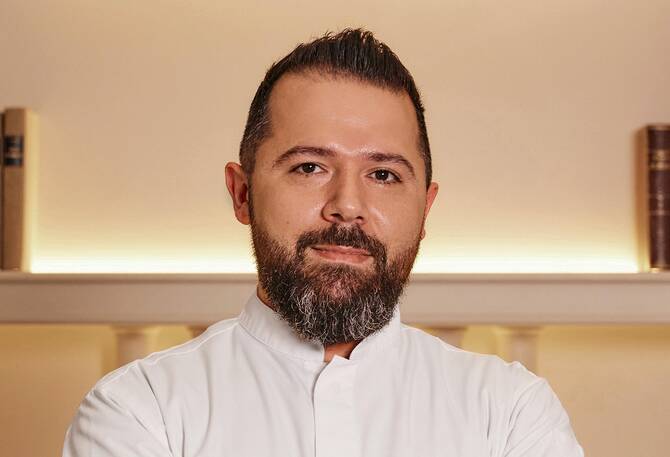

DUBAI: When Elias Saoud was growing up in Lebanon he would watch his mother cooking. She worked with simple ingredients but treated them with care, building dishes around freshness and balance.
“Food in our house meant connection,” Saoud tells Arab News. “It wasn’t just about eating, it was about bringing everyone together.”
He remembers the patience involved in shaping kibbeh by hand and preparing stuffed vegetables, tasks that required focus and care rather than speed. Those experiences quietly shaped his standards long before he realized cooking could become a career.
When he enrolled at École Hôtelière Dekwaneh in Lebanon, he says, “Cooking stopped being just emotional and became disciplined and technical.”
Years on, that combination of feeling and precision continues to define his approach to cooking. Now overseeing research and development for La Maison Ani worldwide, Saoud still draws from those early lessons — balance, respect for ingredients and the importance of gathering people around a table.
When you started out, what was the most common mistake you made?
Overcomplicating dishes. I wanted to prove myself, so I’d add too many elements to a plate, thinking more meant better. Actually, simplicity requires more confidence. A dish doesn’t need many components; it needs balance, proper seasoning and clean execution. That was an important lesson early in my career.
What’s your top tip for amateur chefs?
Taste your food constantly while cooking. Don’t wait until the end. Season gradually and adjust as you go. That’s how you build balance. Also, don’t stress. Mistakes happen. They’re part of learning.
What one ingredient can instantly improve any dish?
High-quality olive oil. It adds depth, richness and aroma, and it enhances the natural flavors without overpowering them, whether it’s drizzled over vegetables, fish, pasta, or even meat. It’s a simple ingredient, but when it’s good, it changes everything.
When you go out to eat, do you find yourself critiquing the food?
It’s difficult not to analyze the food, but I always try to experience the restaurant as a guest first.
What’s the most common issue that you find in other restaurants?
Inconsistency — especially in seasoning and execution. A dish might look beautiful, but if the balance is slightly off or the cooking isn’t precise, it shows immediately. In this industry, consistency is what separates a good restaurant from a great one.
What’s your favorite cuisine or dish to order?
I usually choose Lebanese or Italian. I haven’t worked in Lebanese cuisine for the past three years, so I enjoy it more now as a guest, especially when traditional dishes are executed properly with the right balance and freshness. Italian cuisine also appeals to me for its simplicity. A well-made pasta shows how powerful quality ingredients and proper technique can be.
What’s your go-to dish if you have to cook something quickly at home?
Usually a simple pasta. Good olive oil, garlic, chili and fresh herbs — something quick but balanced. It’s fast, satisfying and shows how powerful a few quality ingredients can be when they’re handled properly.
What customer behavior most annoys you?
It’s always challenging when a guest orders a steak or fish well done. From a chef’s perspective, those ingredients are at their best when cooked to preserve their texture and natural flavor. Of course, the guest’s preference comes first, and we respect that. But as chefs, we always hope people trust us enough to experience the dish the way it was intended.
What’s your favorite dish to cook?
I especially enjoy working with the josper (a hybrid charcoal grill and oven). I like the intensity of the heat and the control it requires. Cooking over fire demands focus and precision. You have to understand the temperature, the timing, and how the smoke interacts with the ingredient. My favorite dish to prepare is roasted sea bass with tomato sauce. The challenge is achieving perfectly crisp skin while keeping the flesh delicate and moist. The smokiness from the josper adds depth, and the tomato sauce brings balance and freshness. It’s a simple dish, but it depends entirely on precision.
What’s the most difficult dish for you to get right?
The most difficult dishes are always the simplest ones. When a dish has only a few components, there’s no room for error. Every detail matters. The timing has to be exact, the texture precise, and the seasoning balanced. Simplicity demands the highest level of control.
As a leader, what are you like?
I’m disciplined but calm. R&D requires focus, experimentation, and attention to detail, so I believe in structure and clear standards. I don’t believe in shouting. Creativity doesn’t grow in that environment. I prefer open communication and teamwork, while still maintaining high expectations. Precision and consistency are important, but so is giving the team space to think and contribute.
Chef Elias’ roasted seabass in tomato sauce served with sumac rice

Chef Elias’ roasted seabass in tomato sauce.
Ingredients:
Roasted seabass (Serves 2)
2 seabass fillets (about 150g each)
Salt and freshly ground black pepper
2 tbsp olive oil
¾ cup tomato sauce (see below)
2 tsp lemon juice
1 tbsp capers
½ small yellow courgette, thinly sliced
¼ small green courgette, thinly sliced
Fresh basil leaves
Fresh chives, finely chopped
Lemon zest, to finish
Tomato sauce (makes approx. 2 cups)
2 cups diced ripe tomatoes (fresh or canned)
½ small white onion, finely diced
1 small garlic clove, minced
3 tbsp olive oil
2 bay leaves
2 tsp sugar
¾ tsp salt
½ cup water
Sumac rice (serves 4; extra can be stored)
1¼ cups basmati rice
1¾ cups chicken stock
1 tsp salt
1½ tbsp sumac
3 tbsp butter
2 tsp grated garlic
Method:
Tomato sauce
Heat olive oil in a saucepan over medium heat.
Add the onion and garlic and cook gently until soft, without coloring.
Add the water and allow it to reduce slightly.
Stir in the tomatoes, bay leaves, sugar and salt.
Bring to a gentle simmer and cook for 20–25 minutes, until slightly thickened.
Remove the bay leaves before using.
Sumac rice
Rinse the rice until the water runs clear.
Combine rice, chicken stock and salt in a pot. Bring to a boil.
Cover tightly, reduce heat and cook for 15 minutes.
In a separate pan, melt the butter. Add garlic and cook gently for 2 minutes.
Stir in the sumac and warm briefly.
Fold the butter mixture gently through the rice.
Seabass
Season the seabass fillets with salt and pepper.
Heat olive oil in a pan over medium-high heat.
Sear the fish skin-side down for 3 minutes. Flip and cook for 1 minute.
Transfer to a preheated oven at 180°C and bake for 5 minutes, until just cooked through.
Courgettes
Lightly season the sliced courgettes with salt.
Sear in a hot pan for 2–3 minutes until lightly golden.
Finish with a squeeze of lemon juice and set aside.
To serve
Spoon warm tomato sauce onto each plate.
Place the seabass on top and arrange the courgettes over the fish.
Garnish with basil, chives and lemon zest.
Serve with sumac rice on the side.


