

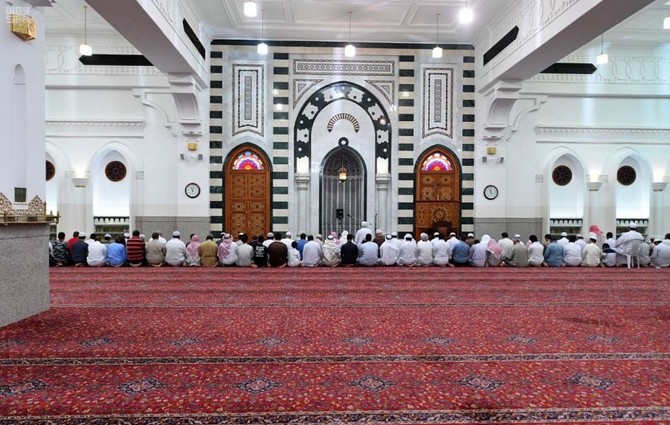
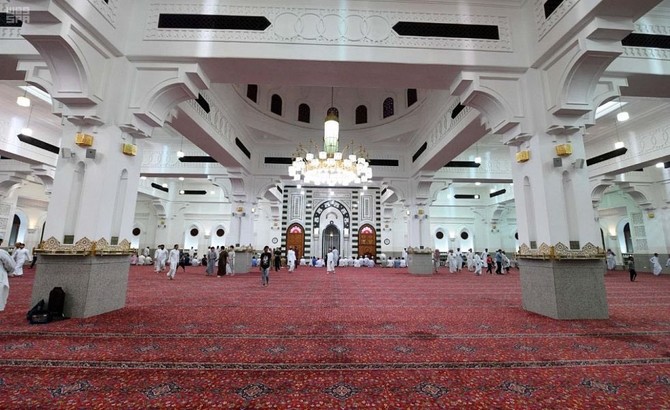
Photos of Al-Khandaq mosque during Ramadan highlight historic importance of Madinah

1 / 4
Photo of Al-Khandaq mosque in the holy city of Madinah, Saudi Arabia, May 22, 2018. (SPA)
2 / 4
Photo of Al-Khandaq mosque in the holy city of Madinah, Saudi Arabia, May 22, 2018. (SPA)
3 / 4
Photo of Al-Khandaq mosque in the holy city of Madinah, Saudi Arabia, May 22, 2018. (SPA)
4 / 4
Photo of Al-Khandaq mosque in the holy city of Madinah, Saudi Arabia, May 22, 2018. (SPA)
Updated 24 May 2018
Follow

Photos of Al-Khandaq mosque during Ramadan highlight historic importance of Madinah

MADINAH: The holy city of Madinah in Saudi Arabia continues its centuries’ old tradition of receiving visitors and pilgrims who enjoy visiting its famous mosques and landmarks dating back to the time of the Prophet Muhammad.

Al-Khandaq Mosque or the Mosque of the “Trench,” which is also referred to as the “Mosque of the Conquest,” is one of the historical sites that visitors to Madinah have high on their list of “must-sees.” It is connected to the Battle of the Trench, which took place during the time of the Prophet Muhammad (PBUH).

The mosque is located in the trench northwest of Madinah where the events of the Battle of the Trench took place.

A few years ago Saudi Arabian authorities expanded the mosque. It is built in a modern architectural style that highlights the aesthetic value of the area and the value of the trench, which is situated at the foot of Jabal Sal’a mountain.

Madinah’s battle of the trenches marked the consolidation of the Prophet’s tenure when he was faced with an attack on Madinah made by an alliance of Jewish and non-Muslim Arab tribes to unseat him.

The digging of the trench around the city saved the day and denied the effective use of cavalry in storming the city by 10,000 attackers who besieged Madinah for more than 30 days.

The Saudi Press Agency recently captured the daily influx of visitors to Madinah during the holy month of Ramadan.

Photos show activity in Al-Khandaq Mosque and seven other mosques in its vicinity. The photographs are a reportage of activities ranging from praying and sightseeing to learning about the mosque’s history, and help put them into the context of the role played by the mosque and the city in spreading the values of Islam and its religious message.


‘Cake not hate’ campaign becomes ‘Dates not hate’ in Madinah

“The Joshie-Man” and his father Dan Harris in the courtyard of the Prophet’s Mosque in Madinah. (Supplied)
Updated 11 sec ago
Follow

‘Cake not hate’ campaign becomes ‘Dates not hate’ in Madinah

LONDON: A British autistic and non-verbal boy who has been visiting UK mosques and distributing cakes to promote solidarity amid an increase in far-right support in the country has taken his message of love to Madinah.

Joshua Harris, or “The Joshie-Man” as the 12-year-old is known to his social media fans, has handed out hundreds of his baked goods to worshipers at mosques in major British cities over the last few months.

The “Cake not hate” campaign came about after an Islamophobic attack on a mosque in his home city of Peterborough in October 2025.

Harris and his father visited Masjid Darassalaam, the mosque that was targeted, with cakes that the boy had baked and distributed them to the congregation soon after the attack. Since then, Harris has visited dozens of mosques in the UK.

On a recent trip to the Middle East, he and his father visited Madinah. In a local twist that pays tribute to the holy city’s famous date varieties including ajwa and ambar, Harris handed out dates to people in the courtyard of the Prophet’s Mosque. The “Cake not hate” campaign became “Dates not hate” for Saudi Arabia.

“He was greeted really, really warmly. There were some really touching moments where people were kissing his hands and his head. It was really lovely,” his father, Dan Harris, said.

Dan, the founder of global charity Neurodiversity in Business, said being in Madinah exposed him to the true diversity of Islam.

“We met people from all around the world. It was amazing. It’s like the United Nations there, you get people from different countries and it just goes to show you that the Muslim community, or the Ummah more generally, is not a homogeneous group,” he said.

“We saw people from Tajikistan and Uzbekistan and it was really interesting for us.”

Dan said his visit to Madinah, considered the second holiest city in Islam after Makkah for Muslims, was “profound and life-changing.”

He added: “I would say it’s my favourite city in the world due to the peace and tranquillity I felt there.”

Dan added that he was very impressed by Saudi hospitality: “Everywhere we went, people were taking down my number and insisting that we come for dinner, insisting they pick us up from the location. They were extremely attentive to Joshie as well, making sure his needs were met. We felt a great sense of welcome, something Saudi Arabia is known for.”