DUBAI: On May 14, 1948, the creation of the state of Israel was declared, formed out of Palestine, and the next day became known as the day of the “Nakba,” or “catastrophe.”
More than 700,000 Palestinians ended up as refugees, as they fled or were driven off their land, and the first Arab-Israeli War began.
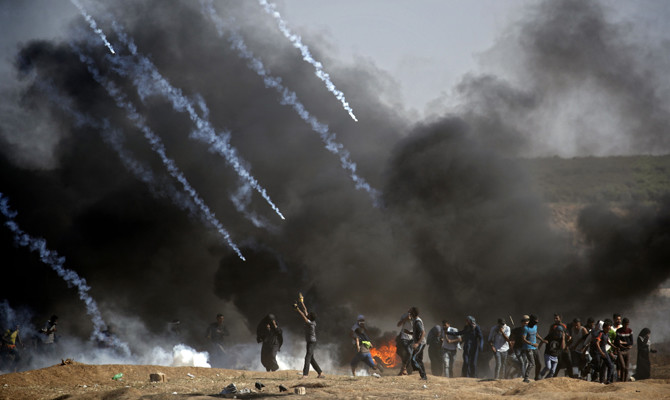
This year, on the eve of the 70th anniversary, the US opened its relocated embassy in Jerusalem, and at least 55 Palestinians were shot by Israeli forces while protesting along the Gaza Strip’s border, a grim reminder that the Nakba is not over.
“For Palestinians, the Nakba is also a continuing affair that only started in 1948, but continued through 1967 and until today, with Jerusalem,” Ghassan Khatib, a former Palestinian government minister, told Arab News.
“Seven decades have passed since Al-Nakba, the biggest crisis in the history of Palestine,” Basem Abdullah Al-Agha, ambassador of Palestine to Saudi Arabia, told Arab News.
“The state of Israel was created on the Palestinian people’s home, from which 6 million Palestine refugees continue to suffer from the cruelty of exile and loss of human security, and with ever-expanding Israeli settlements, Palestinians continue to live under occupation.”
The Nakba is not only about the refugees, according to Khatib.
“The Nakba is the turning point for all Palestinians. And commemorating the Nakba is about taking a stand for resistance, and in particular for self-determination and statehood.”
Third-generation Palestinians, who have made a home somewhere else, struggle with national identity and where to call home. “I’m a Palestinian who grew up in Saudi Arabia,” said 28-year old Dania Husseini, whose family hails from Jerusalem.
“I guess I’m one of those who have an identity crisis. I don’t fit into the typical Palestinian culture or the Saudi or the Western, really. I have a mentality of my own that developed after living in all the environments I lived in and met the people that were part of them.”
Whether refugees or not, it is not hard in the Arab world to find someone whose life wasn’t altered forever by the Nakba.
Arab News columnist Ramzy Baroud was born and raised in a Gaza camp. His family village, Beit Daras, was erased from the map.
The father and grandmother of Arab News writer Daoud Kuttab fled Jerusalem’s Musrara neighborhood for the Jordanian city of Zarqa.
You will find their stories in our eight-page supplement today, which marks Nakba day and the toll it has taken over seven decades.
And in the story of Dr. Bishara A. Bahbah, whose family still holds the deed to their orchard in the Lod-Jaffa area, you will find some hope. As he said: “Even if Israel takes our lands, they can never take away our brainpower and our unshakable will and determination to succeed.”

Israel’s killing of Palestinians a grim reminder that Nakba is not over
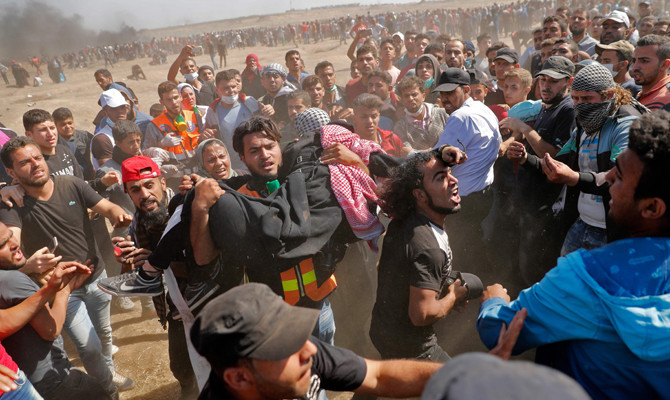
- This year, on the eve of the 70th anniversary, the US opened its relocated embassy in Jerusalem, and at least 55 Palestinians were shot by Israeli forces while protesting along the Gaza Strip’s border, a grim reminder that the Nakba is not over.
- Whether refugees or not, it is hard in the Arab world to find someone whose life wasn’t altered forever by the Nakba.
Lebanon PM publishes long-awaited banking law draft
- The law stipulates that each of the state, the central bank, commercial banks and depositors will share the losses accrued as a result of the financial crisis.
- Depositors with a limit of $100,000, over the course of four years
BEIRUT: Lebanese Prime Minister Nawaf Salam published on Friday a long-awaited banking draft bill, which distributes losses from the 2019 economic crisis between banks and the state.
The draft law is a key demand from the international community, which has conditioned economic aid to Lebanon on financial reforms.
In a televised speech, Salam said “this draft law constitutes a roadmap to getting out of the crisis” that still grips Lebanon.
The draft will be discussed by the Lebanese cabinet on Monday before being sent to parliament, where it could be blocked.
The law stipulates that each of the state, the central bank, commercial banks and depositors will share the losses accrued as a result of the financial crisis.
Depositors, who lost access to their funds after the crisis, will be able to retrieve their money, with a limit of $100,000, over the course of four years.
Salam said that 85 percent of depositors had less than $100,000 in their accounts.
The wealthiest depositors will see the remainder of their money compensated by asset-backed securities.
“I know that many of you are listening today with hearts full of anger, anger at a state that abandoned you,” Salam said.
“This bill may not be perfect... but it is a realistic and fair step toward restoring rights, halting the collapse.”
- ‘Banks are angry’ -
The International Monetary Fund, which closely monitored the drafting of the bill, had previously insisted on the need to “restore the viability of the banking sector consistent with international standards” and protect small depositors.
The Associations of Banks in Lebanon criticized the draft law on Monday, saying in a statement that it contains “serious shortcomings” and harms commercial banks.
“Banks are angry because the law opens the door to them sharing any part of the losses,” said Sami Zougheib, researcher at The Policy Initiative, a Beirut-based think tank.
He told AFP that banks would have preferred that the state bear full responsibility.
The text provides for the recapitalization of failing banks, while the government’s debt to the Central Bank will be converted into bonds.
Salam said that the bill aims to “revive the banking sector” which had collapsed, giving free rein to a parallel economy based on cash transactions, which facilitate money laundering and illicit trade.
According to government estimates, the losses resulting from the financial crisis amounted to about $70 billion, a figure that is expected to have increased over the six years that the crisis was left unaddressed.
Since assuming power, Salam and President Joseph Aoun have pledged to implement the necessary reforms and legislation.
In April, Lebanon’s parliament adopted a bank restructuring law, as the previous legislation was believed to have allowed a flight of capital at the outbreak of the 2019 crisis.
The new bill stipulates that politically exposed persons and major shareholders who transferred significant capital outside the country from 2019 onwards — while ordinary depositors were deprived of their savings — must return them within three months or face fines.
The draft law could still be blocked by parliament even if the cabinet approves it.
“Many lawmakers are directly exposed as large depositors or bank shareholders, politically allied with bank owners, and unwilling to pass a law that either angers banks or angers depositors,” Zougheib said.
Politicians and banking officials have repeatedly obstructed the reforms required by the international community for Lebanon to receive financial support.