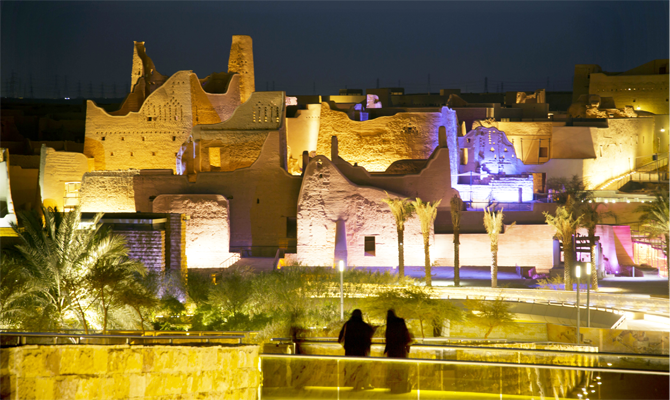

JEDDAH: The Saudi Commission for Tourism and National Heritage (SCTH) approved the registration of 25 archaeological sites in various parts of the Kingdom during the first quarter of this year, the Saudi Press Agency reported on Monday.
Efforts are underway to make Saudi Arabia one of the most attractive countries for tourism. The Saudi government has allocated SR5 billion to the Custodian of the Two Holy Mosques’ program, which takes care of the cultural heritage of the Kingdom.
The program includes the establishment of 18 museums in the Kingdom, the creation of 80 heritage sites and opening them to visitors, the restoration and preparation of 18 villages and traditional towns to receive visitors, and hosting economic and local hospitality activities operated by local people, as well as opening 17 centers for artisans to serve as incubators for the development of their businesses, factories for their production, and outlets for sale.
The archaeological sites recorded in the National Antiquities Register include eight sites in Asir region, one each in Makkah and Jouf regions, eight sites in Qassim region, four in Dharia Governorate, one site in Madinah region, three sites in Tabuk region and one each in Hail and the Eastern Province.
The number of heritage sites placed on the National Antiquities Register since its establishment has reached 8,218. At the 8th Session of Tourism Ministers of the Group, held in Buenos Aires in April, SCTH President Prince Sultan bin Salman said the commission has submitted a strategy for the development of national tourism, approved by the state in 2005, to be one of the most important engines of the economy in the national transformation program and adopted as a central element, along with heritage and culture, in the Kingdom’s Vision 2030.
“The Public Investment Fund (PIF) is now playing a major role in establishing tourism projects,” he said, emphasizing that the SCTH has partnered with the PIF to launch several tourist destinations and tourism companies.
He added: “For us, tourism isn’t a sector but an industry. We, alongside our partners, have managed to establish and enhance 33 regional and specialized museums in which we employ many Saudi men and women who have graduated from universities abroad and can speak multiple languages.”
The efforts of the SCTH and its partners in localizing tourist jobs have reportedly resulted in an increase in the number of direct jobs in the tourism sector from 936,000 in 2016 to 993,000 by the end of 2017. The number of job opportunities is expected to increase to 1.2 million by the year 2020.