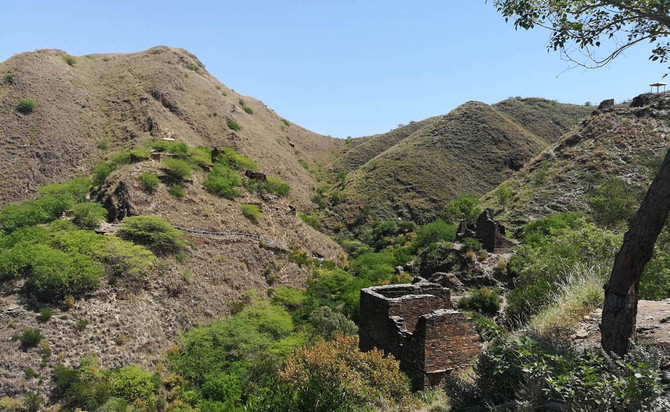
Work on ancient Buddhist residences under way in northwest Pakistan

1 / 8
The Stupa Chamber at the heritage site. (AN photo)
2 / 8
The Stupa Chamber at the heritage site. (AN photo)
3 / 8
Construction work under way at the residential portion of the heritage site. (AN photo)
4 / 8
Spaces for niches for lighting in rooms. (AN photo)
5 / 8
Entrance to the World Heritage Site of Takht Bhai in Mardan district. (AN photo)
6 / 8
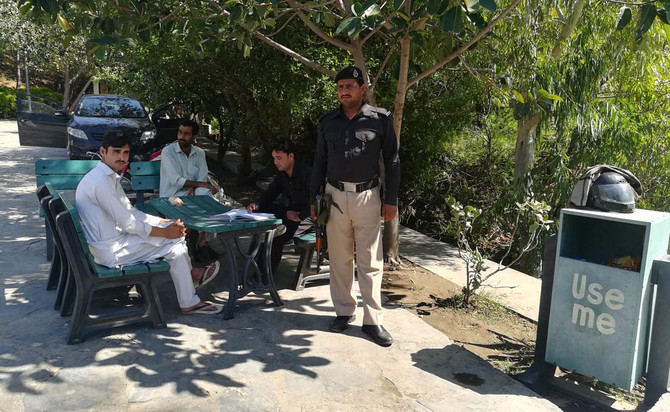
Staff checking identity of the visitors before entry to the site. (AN photo)
7 / 8
Construction work under way at the residential portion of the heritage site. (AN photo)
8 / 8
Construction work under way at the residential portion of the heritage site. (AN photo)
Updated 22 April 2018
Follow

Work on ancient Buddhist residences under way in northwest Pakistan

  • Conservation of the site, discovered in 1836 by a French army officer, will ‘promote a soft image of Pakistan’
  • This famous archaeological site at Takht Bhai was included in the World Heritage List in 1980 by the UN

TAKHT BHAI, Pakistan: Conservation work has begun on an important 2,000-year-old Buddhist monastic site which will be a popular spot for families and tourists as well as historians and Buddhists from around the world.
At an altitude of 500 meters, the Takht Bhai archaeological site not only offers visitors a glimpse into the ancient times but also serves as a popular picnic and tourist spot.
The site is located about 2 kilometers east of the Takht Bhai bazaar in Mardan district of Khyber Pakhtunkhwa (KP) province, once known as the heart of the Gandhara civilization.

It is about 65 km to the north of Peshawar, the capital of KP.

People from different walks of life, including historians, archaeologists and tourists, arrive here while Buddhists from across the world visit it as part of their religious beliefs.

The visitors have to ascend about 300 steps on a hill to reach the archaeological “wonder.”

The Khyber Pakhtunkhwa Directorate of Archaeology has started work on Zone B of the famous archaeological site at Takht Bhai, which the United Nations included in the World Heritage List in 1980.
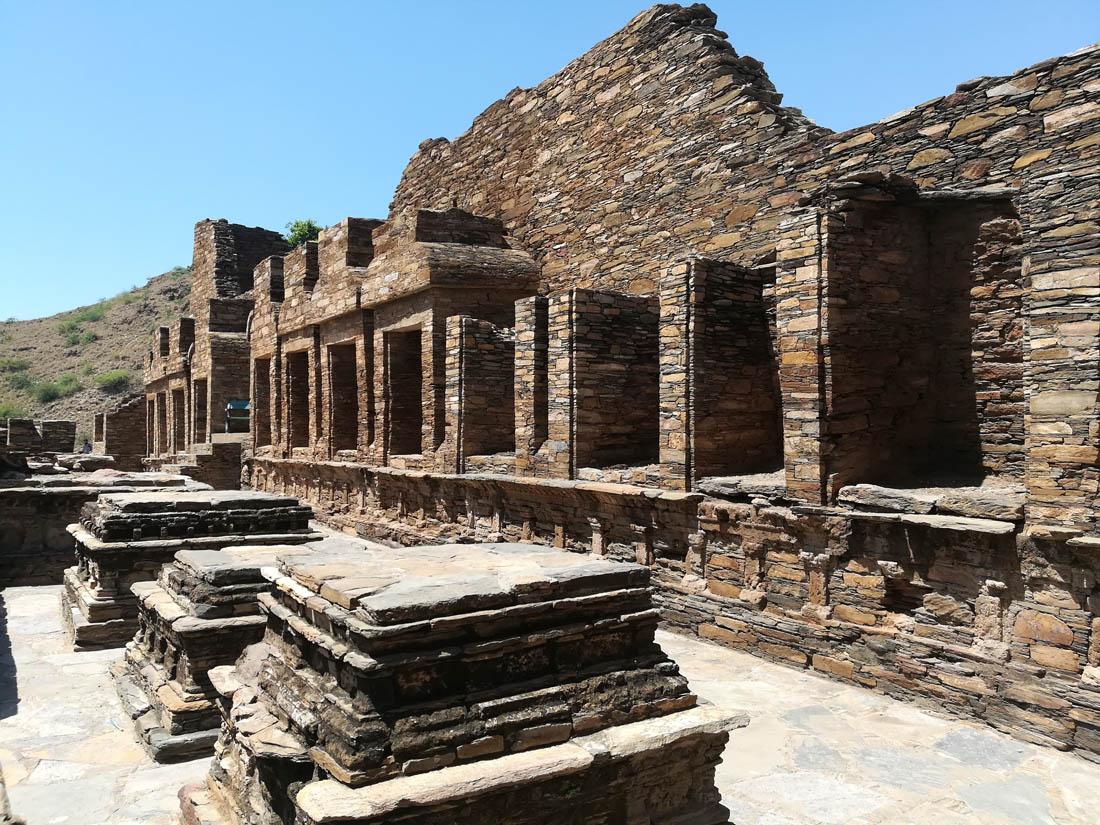


The United Nations declared the venue a World Heritage Site in 1980. (AN photo)

“Zone A was a 2,000-year old Buddhist monastery while Zone B was their residential area,” said senior archaeologist of the directorate Habibullah Khattak.

He added that the coins discovered from the area were from the period of Parthian king Gondophares in the 1st century AD.

He said that Buddhist civilization had spread to other parts of the world from Gandhara state.

Takht Bhai site is an ancient land and is very important for research purposes, said Khattak.

“Through conservation of this site, we also promote a soft image of Pakistan,” he said. “People from our country are known as people of Gandhara in the modern world.”

He said the Buddhist civilization was destroyed by Hindus in the 7th century.

Qaiser Khan, project director of the site’s Zone B, said that the project commenced on July 1, 2017, and will conclude by the end of this year.
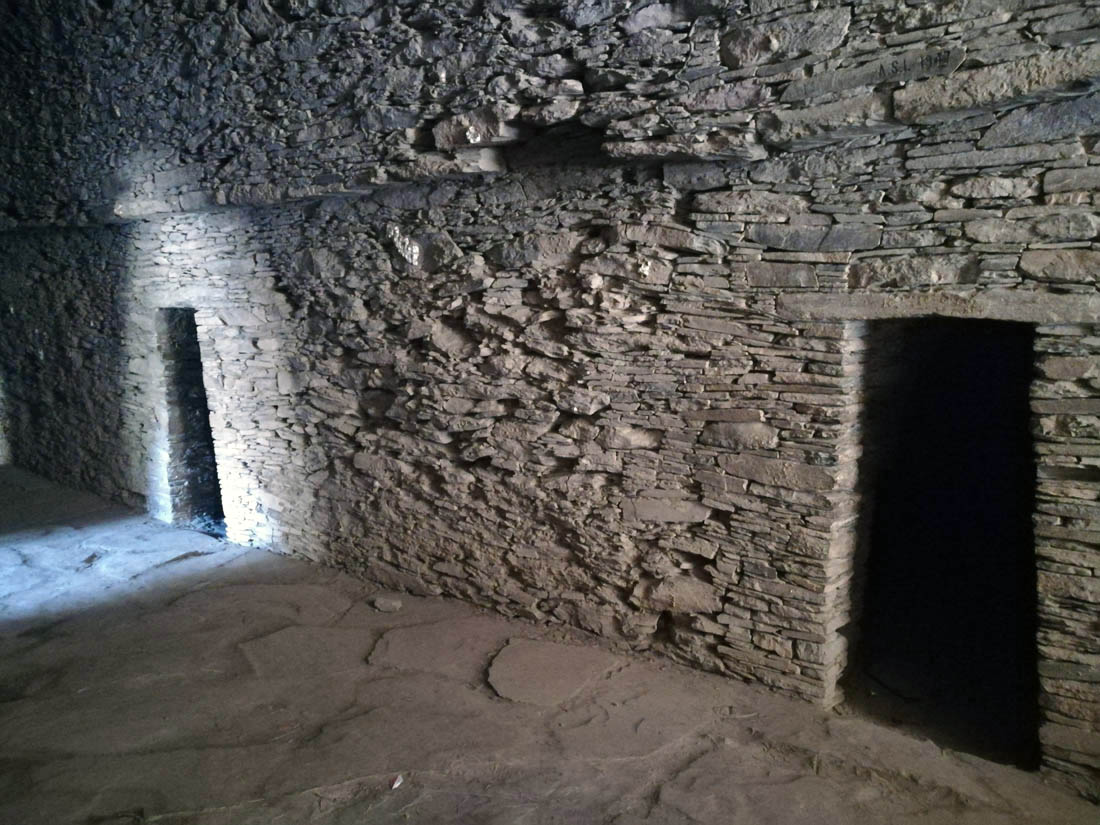


Entrance to the meditation centers of monks.​ (AN photo)

The project has different components such as conservation, archaeological work, cleaning and awareness, for which separate budgets are released.


“The budget is released quarterly. During the past nine months, Rs6 million ($51,903) has been spent on conservation alone,” he added.
Research officer of the KP Archaeology Directorate Nawazud Din told Arab News that the ancient site of Gandhara civilization was discovered in 1836 by a French army officer named General Cort. Excavation work on the site started in 1872 during the British rule in the subcontinent.

“Each visitor is charged Rs20 for an entry ticket. For photographs at the site, a visitor can be charged Rs300, while bridal photography and commercial videography can cost up to Rs30,000 each,” he said.
Pakistan embassy, UN Tourism mark International Day of Mountains in Riyadh

Updated 6 sec ago
Follow

Pakistan embassy, UN Tourism mark International Day of Mountains in Riyadh

  • Event highlights Pakistan’s mountain ecosystems, mountaineering heritage, climate risks
  • Diplomats, artists and climbers gather to promote sustainable mountain tourism

ISLAMABAD: The Embassy of Pakistan in Riyadh, in collaboration with the UN Tourism Office, hosted an event this week to mark the United Nations-designated International Day of Mountains, bringing together diplomats, civil society members, mountaineers and artists to spotlight the global and Pakistani significance of mountain ecosystems.

Pakistan is home to some of the world’s largest mountain ranges and glacier systems outside the polar regions, including the Himalayas, Karakoram and Hindu Kush, which feed major rivers that sustain agriculture, hydropower and drinking water for millions of people. Rising temperatures linked to climate change are accelerating glacial melt, increasing the risk of floods, landslides and glacial lake outburst floods, while also threatening long-term water security as ice reserves shrink. 

These changes are already affecting mountain communities whose livelihoods depend on farming, tourism and pastoralism, exposing them to displacement, loss of income and environmental degradation, and amplifying the human and economic costs of extreme weather events across downstream regions.

Ambassador of Pakistan to Saudi Arabia Ahmad Farooq is briefing guests about mountain ecosystems in Pakistan at the UN Tourism Office in Riyadh on December 11, 2025. (Pakistan Embassy in Saudi Arabia)

Held at the UN Tourism Office in Riyadh, Thursday’s event focused on the ecological, cultural and economic importance of mountains, with particular attention to Pakistan’s vast high-altitude landscapes.

The evening opened with a micro-documentary titled Mountains of Pakistan, showcasing the country’s mountain ranges and their ecological value. Ambassador of Pakistan to Saudi Arabia Ahmad Farooq, in his opening remarks, highlighted the essential role mountains play in sustaining water systems, food security and communities, while also drawing attention to the growing threats posed by climate change.

“Mountains are not just landscapes, they are life-giving ecosystems, repositories of culture, and sources of inspiration,” Farooq said. “Tonight, we celebrate not only their beauty but our shared responsibility to protect them for future generations.”

Ambassador of Pakistan to Saudi Arabia Ahmad Farooq posing for picture with guests at the UN Tourism Office in Riyadh on December 11, 2025. (Pakistan Embassy in Saudi Arabia)

He also referred to challenges facing Pakistan’s mountain regions, including climate-change-driven glacial melt and related environmental risks, reaffirming Islamabad’s commitment to sustainable mountain development.

The program included remarks by the director of the UN Tourism Office, who underscored the importance of international cooperation in preserving fragile mountain ecosystems. A second micro-documentary, Spirit of Mountaineering, paid tribute to the courage and resilience of Pakistani climbers and their contributions to global mountaineering.

Among the featured speakers was Naila Kiani, a prominent Pakistani mountaineer and environmental advocate, who shared her experiences scaling some of the world’s highest peaks, including K2 and Nanga Parbat. Kiani is the first Pakistani woman and overall third Pakistani to climb 12 of the 14 eight-thousanders.

A prominent Pakistani mountaineer and environmental advocate, Naila Kiani, is addressing an event to mark International Day of Mountains in Riyadh on December 11, 2025. (Pakistan Embassy in Saudi Arabia)

Ambassador Farrukh Amil, a senior Pakistani career diplomat and former ambassador, spoke about Pakistan’s mountain heritage and ongoing initiatives to promote conservation and eco-tourism, while landscape photographer Awais Ali presented a photographic exhibition capturing the majesty of Pakistan’s northern regions and the lives of their communities.

The event concluded with the formal inauguration of the mountain photography exhibition curated by Ali, offering guests an immersive visual journey through Pakistan’s highlands.

The embassy said the celebration reaffirmed Pakistan’s commitment to raising global awareness about mountain ecosystems, promoting sustainable tourism and fostering international collaboration to address climate challenges affecting these fragile environments.