Saudi women take the wheel, test-driving a new freedom

1 / 9
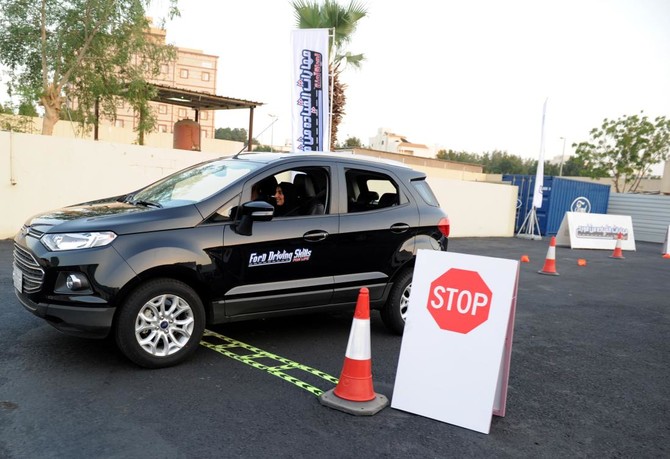
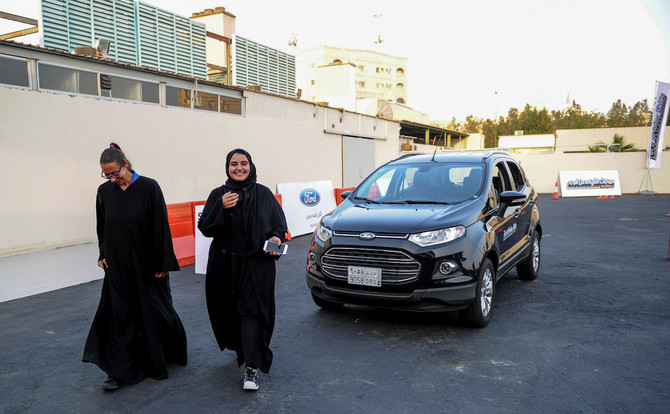
A Saudi woman leaves a car during a driving training at a university in Jeddah. (Reuters)
2 / 9
A Saudi woman has a driving lesson in Jeddah. Saudi Arabia’s historic decision in September 2017 to allow women to drive from June has been cheered inside the kingdom and abroad. (AFP)
3 / 9
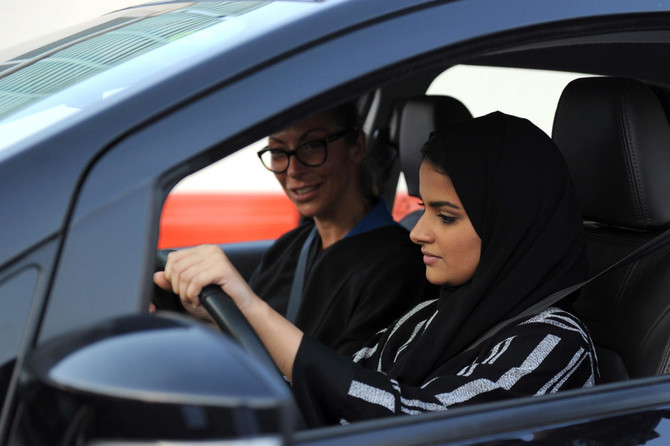
A Saudi woman receives a driving lesson from an Italian instructor in Jeddah. Saudi Arabia’s historic decision in September 2017 to allow women to drive from June has been cheered inside the kingdom and abroad. (AFP)
4 / 9
A Saudi woman awaits her Italian driving instructor during a lesson in Jeddah. Saudi Arabia’s historic decision in September 2017 to allow women to drive from June has been cheered inside the kingdom and abroad. (AFP)
5 / 9
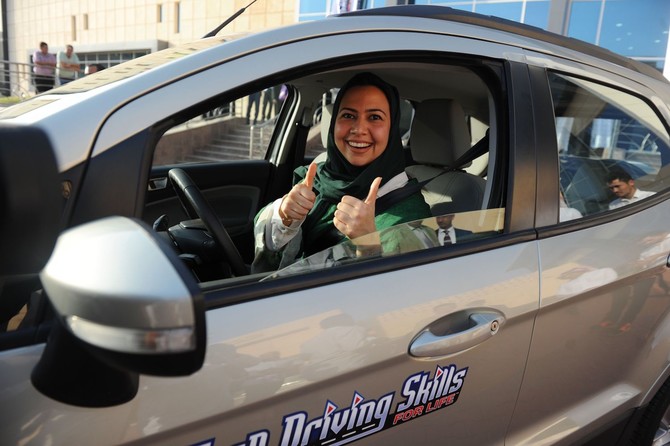
A woman sits in a car during a training at a university in Jeddah. (AN photo)
6 / 9
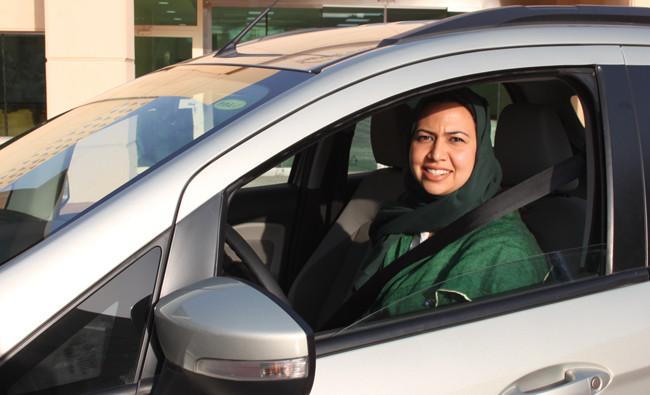
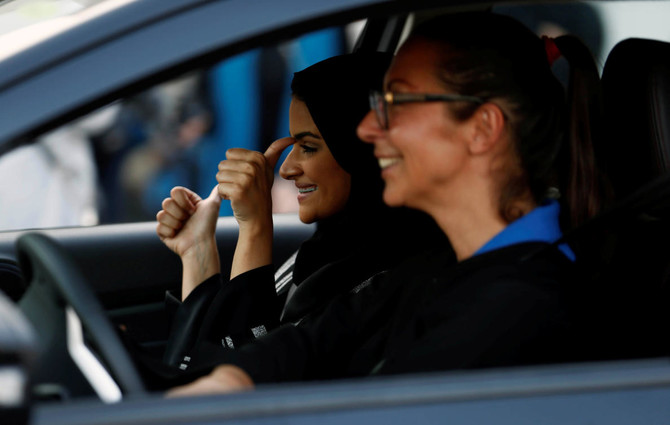
A Saudi woman gestures as she sits in a car during a driving training at a university in Jeddah. (Reuters)
7 / 9
A Saudi woman has a driving lesson in Jeddah. Saudi Arabia’s historic decision in September 2017 to allow women to drive from June has been cheered inside the kingdom and abroad. (AFP)
8 / 9
A Saudi woman awaits her Italian driving instructor during a lesson in Jeddah. Saudi Arabia’s historic decision in September 2017 to allow women to drive from June has been cheered inside the kingdom and abroad. (AFP)
9 / 9
Participants of a driver training session pose for a group photo. (AN photo)
Updated 08 March 2018
Follow

Saudi women take the wheel, test-driving a new freedom

JEDDAH: Fatima Salem giggled with hesitation when it was her turn to drive through a small car park lined with bright orange cones and arrows. Like millions of Saudi women, she will apply for a driver’s license in June — but first she has to learn how to drive.
“I’m a little nervous,” the 30-year-old master’s student said.
Francesca Pardini, an Italian former racing driver, helped to  calm her nerves, reminding Salem to check the mirrors and buckle up. Once on the road, Pardini reached over to help straighten out the wheel after a left turn, and they both lurched forward when Salem stepped on the brakes before a stop sign.
Effat University in Jeddah organized the sessions for students to learn the basics of how to operate a car. For most of the young women, the hour-long training, sponsored by Ford Motor, is the first time they have sat in the driver’s seat. Universities across Saudi Arabia are expected to offer women full driving courses once the rules and guidelines from the government are announced.
“I felt out of place. I’ve never sat on that side of the car. Usually, I always sit in the back or on the right side, but it felt good. You feel, like, in control,” said Sara Ghouth, 18. “I want to drive a car. I want to be independent.”
Car companies see the lifting of the ban on women driving in June as an opportunity to promote their brands and increase sales.
Ford’s Driving Skills for Life program, a one-time session that focuses on safety, has been taught around the world, and to male drivers in Saudi Arabia, but this is the first time the company has taught women-only groups.
“With these girls, they’re like an empty book,” Pardini, the Italian trainer with Ford, told The Associated Press. “They really want to learn.”

Before the training began this week, Ford conducted surveys with women across Saudi Arabia to better understand what they are looking for in a car and how to market their brand to the new drivers.
“The first thing we don’t want to do is be patronizing. This isn’t about lip gloss and nail polish and things like that. These are educated women,” said Crystal Worthem, a marketing manager with Ford.
Worthem said Ford “absolutely” expects a lift in sales as Saudi women start driving this summer. She says some women are already purchasing cars for when the ban is lifted, while others own the cars they are driven around in.
“Women have always been in our showrooms, but now women are actively shopping for themselves, which is exciting,” she said. “It’s a car that they can drive and not a car that they’ll be riding in.”
Amal Al-Jihani, 23, an architecture student, said her biggest supporter encouraging her to drive is her father, who has promised to give her one of the family’s used cars when she’s ready for the road. Her 16-year-old brother already drives.
“My mom is refusing the idea of us driving. She says it’s dangerous and she’ll let us drive when we’re married,” Al-Jihani said, laughing. “My dad tells her she’ll relax when she sees everyone else driving.
Joanna Al-Fattani, 19, relies on services such as Uber to go most places. To get to and from college, she has two different drivers. She said a lot of women are nervous about the idea of driving alongside men on the roads, but she’s looking forward to the freedom.
“It’s such an important announcement. Everybody needed this. Now is the right time to do it,” she said.
The President of Effat University, Dr. Haifa Jamal Al-Lail, said women driving would offer them more opportunities to join the workforce. “It’s not a simple societal change,” she said. “It’s time to take the wheel and drive to our heart’s content.
“Effat University always leads things and gives women opportunities that have never been offered to them before. This initiative is one of those opportunities, we’re offering it gradually.
“We’re making sure that the students, staff, and faculty learn the basics before going into real driving.”

Najran’s camels are embedded in local culture and traditions

Camels are not only a vital livestock resource in Najran, but also a cornerstone of local identity and tradition. (SPA)
Updated 25 December 2025
Follow

Najran’s camels are embedded in local culture and traditions

  • Several distinct camel breeds are found in the region
  • Animals permeate Arab consciousness, says expert

RIYADH: In Najran, camels are not only a vital livestock resource but also a cornerstone of local identity and tradition.

According to Hadi Benyan Al-Amer, head of Najran’s Camel Association, the region has several distinct camel breeds.

Principal among them is the Awarik, an ancient Arabian lineage linked to territories where arak trees flourish, the Saudi Press Agency reported on Thursday.

These light-colored, sparsely-haired camels possess remarkable resilience, and are prevalent across southern Arabia.

The Majahim are characterized by dark hues spanning black to brown, and excel in both milk yield and endurance.

The Asayil are prized for their sleek, lean physiques, and dominate in speed-based competitions.

Al-Amer said traditional water sources known as Odood, or traditional water wells and artesian wells, have sustained herders navigating the Empty Quarter’s grazing lands for generations.

These permanent water points, equipped with dedicated drinking basins for camels, showcase the animals’ extraordinary environmental resilience.

Among the principal wells accessible from Najran are Al-Minkhali, Abu Shadid, Hamra Nathil, Tamani, Umm Al-Wahat, and Khujaima.

Countless additional wells dot the Empty Quarter and adjacent territories, forming the backbone of camel owners’ far-reaching pastoral networks.

Dr. Hind bint Dawood Al-Shuqair of Najran University’s Arabic Language Department explained how camels have permeated Arab consciousness through legends and stories spanning thousands of years.

Representing endurance, power, and grace, they have become inseparable from Arab cultural identity.

Archaeological evidence at Al-Ukhdood, Mount Al-Tharwa and Hima, preserves through carvings and ancient artwork the deep bond between people and camels, Al-Shuqair said.

She drew attention to Saudi Arabia’s substantial investment in camel heritage, exemplified by proclaiming 2024 as the Year of the Camel.

This designation emphasizes their importance to national prosperity and cultural heritage while backing global initiatives to promote awareness of camels as valuable economic and cultural assets.

The Kingdom further demonstrates its commitment to protecting the animals through the annual King Abdulaziz Festival, the SPA reported.