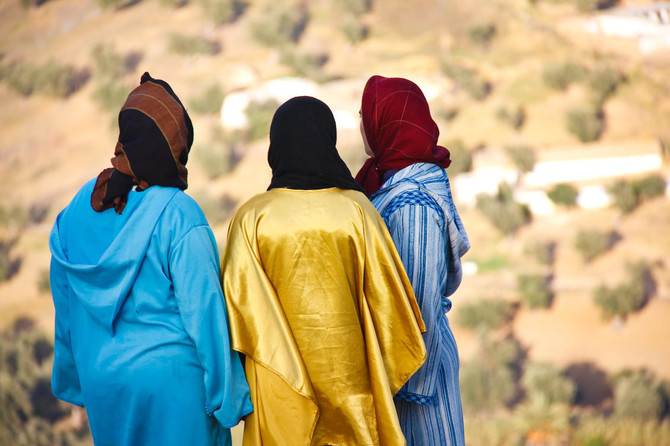
BEIRUT: A hotly-debated new law aimed at protecting women in Morocco against domestic violence does not go far enough, said women’s rights activists who have campaigned for reform for years.
The law passed in the Muslim country earlier this month criminalizes “harassment, aggression, sexual exploitation or ill treatment of women,” according to the women’s ministry.
But it failed to define domestic violence or explicitly outlaw marital rape said Rothna Begum, Middle East women’s rights researcher for Human Rights Watch.
“While Morocco is going out of its way to pat itself on the back, they need to take far more reform to protect all women from violence,” she told the Thomson Reuters Foundation.
By criminalizing forced marriage and the expulsion of a spouse from the home, the law is a “bittersweet victory” for activists in Morocco who have been pushing for reforms for more than a decade, she added.
Sexual harassment and abuse of women is rife in Morocco where a national survey found that nearly two-thirds of women had experienced physical, psychological, sexual or economic abuse.
A video of a young woman being sexually assaulted by a gang of teenage boys on a bus in Casablanca last year sparked outrage in the country.
Saadia Wadah, a women’s rights lawyer and activist based in Casablanca said that the law is a “positive” step forward, despite its “gaps and flaws.”
In pushing through reform, Morocco follows Tunisia, which passed its own law protecting women against violence last year, but other Arab countries like Egypt, Kuwait, and Yemen have yet to do so, said Begum.
The law allows for protection orders that prohibit an accused person from contacting or approaching a victim during or after criminal prosecutions.
Stephanie Willman, co-founder of Mobilising for Rights Associates, a women’s rights group, said this was “terrible.”
“Women shouldn’t have to file criminal charges to get a protection order,” she said by phone from the capital, Rabat.
“Most women who are victims of violence in Morocco will be left unprotected because of this.”
Few women file criminal cases against abusive spouses and most are dropped because of family pressure or financial dependence on their abusers, HRW said.

“Bittersweet victory” for Moroccan women facing domestic violence, activists say

Turkiye’s approval of peace roadmap is important step, PKK source says
- “The vote is considered an achievement and an important step toward consolidating democracy in Turkiye,” said the PKK source
- There were foundations for resolving the Kurdish issue, but there was a lack of clarity on the issue in the report
BAGHDAD: A Turkish parliamentary commission’s approval of a report setting out a roadmap for legal reforms alongside the disbandment of the Kurdistan Workers Party (PKK) militant group is an important step and the beginning of a fundamental change in Turkish policy, a PKK source told Reuters on Thursday.
The commission voted overwhelmingly on Wednesday to approve the report, advancing a peace process designed to end decades of conflict.
“The vote is considered an achievement and an important step toward consolidating democracy in Turkiye,” said the PKK source.
The PKK — designated a terrorist organization by Turkiye, the United States and the European Union — halted attacks last year and said in May it had decided to disband and end its armed struggle.
The parliamentary vote shifts the peace process to the legislative theater, as President Tayyip Erdogan, Turkiye’s leader of more than two decades, bids to end a conflict focused on mainly Kurdish southeast Turkiye.
The insurgency began in 1984 and has killed more than 40,000 people, sowing deep discord at home and spreading violence across borders into Iraq and Syria.
IMPORTANT ISSUES OUTSTANDING
The PKK source said there were foundations for resolving the Kurdish issue, but there was a lack of clarity on the issue in the report.
“There also remain other important issues, such as initiating constitutional amendments, especially in aspects related to the Kurdish language as well as amendments to the anti-terrorism law,” the source said.
Another issue was legislation concerning the return of PKK militants to Turkiye and their integration into society, the source said.
A key element of Wednesday’s report recommended strengthening mechanisms to ensure compliance with decisions by the European Court of Human Rights (ECHR) and the Constitutional Court.
Among key ECHR decisions related to Turkiye are rulings that the rights of jailed former pro-Kurdish party leader Selahattin Demirtas had been violated and that he should be released immediately.
Ankara’s final appeal against that was rejected in November.
SIGN OF INTENT
Demirtas’ lawyer Mahsuni Karaman told Reuters the report’s comments on the ECHR were important as a sign of intent.
“We hope this will be reflected in judicial practice— that is our wish and expectation,” Karaman said.
Demirtas was detained in November 2016 on terrorism-related charges, which he denies. In May 2024, a court convicted him in connection with deadly 2014 protests and sentenced him to more than 40 years in prison.
Turkish nationalist leader Devlet Bahceli, a key Erdogan ally whose call in 2024 triggered the current PKK peace process, said in November that it “would be beneficial” to release Demirtas from prison.
The opposition pro-Kurdish DEM Party — the successor party of Demirtas’ HDP — remains parliament’s third-largest bloc and has cooperated closely with the parliamentary commission.