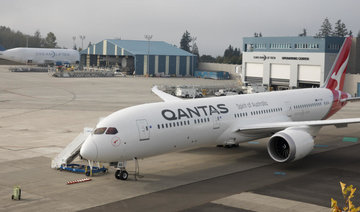
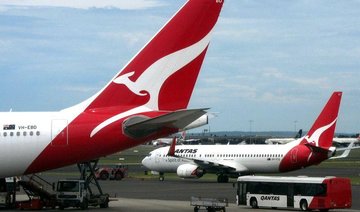
SYDNEY: Australia’s Qantas Airways said half-year profit jumped to a record on cost cuts and hikes in domestic fares — which combined with a share buyback sent its stock bounding higher.
The results are the latest in a slew of robust earnings for the aviation sector and Qantas CEO Alan Joyce was upbeat about future earnings prospects, noting that Australia’s all-important resources sector was growing for the first time in three years.
“We’ve a lot of work to do to maintain it, but if we deliver on that work I have no doubt that the company can keep on maintaining this kind of performance,” he told a news conference.
It also outlined plans for its own pilot academy to address a severe pilot shortage globally. The academy will start next year and aims to train 500 pilots a year when fully established.
The “Flying Kangaroo”, which controls nearly two-thirds of Australia’s domestic market, has pushed average domestic ticket prices to their highest levels in almost a decade while trimming capacity.
At the same time, demand has gathered pace. In addition to the pick-up in the resources sector, Joyce said growth in the financial services, construction and infrastructure sectors were driving business travel demand. Leisure demand was also strong, with international tourist numbers at record highs.
Underlying profit before tax, its most closely watched measure, surged 15 percent to A$976 million ($760 million) for the six months ending December 31, its best result for a first-half and around 3 percent higher than the top of its own guidance. Domestic revenue jumped by a fifth.
Investors also cheered a A$378 million buyback, sending its shares up as much as 10 percent, their biggest daily gain in three years. They last traded 6 percent higher.
“Capacity and capital discipline at a time where demand growth remains robust is driving the stock and its outlook,” said Sondal Bensan, an analyst at Qantas’ biggest shareholder, BT Investment Management wrote in an email.
” next leg will be in the international business that has been held back the past two years,” he said.
Other airlines and aviation firms are also basking in better times for the industry.
Also reporting on Thursday, Air New Zealand said it was destined for its second-highest annual profit ever on the back of a tourism boom.
Flight Center Travel Group, Australia’s biggest listed travel agency, sent its shares to a record high after beating half-year profit expectations and lifting its guidance. Its online rival Webjet saw it stock rocket 15 percent higher as revenue more than tripled.
Last week Singapore Airlines said it had lifted its quarterly profit by almost two-thirds as passenger numbers and cargo revenues rose.
Qantas also confirmed the purchase of 18 long-range Airbus A331LRneo aircraft for budget arm Jetstar.


![]()

Qantas soars to record profit, unveils buyback amid rosy outlook
Qantas soars to record profit, unveils buyback amid rosy outlook

Latest updates


© 2026 SAUDI RESEARCH & PUBLISHING COMPANY, All Rights Reserved And subject to Terms of Use Agreement.