Fresh twist for UAE diners as oysters thrive in warm waters

1 / 12
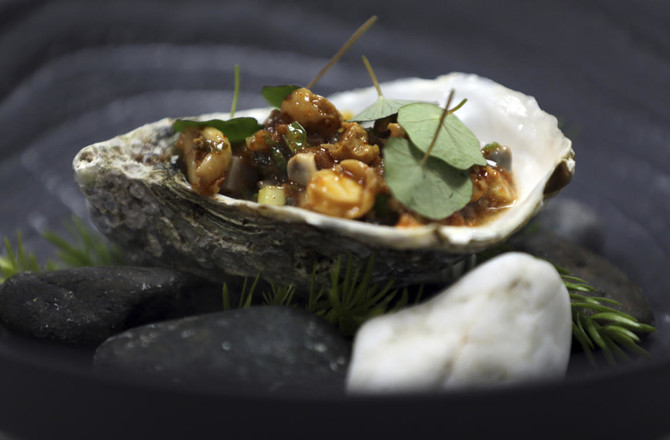
A fresh oyster dish prepared by chef Georgiy Danilov is displayed at Copper Lobster restaurant, in Fairmont, Fujairah, UAE. The waters of the Arabian Gulf have long been home to pearl oysters. Now, off the shores of the Fujairah, an emirate with a coastline that juts out into the Gulf of Oman, a new type of oyster is thriving — the edible kind. (AP/Kamran Jebreili)
2 / 12
Frame grab from video, lantern nets holding oysters inside hang underwater at the Dibba Bay Oyster Farm, in Dibba, United Arab Emirates. The waters of the Arabian Gulf have long been home to pearl oysters. Now, off the shores of the Fujairah, an emirate with a coastline that juts out into the Gulf of Oman, a new type of oyster is thriving — the edible kind. (AP/Fay Abuelgasim)
3 / 12
An employee of the Dibba Bay Oyster Farm points to the underwater oyster farm, in Dibba, United Arab Emirates. The waters of the Arabian Gulf have long been home to pearl oysters. Now, off the shores of the Fujairah, an emirate with a coastline that juts out into the Gulf of Oman, a new type of oyster is thriving — the edible kind. (AP/Kamran Jebreili)
4 / 12
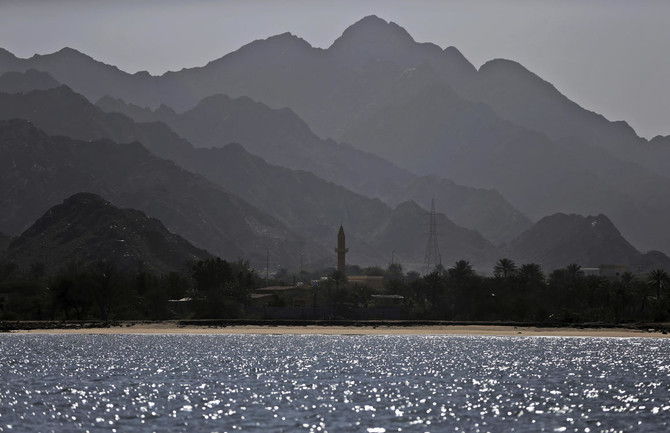
A mosque’s minaret and the Shumayliyah Mountains are seen from Dibba Bay on the Arabian Sea, in Dibba, United Arab Emirates. The waters of the Arabian Gulf have long been home to pearl oysters. Now, off these shores in Fujairah, an emirate with a coastline that juts out into the Gulf of Oman, a new type of oyster is thriving — the edible kind. (AP/Kamran Jebreili)
5 / 12
An employee of the Dibba Bay Oyster Farm cleans a lantern net at the company’s harvesting and processing facilities, in Dibba, United Arab Emirates.The waters of the Arabian Gulf have long been home to pearl oysters. Now, off the shores of the Fujairah, an emirate with a coastline that juts out into the Gulf of Oman, a new type of oyster is thriving — the edible kind. (AP/Kamran Jebreili)
6 / 12
An employee of the Dibba Bay Oyster Farm cleans the lantern nets at the company’s harvesting and processing facilities in Dibba, United Arab Emirates. The waters of the Arabian Gulf have long been home to pearl oysters. Now, off the shores of the Fujairah, an emirate with a coastline that juts out into the Gulf of Oman, a new type of oyster is thriving — the edible kind. (AP/Kamran Jebreili)
7 / 12
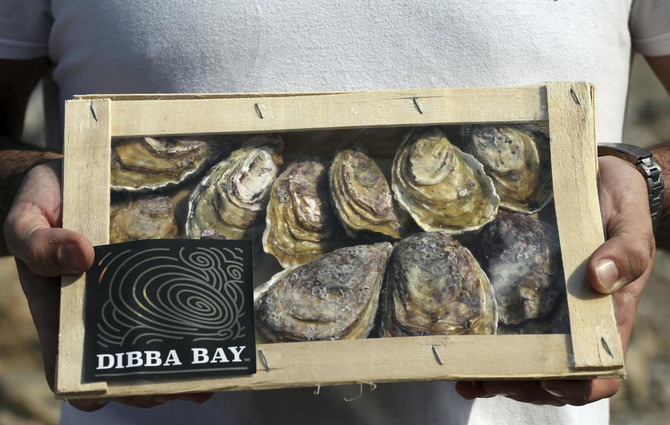
A package of oysters from the Dibba BayOyster Farm is displayed, in Dibba, UAE. The waters of the Arabian Gulf have long been home to pearl oysters. Now, off the shores of the Fujairah, an emirate with a coastline that juts out into the Gulf of Oman, a new type of oyster is thriving — the edible kind. (AP/Kamran Jebreili)
8 / 12
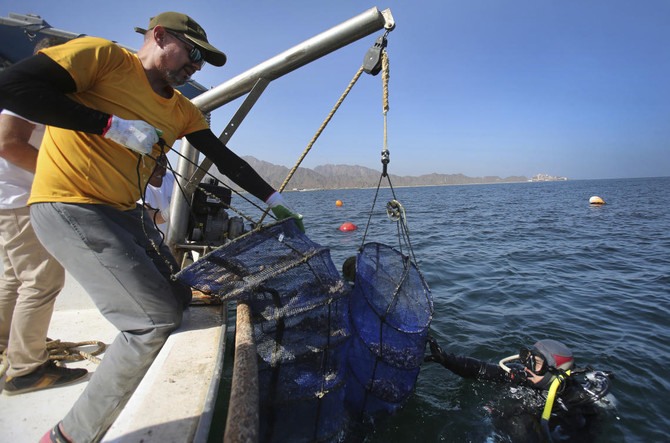
An employee of the Dibba Bay Oyster Farm, pulls a lantern net with oysters from the water, in Dibba, United Arab Emirates. The waters of the Arabian Gulf have long been home to pearl oysters. Now, off the shores of the Fujairah, an emirate with a coastline that juts out into the Gulf of Oman, a new type of oyster is thriving — the edible kind. (AP/Kamran Jebreili)
9 / 12
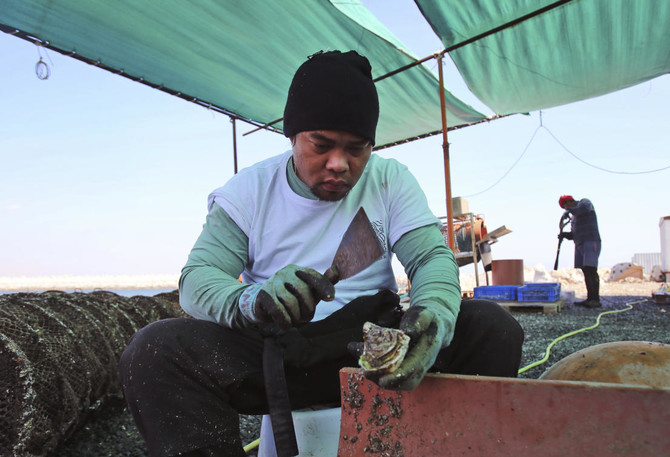
An employee cleans oyster shells at the Dibba Bay Oyster Farm’s harvesting and processing facilities, in Dibba, United Arab Emirates. The waters of the Arabian Gulf have long been home to pearl oysters. Now, off the shores of the Fujairah, an emirate with a coastline that juts out into the Gulf of Oman, a new type of oyster is thriving — the edible kind. (AP/Kamran Jebreili)
10 / 12
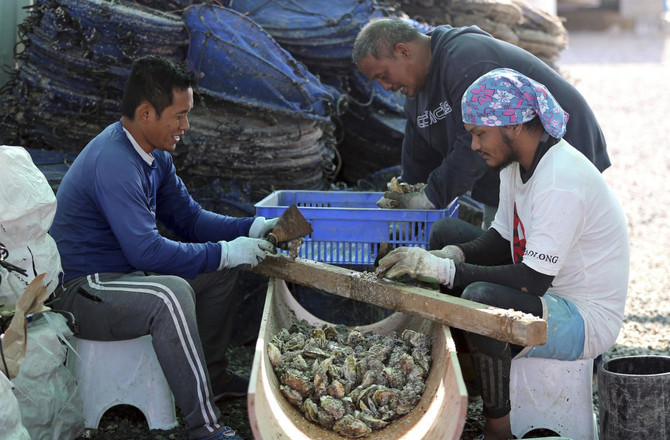
Employees clean oyster shells at the Dibba Bay Oyster Farm’s harvesting and processing facilities, in Dibba, United Arab Emirates. The waters of the Arabian Gulf have long been home to pearl oysters. Now, off the shores of the Fujairah, an emirate with a coastline that juts out into the Gulf of Oman, a new type of oyster is thriving — the edible kind. (AP/Kamran Jebreili).
11 / 12
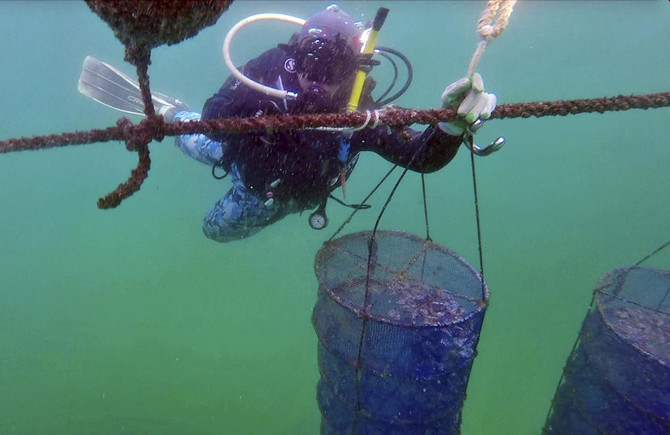
Frame grab from video, a diver from the Dibba Bay Oyster Farm, fixes a lantern net at the underwater oyster farm, in Dibba, United Arab Emirates. The waters of the Arabian Gulf have long been home to pearl oysters. Now, off the shores of the Fujairah, an emirate with a coastline that juts out into the Gulf of Oman, a new type of oyster is thriving — the edible kind. (AP/Fay Abuelgasim)
12 / 12
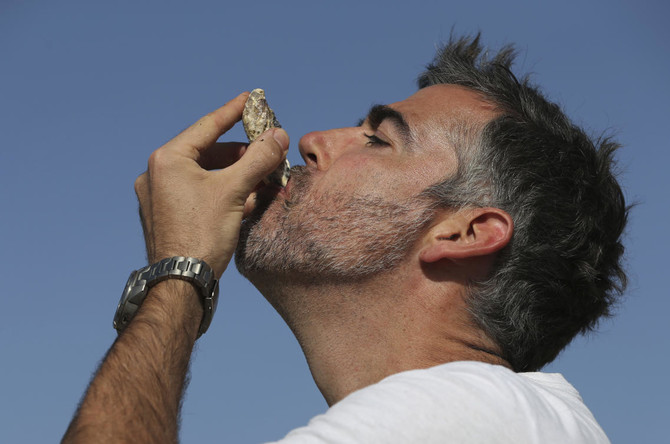
Ramie Murray, Scottish owner and founder of Dibba Bay Oyster Farm tests a fresh oyster at the company’s harvesting and processing facilities, in Dibba, UAE. The waters of the Arabian Gulf have long been home to pearl oysters. Now, off the shores of the Fujairah, an emirate with a coastline that juts out into the Gulf of Oman, a new type of oyster is thriving — the edible kind. (AP/Kamran Jebreili)
Updated 14 February 2018
Follow

Fresh twist for UAE diners as oysters thrive in warm waters

FUJAIRAH, UAE: The waters of the Arabian Gulf have long been home to pearl oysters, providing a valuable mainstay to Arab tribes that subsisted off its trade before the discovery of oil pumped new life into the Arabian Peninsula. Now, off the shores of the United Arab Emirates, a new type of oyster is thriving — the edible kind.
Long thought of as a cold water delicacy, edible oysters are being farmed in the warm waters of Fujairah, an emirate with a coastline that juts out into the Gulf of Oman. The local delicacy has made its way to tables in 12 different restaurants in Dubai, a cosmopolitan emirate east of Fujairah that is home to some of the Middle East’s top-rated restaurants serving international tourists and residents.
Dibba Bay Oysters in Fujairah, established two years ago, produces up to 20,000 oysters a month. They grow inside multi-tiered, netted baskets submerged in the open water. At any given time, there are about 1 million oysters at various stages of growth. An oyster can take anywhere between 12 and 18 months to grow to full market size.
“With these local oysters, we take them out of the water in the morning, and then in the afternoon they’re with the hotels, they’re with the chefs, they’re in the restaurant,” said Dibba Bay founder Ramie Murray.
The UAE imports nearly all of its food due to its harsh desert climate, but being able to deliver fresh oysters within hours to restaurants has made the local delicacy an attractive menu item at some of Dubai’s most popular and prestigious seafood restaurants, including the oyster bar at Dubai’s Opera.
“Someone came to me and said: ‘Hey, have you heard of these local oysters?’ And I was like: ‘No,’” said the bar’s executive chef Carl Maunder. “It was sort of out of the blue because, you know, this was in the summer time, it was very, very hot and just the last thing I expected anybody to be producing or farming here in Dubai.”
Murray plans to ramp up production to about 150,000 oysters a day in the coming years and expand to other markets in the region. The Dibba Bay farm claims to be the first of its kind in the Middle East.
Due to the warmer water temperatures, Murray says his Pacific Cupped oysters grow faster than they might in cooler climates.
The Pacific Cupped oysters, he said, “grow very well in the summer and their growth tails off in the winter, whereas here they just grow continuously because we have the warm weather the whole year round.”
Just down the coast from the Fujairah farm is the Copper Lobster restaurant. There, chefs serve the locally grown oysters with a Japanese Ponzu sauce.
“Being in the industry for 15 years, I had a kind of stereotype as (might) any other chef that oysters can only be imported from Europe,” chef Georgiy Danilov said. “In the middle of the year, I just got the business card of Ramie. ... I called him, and I was like: ‘Are you real?’“


Where We Are Going Today: Nakhat Marga

Photo/Supplied
Updated 21 February 2026
Follow

Where We Are Going Today: Nakhat Marga

  • For the main course, the menu offers a variety of meat and chicken dishes, but the must-try is madhgout laham, a flavorful one-pot meal of spiced meat slow-cooked with rice and served hot

Nakhat Marga, with locations in Al-Naeem and Al-Waha in Jeddah, is a restaurant that focuses on traditional Saudi meat and broth dishes, making it a fitting choice to celebrate Saudi Founding Day. 

The menu is structured around classic dishes, offering a wide selection of meats, chicken, and accompanying sides that reflect the culinary heritage of the Kingdom.

We began with jareesh, a creamy, savory porridge, and marqa, a slow-cooked stew of tender meat, onions, garlic, and different spices, simmered to create a rich broth. 

For the main course, the menu offers a variety of meat and chicken dishes, but the must-try is madhgout laham, a flavorful one-pot meal of spiced meat slow-cooked with rice and served hot.

If you are looking for other rice options, red meat madhbi is cooked in a traditional style, with muqlaqil and maknoom offering familiar tastes that many in Jeddah would recognize from home-cooked meals. 

Among the chicken dishes, kabli stands out for its balanced flavor, but the must try is the maqluba which is served in a generous portion, layering rice and chicken in the classic inverted style. The taste is so good that you may end up eating more than you expected.

Side dishes such as liver and moussaka were consistent with their descriptions and went well with the mains, not too heavy or filling. I also tried the yogurt cucumber salad, which offered a simple, cooling contrast to the heavier meat dishes.

Desserts such as basbousa are served with a dipping sauce, while marsa, made from semolina, sugar, butter, and flavored with cardamom, is similar in texture to basbousa but may vary slightly in ingredients and taste different.

Aseedah is a must-try when visiting, delivering a comforting taste of Saudi cuisine with its soft, traditional porridge served with butter, honey, or date syrup.

The restaurant’s atmosphere leans more toward functional but traditional dining rather than an elaborate experience, which keeps the focus on the food itself.