PARIS: Couscous may be the signature dish of North Africa, but steaming plates of the stew-topped semolina are also served up in West Africa and around the Mediterranean.
Since 1998 the Italian island of Sicily has been the unlikely host of the couscous-making world championship known as Cous Cous Fest, which bills itself as a “festival of cultural integration.”
Each September chefs convene on Sicily, whose Mediterranean location opposite Tunisia has made it a cultural crossroads throughout history, battling to be crowned couscous king or queen.
Palestinian chefs George Suheil Srour and Elias Bassous won the competition last year, with a couscous topped with grilled sea bream, pomegranate and fennel crumble.
In France, from the mid-20th century an influx of North African laborers from colonial territories and French expats returning after decolonization helped popularise the dish.
But here too, couscous already had a history.
In his 1534 novel “Gargantua,” the French writer Francois Rabelais described banquets on tables featuring meats of all kinds, accompanied by soups and couscous.
The 1938 version of the Larousse Gastronomique, France’s hallowed food bible, featured an entire chapter on the dish.
Spain also has long been gobbling couscous, not least due to centuries of Muslim rule on the Iberian peninsula.
“From the 10th century durum wheat was cultivated in Spain and couscous landed on the tables of the working classes,” write Hadjira Mouhoub and Claudine Rabaa in their book “The Adventures Of Couscous.”
But the local aristocracy was rather partial too, they added — as related in the 13th-century cookbook “The Excellences of the Table,” by Andalusian gastronome Ibn Razin Al Tujibi.


![]()
![]()
![]()
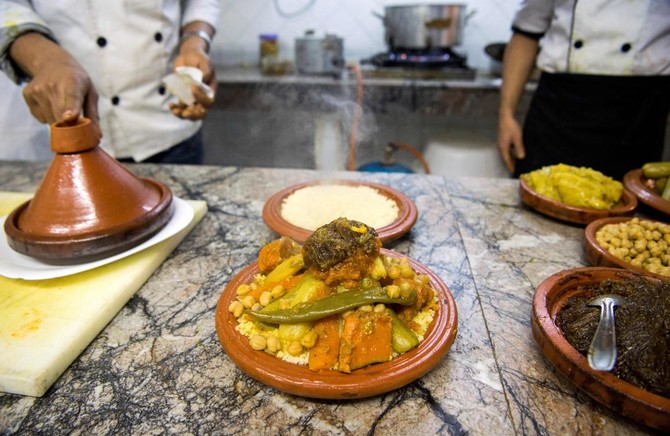
Couscous, a dish beloved far beyond North Africa

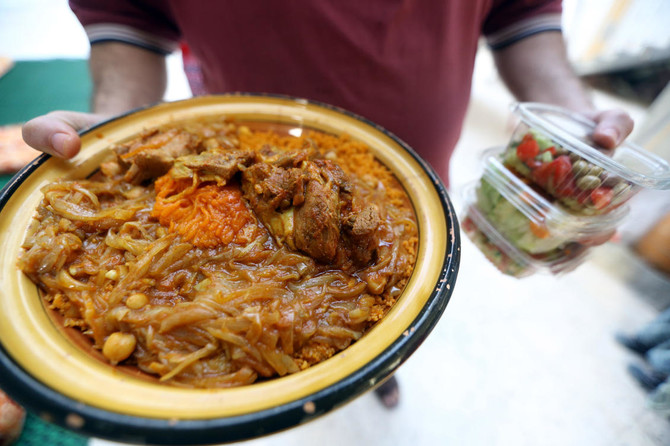
Couscous, a dish beloved far beyond North Africa


Latest updates


© 2026 SAUDI RESEARCH & PUBLISHING COMPANY, All Rights Reserved And subject to Terms of Use Agreement.