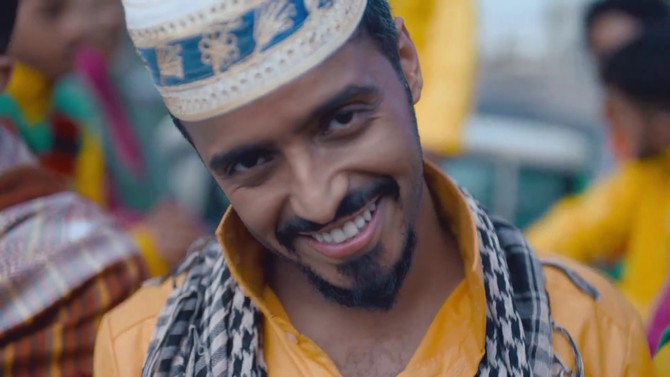
RIYADH: Tariq Al-Harbi, a Saudi musician, is currently enjoying the success of his latest music video, “Erheb.” Coyly flitting between self-deprecating humor and boisterous bragging, Al-Harbi and company sing the praises of various Darbawi favorites — things like desert camping, pet dabs, and pickup truck drifting. And though the video takes a mocking tone of the culture, many have expressed concern that the video might send audiences the wrong message.
Hidden beneath the surface layer of Saudi society, several subcultures of various levels of propriety struggle to stay under the radar. According to the latest statistics, Saudi youth currently make up 70% of the entire population. This segment of the population is so large that the word “segment” no longer even applies to them. And as all youth around the world, they have divided themselves into multiple, almost clique-like subcultures.
The Darbawis are one of those. Often referred to as “Saudi Punks,” they embody traditional Punk-esque values with a Saudi twist. They share a low opinion of authority institutions and outright disregard for danger and punishment.
Though perhaps not as infamous as Punk culture worldwide, some classic indicators of Darbawi youth have slipped into local pop culture to be referenced in disdain, such as their ragged style of dress or their well-known obsession with the citrus-flavored soft drink “Miranda” which they are often seen drinking as a sign of pride.
Darbawi culture glorifies chaos and violence, manifesting as a love for street drag races, participating in hazardous drifting challenges, and of course, a unique brand of music. Darbawi music is characterized by its unique tempo, a thudding beat, and lyrics praising the behavior attached to its participants. But while most of the population remains ignorant of the details of Darbawi subculture, a recent viral video has brought the spotlight on them in a way that has heads turning.
“It’s awful, but it’s catchy,” said Ibrahim Al-Qaraawi, amateur Saudi musician. “and you can never really tell what people are going to latch on to these days. But it’s always sad when things like this gets popular. He’s setting a terrible example for the kids that watch his content.”
Mneerah Al-Khalil, a Saudi marketing specialist, disagrees. “That’s not what real Darbawi culture is like. Besides, he’s clearly making fun of them,” she stated. “Darbawis are what they are as a result of society neglecting them and making no effort to understand them. But I don’t think they’re dangerous … just misunderstood.”