DAVOS: Mona Al-Marri, one of the most influential advocates of women’s empowerment in the Arab world, believes that women in Saudi Arabia have a unique opportunity to advance their cause in the transformation under way in the Kingdom.
Speaking on the sidelines of the World Economic Forum annual meeting in Davos, Al-Marri said: “It is a great chance for them to be fully recognized in Saudi society for their real value. It is not just about driving or being able to go out, it’s all part of the great transformation that is going on in Saudi Arabia.
“For those Saudi women who have chosen to live outside the country, it is a chance to go back and take part. For those already there, it is a chance to fully fulill their role,” she added.
Al-Marri, who is director general of the Government of Dubai Media Office, revealed that Saudi officials had recently visited the UAE’s Gender Balance Council, of which she is vice president, to consult on how the UAE has enhanced women’s employment and social freedoms to be among the most advanced in the region.
“We have had lots of meetings with Saudis recently. We showed our research on women’s empowerment and I think they appreciated it. Maybe Saudi Arabia is thinking of a similar initiative,” she said.
The Council was set up by Sheikh Mohammed bin Rashid Al-Maktoum, ruler of Dubai in 2015, to create a greater balance in the UAE workforce, which had been dominated by men.
Since then, a raft of new laws have been enacted in the UAE to increase the number of women in employment, to raise levels of boardroom participation, and advance other social rights.
The focus was initially on the public sector, but is now extending women’s rights into the private sector, where they are still under-represented.
For example, the UAE is considering extending recent legislation which gave women the right to three months fully paid maternity leave.
“Sheikh Mohammed took a personal role in the women’s cause from the very beginning, and that gave it great impetus. It needs one focus, one vision and one leadership to advance women. Dubai was a more open society, but women still faced issues.
“Saudi Arabia is more conservative, so I think it needs a more assertive approach. If Dubai and the UAE could do it, I’m sure Saudi Arabia can too.”
She said that the guardian laws in the KIngdom — which restrict women’s freedom to travel and to conduct financial business — were an issue.
But the UAE had found that the problem was more a question of social and cultural convention that of law. “We saw that there was nothing in law that stopped women living more freely,” she said.


![]()
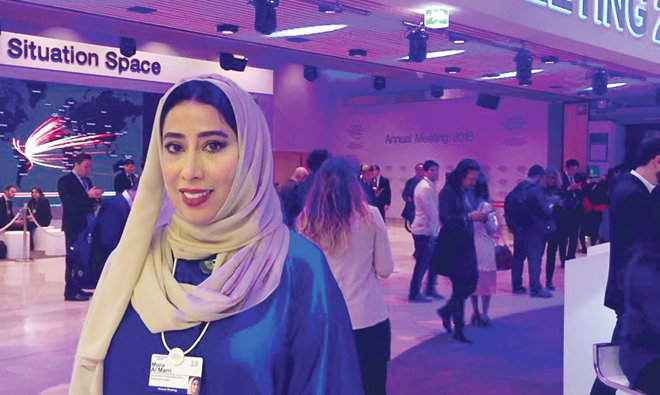
UAE’s Mona Al-Marri: Saudi women have a ‘great chance’ in light of the current transformation
UAE’s Mona Al-Marri: Saudi women have a ‘great chance’ in light of the current transformation

Latest updates


© 2026 SAUDI RESEARCH & PUBLISHING COMPANY, All Rights Reserved And subject to Terms of Use Agreement.