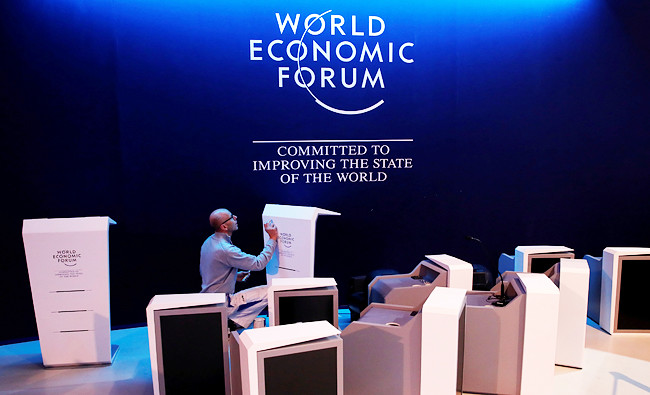
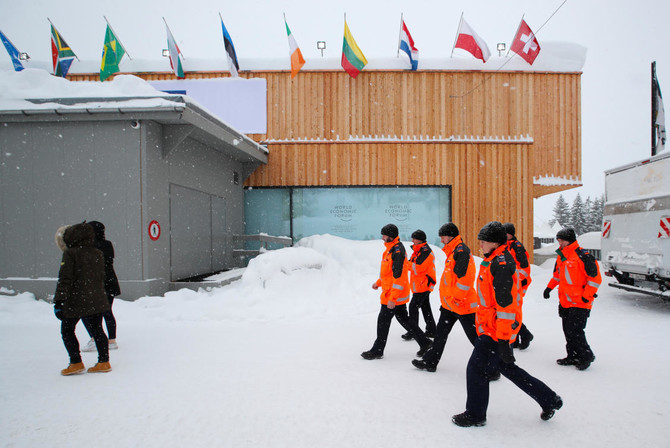
DUBAI: World leaders from business, politics, academia, the arts and media have begun the snowy journey up the Swiss Alps — by car, train or helicopter — to attend the 48th annual meeting of the World Economic Forum (WEF) in Davos.
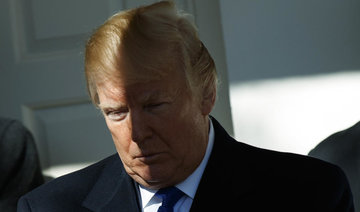
Amid what the WEF organizers called an “unprecedented participation by global leaders,” the meeting will welcome 70 heads of state, including US President Donald Trump, who surprised them with a late acceptance of an invitation he declined last year.
Trump will address the meeting on Friday, in virtually the last event before it ends.
About 2,500 people will attend the gathering, themed around the subject “creating a shared future in a fractured world,” to discuss major issues affecting world politics, economics, business and the environment.
“The meeting will focus on reinvigorating international collaboration as a way of solving shared challenges in an era increasingly defined by societies under strain and competition between nations,” the WEF said.
The issue of women’s’ greater participation in world and national politics and economics is a major item on the agenda, and the WEF has made a statement of its own by appointing an all-female board of co-chairs to oversee the proceedings.
Men still outnumber women in the official participation lists, however. Only 21 percent are female, but this is a higher level than ever before, WEF said.
There is a high level of involvement from the Middle East and North Africa. Mirek Dusek, the WEF’s director for the region, said: “We are really seeing engagement deepen from the economies and countries of the Middle East. There is an even stronger delegation this year from Saudi Arabia.”
The changes within the Kingdom last year under the Vision 2030 strategy to reduce oil dependence have prompted renewed interest in the country’s affairs. There are several high-ranking Saudi ministers at Davos, and it will feature on at least a dozen panels, discussion sessions and cultural events at the meeting.
Business will also be conducted in separate events outside the formal WEF structure, with Saudi Aramco, the national oil company expected to launch an initial public offering this year, taking part in many of them.
Among other Saudi organizations represented at Davos will be the ministries of commerce and investment, economy and planning, finance, foreign affairs, transportation, and communications. The Saudi banking authorities and Riyadh stock exchange are also listed among participants, as are sports and other investment organizations.
A big delegation is also expected from the UAE, traditionally a big participant in WEF, while eight other regional heads of state are expected to attend.
Dusek said the presence of Trump helped make the event “historic.” The last-minute acceptance by the American president — the first by a White House incumbent since 2000 — has created some stir at the Swiss town, 1,560m up in the Alps. Its normal population of about 11,000 rises dramatically each January, with armies of support staff looking after the delegates.
Security, provided by the Swiss police and army, will be tighter than ever because of the US presidential presence. Sources said some of Trump’s own large security entourage will have to be housed in Zurich, a two-hour car ride away, because the town itself is full.
Professor Klaus Schwab, the WEF’s founder and executive chairman, said: “Our world has become fractured by increasing competition between nations and deep divides within societies. Yet the sheer scale of the challenges our world faces makes concerted, collaborative and integrated action more essential than ever.
“Our annual meeting aims to overcome these fault lines by reasserting shared interests among nations and securing multi-stakeholder commitment to renewing social contracts through inclusive growth,” he added.
The world of celebrity will be represented by pop singer Elton John, Hollywood actress Cate Blanchett, and Indian actor and director Shah Rukh Khan. All have received WEF awards for their charitable and humanitarian work.


![]()
![]()
World leaders gather in Davos for ‘unprecedented’ economic forum
World leaders gather in Davos for ‘unprecedented’ economic forum

Latest updates


© 2026 SAUDI RESEARCH & PUBLISHING COMPANY, All Rights Reserved And subject to Terms of Use Agreement.