AMMAN: Family members of two Jordanians killed at the Israeli Embassy in Amman last year have welcomed the success of Jordan’s diplomatic efforts in extracting an apology and compensation from Israel.
Legal experts and political leaders also praised the government for not backing down over the shooting, which plunged relations between Jordan and Israel to their worst in years.
But among the warm words were acknowledgements that the current regional situation had played its part in Israel’s climb down, with the US keen to see two of its key allies improve relations.
In a letter to the Jordanian Foreign Ministry Israel also agreed to investigate the shooting, which took place in July. The letter offered a “deep apology and regret” from the Israeli government, government spokesman Mohammad Momani said on Thursday.
Anis F. Kassim, the editor of the Palestinian Yearbook of International Law, told Arab News that the letter had addressed “the three demands of Jordan.”
“Jordan had demanded that Israel seriously investigates the embassy guard, that Israel apologizes for the killing and that compensation be made to the victims,” Kassim, who said he had seen the details of the letter, said.
Israeli Prime Minister Benjamin Netanyahu confirmed Israel had “expressed regret” and had agreed to pay compensation to the government of Jordan.
Kassim said that it is normal in such international cases that the compensation is paid to the government representing its citizens and not directly to the families.
Khalil Attiyeh, deputy head of the Jordanian Parliament, told Arab News that the Israelis folded under pressure.
“The pressure from the King backed by the popular demands of our people forced the Zionists to accept the need to abide by international law and respect the wishes of the Jordanian people,” Attiyeh said.
“This is a victory for Jordan and for King Abdullah.”
Relatives also said they were pleased with the outcome.
The daughter of Dr. Bashar Hamarneh, a landlord of a house at the embassy compound who was killed in the shooting, thanked King Abdullah for securing the Israeli concession.
“We thank our Jordanian people for standing with us in this difficult case,” she told Al-Rai newspaper.
Other family victims appeared on Jordanian television with similar sentiments in their messages.
However, Muneer Hamarneh, another relative of the killed doctor and a left-wing political activist, said US President Donald Trump’s recognition last month of Jerusalem as the capital of Israel, had played a part in Israel’s apology. The decision outraged Palestinians, who want Jerusalem as the capital of their future state, and angered Arab countries, particularly Jordan, which has a huge Palestinian population and which oversees the city’s Al-Aqsa Mosque compound.
“Since the Jerusalem announcement by the US, there has been an attempt to rectify the situation by way of mending some of the problems it has caused, especially the growing chasm between Jordan and Israel over the embassy incident,” Hamarneh told Arab News.
In the letter, Israel expressed its desire to renew relations with Jordan and Momani said the Jordanian government will take the appropriate steps in “the higher interests” of Jordan.
The shooting at the embassy also killed Mohammad Jawwadeh, a furniture repairer who was working at the compound.
The men were killed in July when an Israeli security guard at opened fire at Jawwadeh.
Jordan allowed the security guard and the embassy staff to leave Jordan because of diplomatic immunity and has not allowed them to return until Israeli met its demands.
The Israeli security guard claimed that the furniture repairman tried to stab him with a screwdriver and that the house landlord was killed by accident.
Israel also said it would compensate the family of Raed Zuietar, a Jordanian judge killed at the King Hussein bridge in March 2014.


![]()
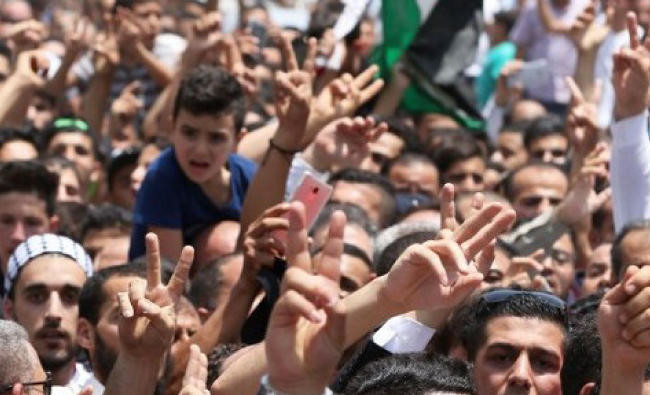
Jordanian families of embassy shooting victims welcome Israeli climbdown
Jordanian families of embassy shooting victims welcome Israeli climbdown



Latest updates


© 2026 SAUDI RESEARCH & PUBLISHING COMPANY, All Rights Reserved And subject to Terms of Use Agreement.