Nations at North Korea meeting commit to considering more sanctions

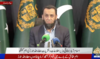
Minister of Foreign Affairs, Chrystia Freeland and Secretary of State of the United States, Rex Tillerson address a news conference following a meeting on the Security and Stability on the Korean Peninsula in Vancouver, British Columbia, on Tuesday. (AP)
Updated 17 January 2018
Follow

Nations at North Korea meeting commit to considering more sanctions

VANCOUVER: A 20-nation meeting on North Korea agreed on Tuesday to consider imposing unilateral sanctions on Pyongyang that go beyond those required by UN Security Council resolutions, the United States and Canada said in a joint statement.
The meeting, to discuss North Korea’s nuclear weapons program, also agreed to support dialogue between the two Koreas “in hopes that it leads to sustained easing of tensions,” the statement added.
The United States and Canada co-hosted the day-long meeting in Vancouver to discuss ways of forcing North Korea to give up its nuclear arms.
The statement said participants “agree to consider and take steps to impose unilateral sanctions and further diplomatic actions that go beyond those required by UN Security Council resolutions.” It gave no details.
North Korean leader Kim Jong Un has refused to give up development of nuclear missiles capable of hitting the United States in spite of increasingly severe UN sanctions, raising fears of a new war on the Korean peninsula.
The Vancouver meeting also committed to ensuring that sanctions already in place were fully implemented.
Earlier on Tuesday, US Secretary of State Rex Tillerson said all countries needed to work together to improve interdiction of ships attempting to skirt the sanctions and said there must be “new consequences” for North Korea “whenever new aggression occurs.”

North and South Korea held formal talks for the first time in two years this month and Pyongyang said it would send athletes to the Olympics.
South Korean Foreign Minister Kang Kyung-wha said in Vancouver she hoped the dialogue would continue well beyond the Olympics, but stressed that existing sanctions must be applied more rigorously.
“These two tools — tough sanctions and pressure on the one hand, and the offer of a different, brighter future on the other — (have) worked hand in hand,” she said.

Kremlin says Putin is mediating in Iran to normalize situation

Updated 16 January 2026
Follow

Kremlin says Putin is mediating in Iran to normalize situation

  • Putin had then been briefed by Pezeshkian in a separate call on what the Kremlin called Tehran’s “sustained efforts” to normalize the situation inside Iran

MOSCOW: President Vladimir Putin is mediating in the Iran situation to quickly de-escalate tensions, the Kremlin said on Friday, after the Russian leader spoke with Israeli Prime Minister Benjamin Netanyahu and Iranian President Masoud Pezeshkian.
Moscow has condemned US threats of new military strikes after Iran acted against protests that broke out late last month.
Putin in ‌his call with Netanyahu expressed Russia’s willingness to “continue its mediation efforts and to promote constructive dialogue with the participation of all interested states,” the Kremlin said, adding he had set out his ideas for boosting stability in the Middle East.
No further details were given on Putin’s mediation attempt.
Putin had then been briefed by Pezeshkian in a separate call on what the Kremlin called Tehran’s “sustained efforts” to normalize the situation inside Iran.
“It was noted that Russia and Iran unanimously and consistently support de-escalating 
the tensions — both surrounding  Iran and in the region as a whole — as soon as possible 
and resolving any emerging issues through exclusively political and diplomatic ‌means,” the Kremlin said.
Putin and Pezeshkian had confirmed their commitment to their countries’ strategic partnership and to implementing joint economic projects, the Kremlin added.
Separately, the Shanghai Cooperation Organization, which includes Russia, China, India, and Iran, among others, said it opposed external interference in Iran and blamed Western sanctions for creating conditions for unrest.
“Unilateral sanctions have had a significant negative impact on the economic stability of the state, led to a deterioration in people’s living conditions, and objectively limited the ability of the Government of the Islamic Republic ​of Iran to implement measures to ensure the country’s socio-economic development,” the SCO said in a statement.
Protests erupted on Dec. 28 over soaring inflation in Iran, whose economy has been crippled by sanctions.
Asked what support Russia could provide to Iran, Kremlin spokesman Dmitry Peskov said: “Russia is already providing assistance not only to Iran but also to the entire region, and to the cause of regional stability and peace. This is partly thanks to the president’s efforts to help de-escalate tensions.”
The US Treasury on Thursday announced new sanctions targeting Iranian officials, including Ali Larijani, secretary of Iran’s Supreme Council for National Security.