DUBAI: Bahrain released radar tracks on Tuesday it said showed Qatari fighter jets passing by Emirati commercial airliners on their way to the island nation, encounters which started a new dispute between the Gulf nations amid the diplomatic crisis gripping Doha.
The UAE will lodge a complaint against Qatar at the UN aviation agency. The UAE will accuse Qatar of violating the Chicago Convention, which governs the use of airspace, in a complaint to the International Civil Aviation Organization (ICAO), UAE General Civil Aviation Authority Director-General Saif Mohammed Al-Suwaidi told Reuters.
Al-Suwaidi said two Qatari warplanes twice flew dangerously close to the UAE airliners as they descended toward Bahrain International Airport in separate incidents on Monday, and could be seen by the pilots and passengers.
“It’s a very obvious violation,” he said by phone.
Al-Suwaidi said the UAE aircraft had been intercepted in airspace managed by Bahrain. He refused to say whether their flight paths had taken them across Qatar, the most common route from the UAE to Bahrain.
The UAE has banned Qatari aircraft from using its airspace as part of the restrictions imposed since June. Qatar has not reciprocated.
Al-Suwaidi said that Bahraini radar had determined the fighter jets originated and returned from Doha, and pilots of the UAE commercial planes had identified the aircraft as Mirage warplanes, which are used by several Arab air forces, including Qatar’s.
Al-Suwaidi said he was confident that ICAO could stop Qatar from repeating Monday’s incidents but that the UAE could consider to re-routing its flights as a precautionary step.
Changing flight paths can be costly for airlines if it means flying longer routes and subsequently using more fuel, often their biggest single operating expense.
Asked if the UAE would consider escorting civilian aircraft, Al-Suwaidi that the UAE could “use different tools to protect its airlines.” He did not elaborate.
The two alleged fly-bys on Monday morning could further escalate tensions between Qatar and the four Arab nations that have been boycotting it for months, among them the UAE, home to the world’s busiest international airport. They also could affect long-haul airline travel, as the region’s carriers are a crucial link between the East and West.
Emirati officials on Monday described the fly-bys as though the fighter jets “intercepted” their civilian aircraft. Qatari officials deny their jets intercepted the aircraft and on Tuesday dismissed the footage as “unauthenticated videos.”
The UAE’s allegations follow two complaints by Qatar to the UN about Emirati military aircraft allegedly violating its international airspace amid the diplomatic crisis. The UAE denies those allegations.
Anwar Gargash, the Emirati minister of state for foreign affairs, wrote Friday on Twitter that Qatar’s airspace complaints were “incorrect and confused.”
Bahrain state television aired radar footage the broadcaster described as showing Emirates flight No. EK837 from Dubai flying toward Bahrain International Airport at 10,400 feet. Two other radar signals the broadcaster described as Qatari fighter jets flew at around 8,500 feet in front of the Emirates flight. The radar screen briefly flashes orange text, likely a collision warning.
It was not clear from the footage at what distance the fighter jets allegedly passed the Emirates flight, but Bahrain previously described the distance as being 3.2 km (2 miles).
The broadcaster also aired footage of an aeronautical chart it said showed a Qatari fighter jet flying across the flight path of a just-passed Etihad airliner, both at 8,000 feet. It identified the flight as ETD23B, which corresponds to Flight No. EY371, a direct Abu Dhabi-Bahrain flight that took off Monday morning.
Both Dubai-based Emirates and Abu Dhabi-based Etihad have refused to comment. Both flights flew in international waters just north of the tip of Qatar before landing in nearby Bahrain.
The UAE’s state-run WAM news agency on Monday quoted Saif Al-Suwaidi, the director-general of its civil aviation division, as saying the crew and passengers onboard the flights saw the military aircraft.
It “constituted a clear and explicit threat to the lives of innocent civilians,” he said.
Reached on Tuesday, Qatar’s Government Communication Office dismissed the Bahrain state television report as part of a “smear campaign” against it by the UAE.
“This matter should be dealt with by filing a formal complaint to the UN Security Council, as Qatar has done following two breaches by UAE military aircraft of the state of Qatar’s airspace, and not by distributing unauthenticated videos to the media as how the blockading nations have done since the start of the crisis,” it said in a statement to The Associated Press.
At issue as well is language in the dispute. Intercepts normally refer to military jets flying alongside passenger planes and giving orders in emergencies. Military jets also do not necessarily file flight plans, as required by commercial airlines.
Qatar’s stock exchange dropped some 2.5 percent in trading Monday, one of its biggest jolts since the crisis began.
Bahrain, Egypt, Saudi Arabia and the UAE cut off Qatar’s land, sea and air routes on June 5 over its alleged support of extremists and close ties with Iran.
The crisis has hurt Qatar Airways, Doha’s long-haul carrier that competes with Emirates and Etihad.
Qatar had complained to the Montreal-based International Civil Aviation Organization about the boycotting nations cutting off its air routes, forcing the carrier to take longer flights through Iran and Turkey. Its regional feeder flights in Saudi Arabia and the UAE also have been cut off.


![]()
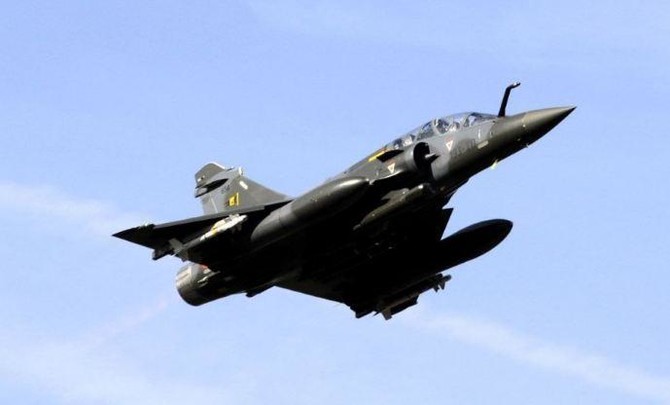
Bahrain: Radar tracks show Qatari jets flying by Emirati airliners
Bahrain: Radar tracks show Qatari jets flying by Emirati airliners

Latest updates


© 2026 SAUDI RESEARCH & PUBLISHING COMPANY, All Rights Reserved And subject to Terms of Use Agreement.