RIYADH: The Saudi Arabia-Japan Business Forum opened on Sunday at Riyadh’s Al-Faisaliah Center. The event brought together companies and government officials to pave the way for joint projects related to Saudi Vision 2030.
Ghada Abdulelah, a Jeddah-based employee of the Saudi Arabian General Investment Authority (SAGIA), surprised the audience with her fluency in the Japanese language. She gave an introductory presentation in Japanese. The participants of the event were pleased to see a young Saudi speak so eloquently in a language that is considered difficult to master.
Abdulelah learned Japanese on her own for a year then ventured to Japan and continued her studies in international relations. Describing learning languages as her passion, she told Arab News: “I adore the Japanese language and their immaculate way of life.”
Eilaf Assiry, from the Saudi Center for International Strategic Partnerships, is a young Saudi who is half Japanese. She was born and raised in Saudi Arabia but speaks Japanese like a native.
She received her master’s degree in Japan in international business. “I now work in strategic partnerships between Saudi Arabia and Japan and this has always been my dream. When I applied for the job, I was very specific that I wanted to be an enabler for the two countries. With the Vision 2030, I found this opportunity. I am lucky and privileged to be a part of this vision, serving as a bridge between the two countries.”
“In Japan, people are always surprised that I speak like a native; they never believe that my mother is Japanese,” said Assiry.
The ties between the two countries are not new. The establishment of the Japan Cooperation Center in the Middle East (JCCME) helped build a stronger partnership. Established in 1973, the principal mission of JCCME was to encourage the development of the industries and build robust bilateral relations.
Naoki Shimoda, general manager in the Saudi project division of Toho Titanium, remarked: “I’ve come to Saudi Arabia so many times that my passport is filled with Saudi stamps. We have a company based in Jeddah. We are working hard on implementing the Vision 2030.”
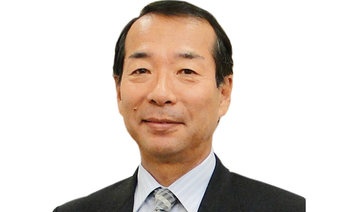
Yuji Satoh, the general manager of the JCCME office in Riyadh, has been living in the Kingdom for the past five years. When asked if he could speak Arabic, he replied: “Shwaya,” meaning “a little” in Arabic.
Commending the Vision 2030 and on how it has changed the perception of the traditional Saudi role, Satoh commented: “What we are experiencing is that we are now knowing more about Saudi Arabia.”


![]()
![]()

‘Japanized’ Saudis astonish business forum’s participants

‘Japanized’ Saudis astonish business forum’s participants


Latest updates




© 2026 SAUDI RESEARCH & PUBLISHING COMPANY, All Rights Reserved And subject to Terms of Use Agreement.