RIYADH: With the hike in fuel prices effective as of midnight Sunday, the Ministry of Commerce and Investment (MCI) intensified its control on fuel stations across the Kingdom to ensure availability of petroleum products at prices fixed by the government.
The regulatory authorities were constantly monitoring markets to ensure that prices were not manipulated and supplies not interrupted in view of the increase. After the hike, 91 octane will now sell for SR1.37 ($0.37) per liter, up from 75 halalas per liter, whereas 95 octane will now sell for SR2.04 per liter, up from 90 halalas per liter. Notably, the new prices also include the value-added tax (VAT), which is being levied from Monday.
Moreover, diesel rates for transport and kerosene rates were left unchanged as the Ministry of Energy, Industry and Mineral Resources explained on Monday its financial balance plan and the aim of reducing the rapid growth in domestic consumption of energy products and efficient energy use in line with Saudi Vision 2030, which seeks to diversify the economy and sources of revenue away from oil.
Speaking to Arab News on the government plan on efficient use of energy coinciding with an ambitious reform plan to diversify income, Hesham Alghannam, a Saudi analyst, Fulbright scholar and a consultant on Middle East and North Africa (MENA) and Gulf affairs, said: “I have been saying for a while now, it would not be difficult for the state to push for cultural and social change. However, the challenge remains in the implementation of economic reform, as the economy is always complicated.
“It is not something that you can predict easily. I think that trial and error is one way to do it. At least there is a serious will to change and reform for betterment.”
Alghannam also pointed that the Saudi private sector is not capable of being a part of the solution. There are a number of reasons for this: First, the Saudi “private” sector is not genuinely private, most of its activities are recycling the oil rent, and it is to this extent hard to conceive of it purely as a profit or job creator. Second, the needs of the private sector are poorly aligned with the internal job market. This is shown by the difficulties in recruiting sufficient numbers of Saudi youth to certain jobs. Ultimately, the private sector is driven by its balance sheet and its profit and loss account.
“I also agree that the corruption purge will put a lot of weight on Crown Prince Mohammed bin Salman’s shoulders, because people see him as a determined man in dealing with officials that have been corrupted into inaction,” Alghannam told Arab News.
He added: “We have to wait and see, but without a doubt, the anti-corruption campaign in Saudi brings hope to the people that did not exist in the past. Such change is a golden opportunity to illustrate what the Saudi Vision can bring to the people.”
Dr. Majed bin Abdullah Al-Hedayan, an analyst, FDI expert and a legal adviser, told Arab News: “The Ministry of Energy, Industry and Mineral Resources announced on Monday the hike in the price of gasoline and its derivatives in the Kingdom... They also require the consumer to re-arrange their daily life and save energy as much as possible.”
Saqib Hamza, a recruitment executive from Dammam, told Arab News: “Saudi Arabia is the country with the lowest fuel price in the world. This hike will help in optimum energy utility and help cut on excess expenditure.” The advent of public transport, work on which is in fast progress, will help cut on expenditure for daily transport needs, he added.


Hike in gasoline prices across KSA will help in govt plan for efficient energy use: Experts
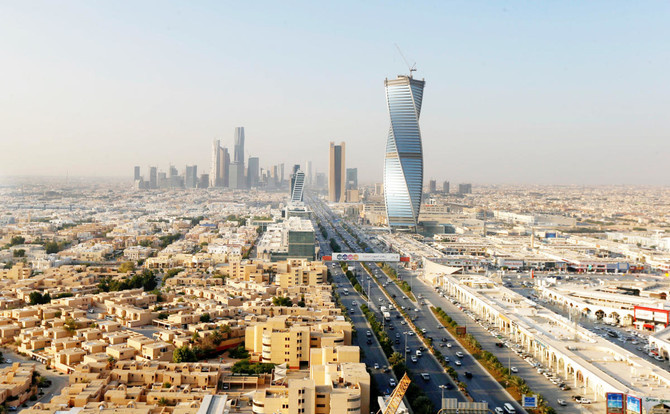
Hike in gasoline prices across KSA will help in govt plan for efficient energy use: Experts


Saudi Arabia’s Sharaan and Wadi Nakhlah nature reserves win Dark Sky recognition
- The two reserves in AlUla join more than 250 locations worldwide that are protected from light pollution
- AlUla Manara and AlGharameel Nature Reserve, also both in AlUla, received Dark Sky Park designations last year
ALULA: Two more nature reserves in Saudi Arabia’s AlUla have won recognition as Dark Sky Places, joining more than 250 locations worldwide that are protected from light pollution.
The official accreditation of Sharaan National Park and Wadi Nakhlah reserves from the DarkSky International builds on AlUla’s 2024 achievement, when AlUla Manara and AlGharameel Nature Reserve became the first sites in the Kingdom and the Gulf region to receive Dark Sky Park designations.
The latest recognition further strengthens AlUla’s position as a leading global destination for night sky protection and astronomical tourism, said the Royal Commission for AlUla (RCU) in a statement carried by the Saudi Press Agency (SPA).
Dark Sky International also announced the recognition in an earlier report, noting that the Sharaan and Wadi Nakhlah’s combined area of 6,146 square kilometers reflects the “expanded scope of environmental protection efforts aimed at preserving AlUla’s pristine night skies and reducing light pollution across a vast geographical area.”
DarkSky International works to reduce light pollution in both urban and rural areas and to raise global awareness of the importance of protecting the night sky.

AlUla’s protected areas are located in the heart of northwest Arabia, near the ancient oasis city of AlUla in Madinah Province.
“Towering sandstone cliffs, labyrinthine canyons, tranquil basins, and volcanic formations create a dramatic setting where geological diversity, cultural heritage, and thriving biodiversity converge beneath exceptionally dark, open skies,” Dark Sky said.
Scientists have noted that AlUla’s natural isolation from urban light sources, combined with ideal atmospheric conditions, makes it a world-class destination for stargazing, astronomy education, and immersive dark-sky experiences.
With the phased development of its reserves, AlUla is now ranked 3rd globally in the Dark Sky Park category, solidifying its status as one of the world’s premier destinations for astronomical discovery.
The RCU reaffirmed its commitment to protecting the natural environment, preserving the night sky, and promoting sustainable tourism, further positioning AlUla as a leading global destination for astronomy, scientific research, and advanced environmental experiences, in line with AlUla Vision and the Kingdom’s Vision 2030.


