SEOUL: South Korean authorities have seized a Panama-flagged vessel suspected of transferring oil products to North Korea in violation of international sanctions, a customs official said on Sunday.
The seizure was the second to be revealed by South Korea within a few days, as the UN steps up efforts to squeeze essential oil supplies to the reclusive North following its nuclear or ballistic missile tests.
The ship, KOTI, was seized at Pyeongtaek-Dangjin port, the official told Reuters, without elaborating, due to the sensitivity of the issue. The port is on the west coast, south of Incheon.
A marine official also confirmed the seizure, which he said was done “recently.”
The KOTI’s estimated time of arrival at the port was Dec. 19, according to VesselFinder Ltd., a tracking service provider,
The ship can carry 5,100 tons of oil and has a crew mostly from China and Myanmar, Yonhap News Agency reported, adding that South Korea’s intelligence and customs officials are conducting a joint probe into the vessel.
A Foreign Ministry spokesman confirmed the probe, declining to provide details.
“The government has been in close consultations with related countries and ministries to thoroughly implement the sanctions by the UN Security Council,” the spokesman said.
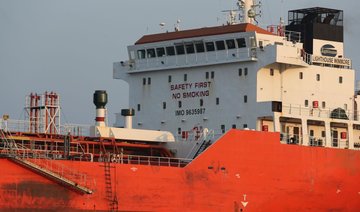
On Friday, South Korea said that in late November it seized the Hong Kong-flagged Lighthouse Winmore, which is suspected of transferring as much as 600 tons of oil to the North Korea-flagged Sam Jong 2.
The UN Security Council last month unanimously imposed new sanctions on North Korea for a recent intercontinental ballistic missile test, seeking to limit its access to refined petroleum products and crude oil.
The US has also proposed that the UN Security Council blacklist 10 ships for transporting banned items from North Korea, according to documents seen by Reuters on Tuesday.
The Lighthouse Winmore is one of the 10 ships proposed to be blacklisted. The KOTI does not seem to be included on the list.
On Thursday, China blocked a US effort at the UN to blacklist six foreign-flagged ships, a UN Security Council diplomat said.
China’s Foreign Ministry, responding to a question from Reuters on the blocking, said Beijing always fully and strictly implemented Security Council resolutions.
“At the same time, any measures taken by the Security Council must have a basis in conclusive and actual proof. China will continue to participate in the work of the relevant Security Council sanctions committee on this principle,” it said in a short statement, without elaborating.
China also denied reports it had been illicitly selling oil products to North Korea in defiance of UN sanctions, after US President Donald Trump said he was unhappy that China had allowed oil to reach the isolated nation.
Russian tankers have supplied fuel to North Korea on at least three occasions in recent months by transferring cargoes at sea, breaching UN sanctions, sources told Reuters.

South Korea seizes second ship suspected of providing oil to North Korea
Vietnam’s ruling Communist Party re-elects To Lam as general secretary
HANOI: Vietnam’s leader To Lam was re-elected Friday as the general secretary of its ruling Communist Party, securing a new five-year term in the country’s most powerful position and pledging to rev up economic growth in the export powerhouse.
Lam, 68, was reappointed unanimously by the party’s 180-member Central Committee at the conclusion of the National Party Congress, the country’s most important political conclave.
In a speech, he said he wanted to build a system grounded in “integrity, talent, courage, and competence,” with officials to be judged on merit rather than seniority or rhetoric.
No announcement was made about whether Lam will also become president. If he were to get both positions, he would be the country’s most powerful leader in decades, similar to Chinese leader Xi Jinping.
The Congress was framed by Vietnam’s defining national question: whether the country can transform itself into a high-income economy by 2045. During the meeting, Vietnam set a target of average annual GDP growth of 10 percent or more from 2026 to 2030.
The gathering brought together nearly 1,600 delegates to outline Vietnam’s political and economic direction through 2031. It also confirmed a slate of senior appointments, electing 19 members to the Politburo, the country’s top leadership body.
Beyond settling the question of who will lead Vietnam for the coming years, the Congress will also determine how the country’s single-party system responds to world grown increasingly turbulent as China and the United States wrangle over trade and Washington under President Donald Trump challenges a longstanding global order.
Vietnam’s transformation into a global manufacturing hub for electronics, textiles, and footwear has been striking. Poverty has declined and the middle class is growing quickly.
But challenges loom as the country tries to balance rapid growth with reforms, an aging population, climate risks, weak institutions and US pressure over its trade surplus. At the same time it must balance relations with major powers. Vietnam has overlapping territorial claims with China, its largest trading partner, in the South China Sea.
Lam has overseen Vietnam’s most ambitious bureaucratic and economic reforms since the late 1980s, when it liberalized its economy. Under his leadership, the government has cut tens of thousands of public-sector jobs, redrawn administrative boundaries to speed decision-making, and initiated dozens of major infrastructure projects.
Lam spent decades in the Ministry of Public Security before becoming its minister in 2016. He led an anti-corruption campaign championed by his predecessor, Nguyen Phu Trong. During his rise, Vietnam’s Politburo lost six of its 18 members during an anti-graft campaign, including two former presidents and Vietnam’s parliamentary head.
Lam, 68, was reappointed unanimously by the party’s 180-member Central Committee at the conclusion of the National Party Congress, the country’s most important political conclave.
In a speech, he said he wanted to build a system grounded in “integrity, talent, courage, and competence,” with officials to be judged on merit rather than seniority or rhetoric.
No announcement was made about whether Lam will also become president. If he were to get both positions, he would be the country’s most powerful leader in decades, similar to Chinese leader Xi Jinping.
The Congress was framed by Vietnam’s defining national question: whether the country can transform itself into a high-income economy by 2045. During the meeting, Vietnam set a target of average annual GDP growth of 10 percent or more from 2026 to 2030.
The gathering brought together nearly 1,600 delegates to outline Vietnam’s political and economic direction through 2031. It also confirmed a slate of senior appointments, electing 19 members to the Politburo, the country’s top leadership body.
Beyond settling the question of who will lead Vietnam for the coming years, the Congress will also determine how the country’s single-party system responds to world grown increasingly turbulent as China and the United States wrangle over trade and Washington under President Donald Trump challenges a longstanding global order.
Vietnam’s transformation into a global manufacturing hub for electronics, textiles, and footwear has been striking. Poverty has declined and the middle class is growing quickly.
But challenges loom as the country tries to balance rapid growth with reforms, an aging population, climate risks, weak institutions and US pressure over its trade surplus. At the same time it must balance relations with major powers. Vietnam has overlapping territorial claims with China, its largest trading partner, in the South China Sea.
Lam has overseen Vietnam’s most ambitious bureaucratic and economic reforms since the late 1980s, when it liberalized its economy. Under his leadership, the government has cut tens of thousands of public-sector jobs, redrawn administrative boundaries to speed decision-making, and initiated dozens of major infrastructure projects.
Lam spent decades in the Ministry of Public Security before becoming its minister in 2016. He led an anti-corruption campaign championed by his predecessor, Nguyen Phu Trong. During his rise, Vietnam’s Politburo lost six of its 18 members during an anti-graft campaign, including two former presidents and Vietnam’s parliamentary head.
© 2026 SAUDI RESEARCH & PUBLISHING COMPANY, All Rights Reserved And subject to Terms of Use Agreement.