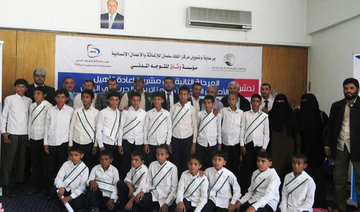
RIYADH: Forty children from Taiz in Yemen and Amman, Jordan, recruited by Houthi militias to become child soldiers, are undergoing rehabilitation as part of the second stage of the Child Soldiers Rehabilitation Project.
During the first stage of the program, the King Salman Humanitarian Aid and Relief Centre (KSRelief) also provided rehabilitative services to another 40 children, including those from Marib, Yemen, and Al-Jawf in Libya. “They will receive psychological, social, cultural and sports services and activities for a period of one month,” KSRelief said on its website.
The child soldiers, who were illegally recruited by Houthi militias to fight in the ongoing conflict, are being rehabilitated at the Community Rehabilitation Center in Marib.
The initiative, called Child Soldiers Rehabilitation Project, is described as “a qualitative program and a major achievement in the country’s crisis.”
KSRelief added that the children will also receive educational assistance to help them re-enter school and continue their disrupted studies.
It said relatives will also take part in programs to help children reintegrate into their respective families and communities.
Concerned families expressed their appreciation for KSRelief’s initiatives “to address the overall plight of the children who are used as pawns in armed conflicts.”
KSRelief added that various services had been given to more than 2,000 child soldiers in Yemen so that they could recover from their ordeals. Since 2015, KSRelief has spent more than $262 million on child development programs through 116 projects.
Earlier, Abdullah Al-Rwaily, KSRelief’s director of community support services, told Arab News that the center had organized rehabilitation for about 20,000 child soldiers in Yemen.
He said that there were four training centers where these children were being rehabilitated.
He also called for the participation of non-governmental organizations in the programs, warning that without such aid the situation could become similar to that in Afghanistan.


![]()

KSRelief launches 2nd phase of program to rehabilitate Yemen’s child soldiers
KSRelief launches 2nd phase of program to rehabilitate Yemen’s child soldiers
Latest updates




© 2026 SAUDI RESEARCH & PUBLISHING COMPANY, All Rights Reserved And subject to Terms of Use Agreement.