PARIS: More ships packed with aid have arrived in Yemen as Saudi Arabia and coalition forces draw up a humanitarian plan, the Kingdom’s ambassador to the war-torn country told Arab News.
The coalition closed air, land and sea access to Yemen earlier this month to stop the alleged flow of Iranian arms to Houthi militias, after a missile fired toward Riyadh was intercepted by Saudi forces. Iran has denied supplying arms to the Houthis.
The measures were eased over the weekend, with a ship carrying 5,500 tons of flour having docked in Yemen’s Hodeidah port in the Red Sea, and UNICEF having sent a plane with vaccines to Sanaa airport after the coalition granted clearance for UN flights.
Regional UNICEF director Geert Cappelaere earlier said that the delivery of vaccines “cannot be a one-off” and that more supplies are needed.
But Mohammed Al-Jabir, the Saudi ambassador to Yemen, confirmed that more aid was arriving as the allies work on a plan to boost the response to the humanitarian situation.
“More than three ships arrived to Hodeidah with different kinds of foods (on Saturday and Sunday), and also five flights to Sanaa airport from different UN organizations,” he told Arab News.
“Saudi Arabia and the coalition are preparing for the humanitarian operations plan, which will be announced maybe over the next few days.”
Al-Jabir was speaking on the sidelines of a conference in Paris on Yemen’s cultural heritage and humanitarian aid.
The event, held at the UN Educational, Scientific and Cultural Organization (UNESCO) headquarters, heard how Houthi militias are “destroying” Yemen’s cultural history.
“The Houthis are … a threat to the culture and heritage,” Al-Jabir said.
The ambassador said Houthi militias had transformed cultural sites into military facilities and engaged in the illegal trafficking of artefacts.
Col. Turki Al-Maliki, spokesman for the coalition forces, said the Houthis had taken advantage of the coalition’s policy not to target cultural and archaeological sites.
Mustafa Al-Jabri, of the Yemeni embassy in Paris, lamented the loss of historical artefacts in Yemen and said some people had turned “their houses into personal museums.”
“Terrorist groups keep stealing artefacts,” he said. “The Houthis are destroying the heritage of Yemen and they work with groups like Al-Qaeda, which has a long history of destroying cultural and archaeological sites.”
Abdul Aziz Sager, chairman of the Gulf Research Center, agreed that the Houthis are “looting” Yemini culture but said Saudi Arabia was working to preserve it.
“What Saudi Arabia has been trying to do is to save Yemen from that chaos … and to ensure that its culture remains intact.”
Yemen’s Ambassador to UNESCO Ahmed Sayyad said there was a “shared responsibility” to preserve the culture of the war-torn country. “Yemen is a cradle of Arab-world heritage,” he said.


![]()
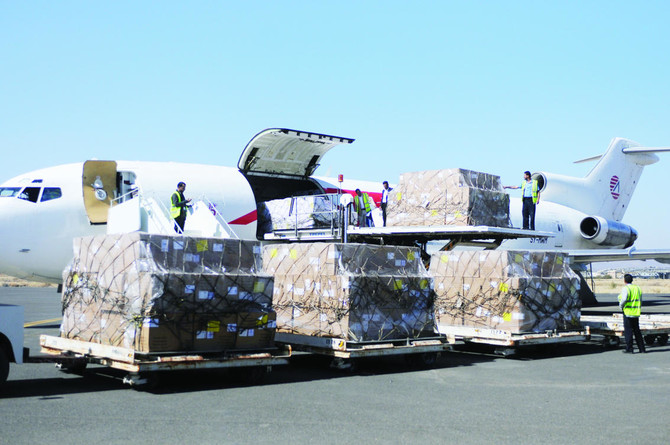
More aid flows into Yemen as coalition works on humanitarian plan
More aid flows into Yemen as coalition works on humanitarian plan
Latest updates


© 2026 SAUDI RESEARCH & PUBLISHING COMPANY, All Rights Reserved And subject to Terms of Use Agreement.