Saudi mortgage refinancing firm to court foreign investors

1 / 2
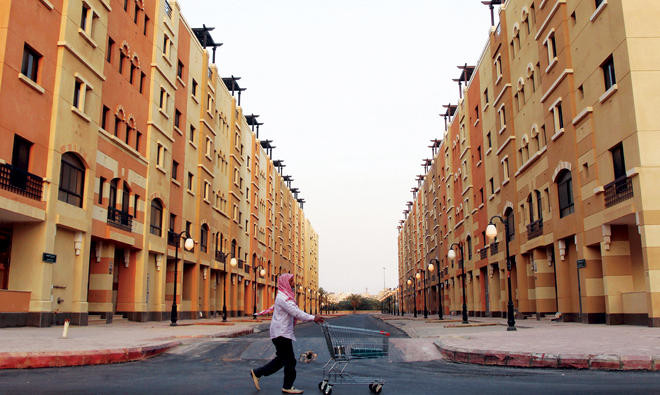
The Kingdom has announced plans to raise the rate of home ownership from 47 percent to 52 percent by 2020. (Reuters)
2 / 2
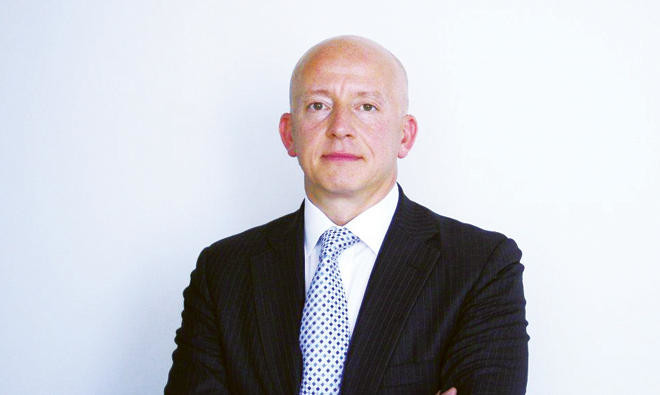
Fabrice Susini
Updated 04 December 2017
Follow

Saudi mortgage refinancing firm to court foreign investors

LONDON: Saudi Arabia’s first mortgage-refinancing firm will actively court international investors to increase liquidity in the Kingdom’s housing market, said the CEO of the initiative.
The newly established Saudi Real Estate Refinance Company, which seeks to free up liquidity in the Kingdom’s mortgage market to promote homeownership, has already embarked on “soft discussions” with investors interested in the new market opportunity, CEO Fabrice Susini told Arab News.
“It’s not good enough simply to focus on the country and domestic investors. We want to have foreign investors interested in coming and investing into these loans or portfolios,” said Susini, who was picked to lead the state-run company, which officially launched in October.
With $1.3 billion in initial capital, the SRC will use a range of tools — from buying mortgage portfolios to issuing mortgage-backed securities — to incentivize lenders to give more loans to Saudi homebuyers.
According to Saudi officials, the demand for real estate financing is set to top SR500 billion ($133 billion) by 2026.
But Saudi citizens, particularly young people, have been hit in recent years by the double blow of a Kingdom-wide housing shortage and risk-averse banks wary of lending.
The Kingdom has announced plans to raise the rate of home ownership from 47 percent to 52 percent by 2020. By comparison, the US and UK both have home ownership rates above 60 percent.
Establishing the SRC, which expects to refinance up to $20 billion over the next five years, is part of an effort to remedy the nation’s low mortgage penetration rate, Susini said.
The SRC, which works under the auspices of the Ministry of Housing, will initially court investors closer to home.
“Our strategy is to go gradually, starting with the region, (with) countries which are close and knowledgable about the Saudi environment and the Shariah compliance,” Susini said. “As we will create credentials and history on the portfolios themselves … we will go after investors which are further away from the Kingdom or the region,” he said.
Secondary mortgages, which drew global attention during the financial crisis of 2008, are new to Saudi Arabia. According to reports, the Kingdom’s financial leaders have been working with American consultants to launch the enterprise for several years.
But Susini stressed that easing the mortgage process for average Saudi citizens is the SRC’s primary objective. “The SRC is really (meant) make sure that more people get access to home ownership,” he said. “The rest … the way we organize … all this is done in the kitchen. You are at the restaurant; we want people to have a good dish, at an affordable price. What happens in the kitchen, let’s leave it in the kitchen,” he said.
Asked when the company would officially launch operations and put the existing capital to work, Susini was circumspect. “Soon,” was all he revealed.
In an economy where cash is king and people are accustomed to paying upfront, new market realities will require new financing tools. “We need to explain why a reasonable amount of debt is advisable and will help fund your objectives,” Susini said.
Susini, who worked as a fixed income specialist at BNP Paribas for two decades, said that the SRC would help unlock capital across the entire real estate ecosystem. With more home loans available to buyers, building developers may be more keen to launch projects, he posited.
Broadening the country’s real estate sector is part of Crown Prince Mohammed bin Salman’s effort to wean Saudi Arabia off oil dependency and create modern financial markets more open to outside investment.


Dubai Financial Market reports $288.6m profit for 2025 - up 159%

Updated 29 January 2026
Follow

Dubai Financial Market reports $288.6m profit for 2025 - up 159%

RIYADH: Dubai Financial Market reported net profit before tax of 1.06 billion dirhams ($288.6 million) in 2025, up 159 percent from a year earlier.

The improved performance was driven by sustained confidence in Dubai’s capital markets and a year of heightened trading activity, with momentum continuing through the fourth quarter.

The results coincided with the exchange marking 25 years since its establishment in 2000, highlighting its evolution into a more globally connected and institutionally active marketplace, according to a report by the Emirates News Agency. 

For the full year ending Dec. 31, total consolidated revenues rose to 1.28 billion dirhams, while earnings before interest, tax, depreciation and amortization reached 1.13 billion dirhams, translating into an EBITDA margin of 88 percent. 

The results come as Dubai pushes ahead with its D33 agenda to double the emirate’s economy by 2033 and deepen its position as a global financial hub. 

The UAE central bank has pointed to solid capital markets momentum and low sovereign risk indicators in 2025, underscoring the confidence backdrop for higher trading activity. 

Helal Al-Marri, chairman of DFM, said: “DFM’s performance in 2025 reflects the continued strength of Dubai’s capital markets and the confidence of global investors in the emirate’s economic vision.

“As we mark 25 years since the establishment of DFM, the exchange continues to play a central role within Dubai’s financial ecosystem, supporting transparency, liquidity, and long-term market development in line with the Dubai Economic Agenda D33.” 

Fourth-quarter net profit before tax increased to 124.4 million dirhams from 110.6 million dirhams in the same period of 2024, reflecting sustained trading momentum toward year-end. 

Market performance remained strong throughout the year, with the DFM General Index rising 17.2 percent and total market capitalization reaching 992 billion dirhams. 

Average daily traded value climbed to 692 million dirhams, while total traded value amounted to 174 billion dirhams, marking the highest liquidity levels in more than a decade. 

The average daily number of trades rose 31 percent year on year, driven by increased institutional and cross-border activity. 

Hamed Ali, CEO of DFM and Nasdaq Dubai, said: “In 2025, DFM continued to build on the progress of recent years, supported by steady trading activity, growing international participation, and ongoing enhancements to our market infrastructure.” 

He added: “Our focus throughout the year remained on improving market accessibility, supporting a broad range of investment activity, and ensuring the market continues to operate efficiently for both issuers and investors. As we mark 25 years of DFM, we remain committed to developing the market in line with Dubai’s long-term capital markets ambitions.”

Investor participation broadened further during the year, with 97,394 new participants joining the market, of which 84 percent were foreign. 

Foreign investors accounted for 51 percent of total trading value, while institutional investors represented 71 percent of trading activity. 

The total investor base reached 1.25 million, reinforcing DFM’s position as a destination for regional and international capital. 

Capital-raising activity also expanded DFM’s sectoral footprint. 

The exchange hosted Dubai Residential REIT, the region’s first publicly traded residential leasing real estate investment trust, which attracted subscriptions 26 times over and total demand of 56 billion dirhams.

It also saw the secondary public offering of Emirates Integrated Telecommunications Co., alongside the initial public offering of ALEC Holdings, the UAE’s largest construction-sector listing to date, which generated subscriptions of 30 billion dirhams, representing an oversubscription of 21 times. 

Innovation and market development remained a focus in 2025, with the launch of a centralized securities lending and borrowing framework and further enhancements to digital platforms, including AI-enabled features on iVestor. 

DFM also strengthened its international engagement through global roadshows and partnerships, including a memorandum of understanding with the Taiwan Stock Exchange aimed at supporting cross-border listings and investor outreach. 

Looking ahead, the exchange said it remains focused on enhancing liquidity, expanding product offerings, and deepening global connectivity, supported by a strong financial position and a diversified investor base.