JEDDAH: On Oct. 17, a US-backed alliance of Syrian fighters took full control of Raqqa, the de-facto capital of Daesh’s self-styled caliphate in parts of Syria and Iraq, following a four-month assault.
The Syrian Democratic Forces (SDF) captured Raqqa with the help of the US-led coalition airstrikes, and — with US Defense Secretary James Mattis describing the fight against Daesh as a war of “annihilation,” the assumption was Daesh soldiers would not be allowed to leave Raqqa alive.
“Our intention is that the foreign fighters do not survive the fight to return home to North Africa, to Europe, to America, to Asia, to Africa. We are not going to allow them to do so,” Mattis said on US television back in May.
However, a BBC report, “Raqqa’s Dirty Secret,” reveals that hundreds of battle-hardened foreign militants and their families were allowed to leave Raqqa under an evacuation deal.
“We took around 4,000 people including women and children — our vehicles and their vehicles combined,” the report quotes a lorry driver as saying. “When we entered Raqqa, we thought there were 200 people to collect. In my vehicle alone, I took 112 people.”
According to the BBC report, the convoy included 10 truckloads of weapons and ammunition.
“We didn’t want anyone to leave,” Col. Ryan Dillon, spokesman for Operation Inherent Resolve, the Western coalition against Daesh, told the BBC. “But this goes to the heart of our strategy, ‘by, with and through’ local leaders on the ground. It comes down to Syrians — they are the ones fighting and dying, they get to make the decisions regarding operations.”
Along the route, many people told the BBC’s reporters they heard coalition aircraft, sometimes drones, following the convoy.
According to the report, due to the collapse of the so-called Daesh caliphate, smugglers are having a field day.
“In the past couple of weeks, we’ve had lots of families leaving Raqqa and wanting to leave for Turkey,” a smuggler operating on the Syria-Turkey border, told the BBC. “This week alone, I personally oversaw the smuggling of 20 families. Most were foreign but there were Syrians as well.”
He said he now charges $600 (£460) per person and a minimum of $1,500 for a family.
As Turkey has increased border security, the work has become more difficult, another smuggler explained: “In some areas we’re using ladders, in others, we cross through a river, in other areas we’re using a steep mountainous trail. It’s a miserable situation.”
An alternative route for those fleeing Raqqa is to go west to Idlib, which the report describes as “a haven” for “countless” Daesh fighters and their families. Foreigners including Britons, other Europeans and Central Asians have made it out, the report claims. The costs range from $4,000 (£3,000) per fighter to $20,000 for a large family.
According to a French member of Daesh interviewed by the BBC, a group of French Daesh fighters have escaped Raqaa and headed to France, where they intend to carry out terror attacks “in what would be called ‘a day of reckoning.’”


![]()
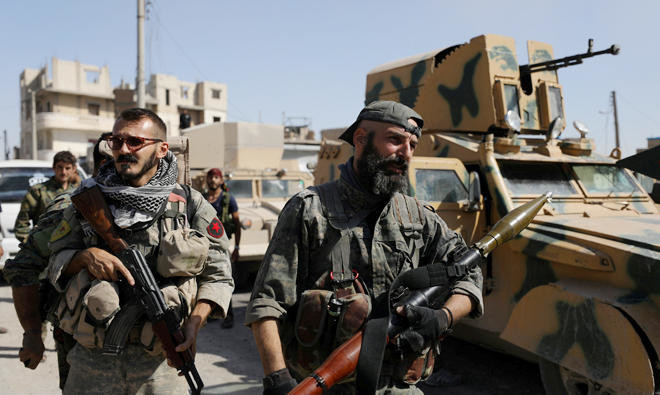
Hundreds of foreign Daesh fighters allowed to leave Raqqa: BBC
Hundreds of foreign Daesh fighters allowed to leave Raqqa: BBC

Latest updates


© 2026 SAUDI RESEARCH & PUBLISHING COMPANY, All Rights Reserved And subject to Terms of Use Agreement.