BRUSSELS: After months of lobbying NATO allies to increase their troop contributions and support to the war in Afghanistan, the alliance came up short Thursday, meeting a bit more than 90 percent of the military requirements mapped out by commanders, according to NATO officials.
US military leaders, however, said they have been encouraged by the continuing discussions with several nations, who may eventually agree to increase their commitments.
"Coming out of today, it won't be at 100 percent today," said US Army Gen. Curtis Scaparrotti, NATO's top military officer. "We're still in discussion with more than a few nations that are looking at an increase above the initial one given at the force generation conference. So, I'm encouraged."
The gap, said Gen. John Nicholson, top US commander for Afghanistan, has contributed to the lowest level of capabilities and the "highest level of risk we faced" in the 16-year war.
Nicholson and Scaparrotti declined to provide details on the numbers, but other NATO officials confirmed that coming out of the meeting Thursday there would be a shortfall approaching 10 percent. The officials were not authorized to discuss the numbers publicly so spoke on condition of anonymity.
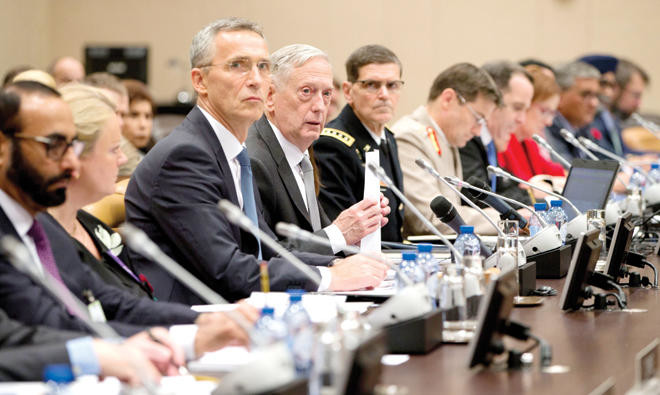
NATO defense ministers are meeting here to provide their countries' latest decisions on troop contributions, under pressure from US and NATO leaders to beef up their commitments. Defense Secretary Jim Mattis sent letters to some allies in recent weeks urging them to fill critical gaps.
The additional trainers are critical to reaching the stated U.S. and NATO goal of building up the Afghan forces so that they can take control of their own country's security. At the same time, officials want to use the increased military pressure to force Taliban leaders to the peace table.
Scaparrotti told reporters that, at the end of the day, there will still be a need for additional trainers and advisers, particularly at schools for Afghan forces.
"This is a complex world and there's a lot of demand on the military, and so all these nations have to make hard choices between Afghanistan, internal responsibilities and other missions," Scaparrotti told reporters traveling with Mattis. "We also have budget constraints that each of the nations are dealing with. It's just a fact of life today."
Nicholson told reporters that that he needs close to 16,000 troops to fill the NATO training mission in Afghanistan. That number does not include other support missions or counterterrorism operations against the Taliban, Islamic State militants and other insurgents.
Nicholson said he is most concerned about getting enough trainers and advisers for the Afghan commandoes, the Air Force and the schools where the military and local police are trained. In addition, he said he has asked for more forces to provide security for the troops.
NATO officials said Thursday that they met their goal of 16,000 troops for Afghanistan. That success, however, is due in part to the increase in US troop levels. Still, NATO and US officials lauded those nations that came through with additional forces.
"Over two dozen nations have stated that they intend to raise the troop numbers that they have on the ground there now, including some very small nations for whom this is the largest overseas deployment they have been engaged in," Mattis said during a news conference at the close of the NATO meeting. "We appreciate their commitment to stabilizing the South Asia region."
Nicholson said his aim is to get enough NATO and partner troops doing the broader training so that American forces can do other key military missions.
"My plan is to have US forces focused on the things that only Us forces can do, so I would not like to have to divert US forces to do things that allies could perform," he said. "We have made it very clear to the allies that we really need their help in filling these billets that we've identified."
President Donald Trump in August outlined the new US approach to the stalemated war, including in US troops to train, advise and accompany local forces at the brigade level -- which the Afhgans call Kandaks. That puts U.S. forces closer to the fight, but enables them to better direct the smaller units in combat and provide additional airstrike and support capabilities.


![]()
NATO boosts support to Afghanistan war, falls short of goal
NATO boosts support to Afghanistan war, falls short of goal

Latest updates


© 2026 SAUDI RESEARCH & PUBLISHING COMPANY, All Rights Reserved And subject to Terms of Use Agreement.