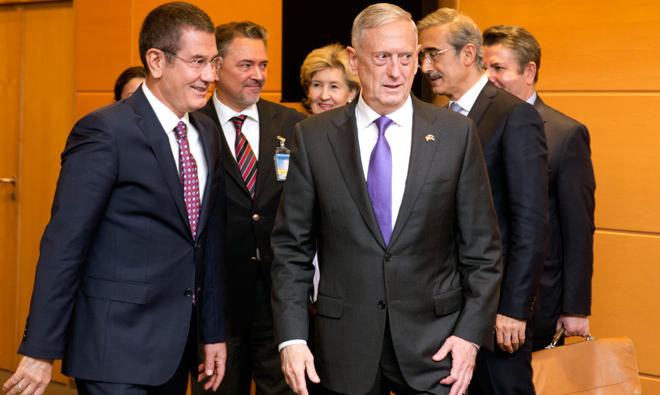
BRUSSELS: With Daesh crumbling in Iraq and Syria, Afghanistan mired in crisis and Russia looming large, US Defense Secretary Jim Mattis has plenty of pressing issues to tackle with NATO allies this week.
The Pentagon chief arrived at the alliance’s Brussels headquarters Wednesday for two days of talks with fellow NATO defense ministers and a separate meeting with partners from the coalition fighting Daesh in the Middle East, where the militants continue to lose territory.
The North Korean nuclear crisis and efforts to revamp NATO to help it better combat the rising threat from Russia will also be high on the agenda.
As he flew to Europe, Mattis told reporters that coalition partners are looking to the US for a clear plan about what follows the physical defeat of Daesh.
“Maybe three-quarters of the questions I am getting asked now is (about) going forward. It’s not about are we going to be able to stop ISIS (Daesh), are we going to be able to overcome ISIS. They are now saying: ‘What’s next? How is it looking?’” Mattis said.
Following back-to-back losses, including of their Syrian and Iraqi strongholds of Raqqa and Mosul, Daesh are down to defending their last holdouts along the Euphrates River valley.
America’s military involvement in Syria has until now been focused solely on fighting Daesh, but with the militants on the ropes, Washington must articulate its longer-term interests and what role, if any, US forces will play in Syria.
Mattis supports a UN-backed effort in Geneva, which has run in parallel to a Russian and Iranian-led process, to reach a diplomatic solution.
America has armed and trained Kurdish and Syrian Arab fighters who are battling Daesh on the ground, but the weapons provided to the Kurdish YPG are a source of huge angst for NATO ally Turkey, which views the group as terrorists.
Mattis declined to say whether the US would be asking for those weapons back, though Washington has previously said it keeps tabs on the equipment. Mattis will meet his Turkish counterpart at NATO to discuss ongoing concerns.
NATO has been in Afghanistan since the US-led invasion in late 2001 to dislodge the Taliban in the wake of the Sept. 11 attacks.
Despite a 16-year war and hundreds of billions of dollars in investment in Afghan institutions and security forces, the country remains beset by corruption and an ongoing security crisis that is killing thousands of local soldiers and civilians each year.
NATO will boost its training mission to the local troops from around 13,000 troops to around 16,000, Secretary General Jens Stoltenberg said Tuesday.
According to diplomatic sources, the US would contribute around 2,800 troops, while other NATO allies and partner countries would supply around 700 more.
On North Korea, Mattis said he has received calls from EU leaders concerned about the recent escalation in tensions, following Pyongyang’s sixth nuclear test — and its most powerful to date.
He arrives in Brussels from Helsinki, where he attended a forum called the Northern Group, a little-known meeting of northern European nations focusing on the continent’s military and security challenges, particularly from Russia.
Moscow frequently sends warplanes into the skies around the Baltics and Europe remains anxious about Russia’s military intentions, especially after the 2014 annexation of Crimea from Ukraine.
Mattis’s initial visits to Europe and NATO were overshadowed by doubts among allies, nervous about President Donald Trump’s campaign statements that he thought NATO was “obsolete.”


![]()
Mattis heads to NATO for key talks on ME, Afghan crisis
Mattis heads to NATO for key talks on ME, Afghan crisis


Latest updates


Recommended


© 2026 SAUDI RESEARCH & PUBLISHING COMPANY, All Rights Reserved And subject to Terms of Use Agreement.