BEIRUT: There was a flurry of diplomatic talks and phone calls on Wednesday as Lebanon strove to deal with the crisis caused by the sudden resignation of Prime Minister Saad Al-Hariri.
Al-Hariri, who is in Riyadh, stood down on Saturday because of Iranian influence in Lebanon, and said he feared for his life. On Wednesday he discussed the crisis by phone with Palestinian President Mahmoud Abbas.
Nabih Berri, the Lebanese parliamentary speaker, insisted that government business would continue. “The government still stands and Hariri’s resignation … will not change the government’s capacities.”
Fouad Siniora, former prime minister and head of the Future Movement parliamentary bloc, discussed the issue by phone with the Arab League Secretary-General Ahmed Aboul Gheit. Siniora also held talks with foreign diplomats in Lebanon, including German Ambassador Martin Hugh, Egyptian Ambassador Nazih Al-Najjari, UAE Ambassador Hamad Al-Shamsi and Turkish Ambassador Cagatay Erciyes.
British Ambassador Hugo Shorter visited the Progressive Socialist Party leader Walid Jumblatt to discuss the crisis.
Meanwhile, the US, France and the EU called for a calm resolution to the government crisis and pledged their support for the stability of Lebanon’s political institutions.
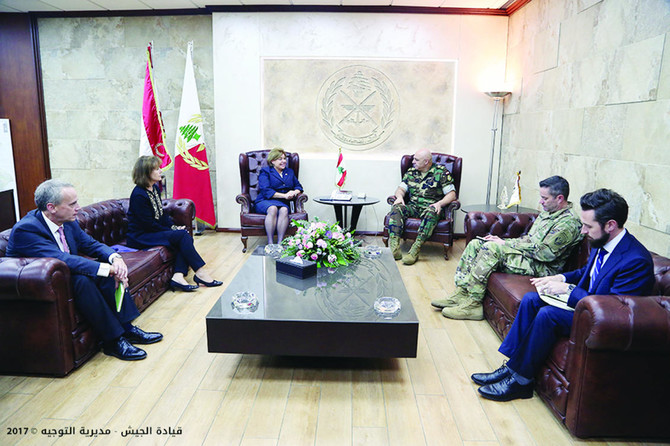
“The US is still committed to a stable, safe, democratic and prosperous Lebanon,” said US Ambassador to Lebanon Elizabeth Richard.
Lebanon was a strong US partner, the State Department said on Tuesday. “The United States strongly supports the legitimate institutions in the Lebanese state,” spokeswoman Heather Nauert said. “We expect all members of the international community to fully respect those institutions and the sovereignty and political independence of Lebanon.”
France’s Foreign Affairs Ministry spokesperson Agnes Romatet-Espagne said: “France stands with Lebanon and reaffirms its strong commitment to the country’s unity, sovereignty and stability. It believes that the smooth functioning of institutions is an important condition. This is the message France is sending to all the Lebanese parties and the international community.”
The ambassadors of the EU to Lebanon pledged their “strong support for the unity, stability, sovereignty, security and people of Lebanon.”
The EU mission to Lebanon called on “all parties to pursue an instructive dialogue and rely on the work done during the past 11 months to strengthen Lebanese institutions and prepare for parliamentary elections in 2018.”
The ambassadors pledged their “continued commitment to stand by Lebanon and help it within the framework of a strong partnership that ensures its stability and sustained economic recovery.”
Saroj Kumar Jha, World Bank Group’s senior director for the Fragility, Conflict and Violence Group, said the crisis would not affect the organization’s support for Lebanon.
“The Bank’s partnership with Lebanon is on a long-term basis and it is committed to working with its government,” he said. “The World Bank has a wide program to support the Lebanese government to focus on the economic development agenda.”


![]()
Diplomacy in overdrive to resolve Lebanon’s crisis
Diplomacy in overdrive to resolve Lebanon’s crisis

Latest updates


© 2026 SAUDI RESEARCH & PUBLISHING COMPANY, All Rights Reserved And subject to Terms of Use Agreement.