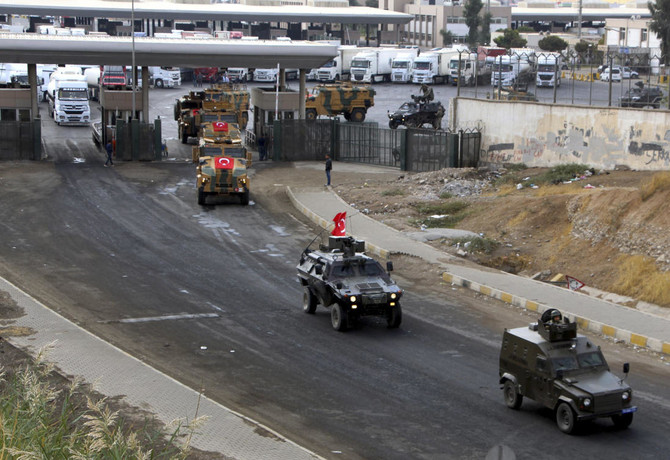
ANKARA: Clashes between Turkish security force members and Kurdish militants in three mainly Kurdish provinces in southeastern Turkey on Thursday killed eight security force members and 31 militants, officials said.
A skirmish erupted near the town of Semdinli, in the province of Hakkari that borders Iraq, after the security forces spotted a group of rebels who were allegedly preparing to launch an attack, the military said.
Six soldiers and two government-paid village guards aiding troops in the fight against the rebels were killed in the fighting.
An Interior Ministry statement said 19 rebels were killed in the clash as well as a wider, air power-backed operation launched to catch the militants.
Separately, nine rebels were killed in a clash in the province of Tunceli, while three others were killed in Sirnak province, the ministry said.
The rebels of the Kurdistan Workers’ Party, or PKK, have waged a three-decade-long insurgency in southeastern Turkey. The conflict has killed tens of thousands of people. The group is considered a terror organization by Turkey, the US and the EU.
Violence flared again in 2015 after the collapse of a two-year peace process.
In a speech in Ankara, President Recep Tayyip Erdogan vowed to press ahead with operations against the PKK.
“We will continue our struggle against them, until these terrorists are annihilated and are gone,” Erdogan said.
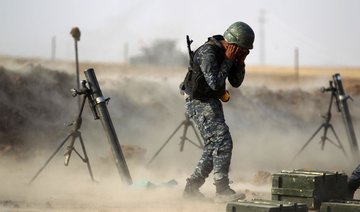
The military said several rocket launchers, ammunition, hand grenades and an automatic rifle used by the rebels were seized during the operation near Semdinli.

Turkey: 39 killed in clashes between troops, Kurdish rebels
Former Iraq PM Maliki rejects US interference after threat
- His comments come after Trump threatened to end support to the country if Al-Maliki returns as PM
BAGHDAD: Iraq’s main candidate for the premiership, Nouri Al-Maliki, on Wednesday denounced Washington’s “blatant interference,” after President Donald Trump threatened to end all support to the country if Al-Maliki took the post.
The US has held significant sway over Iraqi politics since leading the 2003 invasion that ousted long-time ruler Saddam Hussein.
“We categorically reject the blatant American interference in Iraq’s internal affairs,” said Maliki, the only former Iraqi prime minister to have served two terms since the invasion.
“We consider it a violation” of Iraq’s “democratic system,” in place since 2003, he added on X.
Maliki fell out with Washington during his premiership (2006-2014) over growing ties with Iran and accusations that he pushed a sectarian agenda.
But the 75-year-old shrewd politician remained a central figure in Iraq’s politics and a powerbroker whose approval is considered indispensable to any governing coalition.
On Tuesday, Trump said that Iraq would make a “very bad choice” if Al-Maliki were selected for the top post.
He warned that because of Maliki’s “insane policies and ideologies, if elected, the United States of America will no longer help Iraq.”
Maliki was endorsed as Iraq’s next prime minister by the Coordination Framework, an alliance of Shiite groups with varying links to Iran that has emerged in recent years as the main ruling coalition.
‘Until the end’
Since the invasion, Iraq has long been a proxy battleground between the US and Iran, with successive governments negotiating a delicate balance between the two foes.
But Iraq’s new prime minister is set to return to power at a time of seismic changes in the Middle East, as Tehran’s regional influence wanes and as Washington threatens possible military intervention in Iran.
In his post on Wednesday, Al-Maliki said the US involvement “infringes upon the Coordination Framework’s decision to nominate” its candidate.
He added that, in line with that decision, he “will continue to work until the end, in a way that achieves the higher interests of the Iraqi people.”
Several Iraqi political sources told AFP that the coalition is set to meet soon to discuss Trump’s ultimatum.
“Efforts are underway to hold a meeting amid a complicated situation,” a source close to the Framework said.
He added that there were internal divisions within the coalition over supporting Maliki, but that a majority vote ultimately settled the issue.
Maliki’s backers are now pushing to maintain his candidacy and “not back down,” he added.
US representatives in Iraq have been lobbying against Maliki, according to Iraqi sources and diplomats in Baghdad.
Trump’s statement came days after Secretary of State Marco Rubio voiced similar concerns in a telephone call with outgoing Prime Minister Mohammed Shia Al-Sudani.
The US had also sent a letter to Iraqi politicians saying that Washington views Al-Maliki negatively, political sources told AFP.
Iraq’s new premier will be expected to address Washington’s longstanding demand that Baghdad disarm Tehran-backed factions, many of which are designated terrorist groups by the United States.
Last month, Iraqi officials and diplomats told AFP that Washington demanded that the incoming government exclude Iran-backed armed groups.
Before Trump’s call, an Iraqi political source said that the Coordination Framework was set on moving forward with the nomination, believing that Al-Maliki could eventually allay Washington’s concerns.
Maliki “thinks differently today,” an Iraqi politician told AFP.
After decades of conflicts and chaos, Iraq has recently regained a sense of stability.
But it is struggling with weak economic growth and cannot risk punitive measures by the US, which has already sanctioned several Iraqi entities, accusing them of helping Tehran evade sanctions.
The US has held significant sway over Iraqi politics since leading the 2003 invasion that ousted long-time ruler Saddam Hussein.
“We categorically reject the blatant American interference in Iraq’s internal affairs,” said Maliki, the only former Iraqi prime minister to have served two terms since the invasion.
“We consider it a violation” of Iraq’s “democratic system,” in place since 2003, he added on X.
Maliki fell out with Washington during his premiership (2006-2014) over growing ties with Iran and accusations that he pushed a sectarian agenda.
But the 75-year-old shrewd politician remained a central figure in Iraq’s politics and a powerbroker whose approval is considered indispensable to any governing coalition.
On Tuesday, Trump said that Iraq would make a “very bad choice” if Al-Maliki were selected for the top post.
He warned that because of Maliki’s “insane policies and ideologies, if elected, the United States of America will no longer help Iraq.”
Maliki was endorsed as Iraq’s next prime minister by the Coordination Framework, an alliance of Shiite groups with varying links to Iran that has emerged in recent years as the main ruling coalition.
‘Until the end’
Since the invasion, Iraq has long been a proxy battleground between the US and Iran, with successive governments negotiating a delicate balance between the two foes.
But Iraq’s new prime minister is set to return to power at a time of seismic changes in the Middle East, as Tehran’s regional influence wanes and as Washington threatens possible military intervention in Iran.
In his post on Wednesday, Al-Maliki said the US involvement “infringes upon the Coordination Framework’s decision to nominate” its candidate.
He added that, in line with that decision, he “will continue to work until the end, in a way that achieves the higher interests of the Iraqi people.”
Several Iraqi political sources told AFP that the coalition is set to meet soon to discuss Trump’s ultimatum.
“Efforts are underway to hold a meeting amid a complicated situation,” a source close to the Framework said.
He added that there were internal divisions within the coalition over supporting Maliki, but that a majority vote ultimately settled the issue.
Maliki’s backers are now pushing to maintain his candidacy and “not back down,” he added.
US representatives in Iraq have been lobbying against Maliki, according to Iraqi sources and diplomats in Baghdad.
Trump’s statement came days after Secretary of State Marco Rubio voiced similar concerns in a telephone call with outgoing Prime Minister Mohammed Shia Al-Sudani.
The US had also sent a letter to Iraqi politicians saying that Washington views Al-Maliki negatively, political sources told AFP.
Iraq’s new premier will be expected to address Washington’s longstanding demand that Baghdad disarm Tehran-backed factions, many of which are designated terrorist groups by the United States.
Last month, Iraqi officials and diplomats told AFP that Washington demanded that the incoming government exclude Iran-backed armed groups.
Before Trump’s call, an Iraqi political source said that the Coordination Framework was set on moving forward with the nomination, believing that Al-Maliki could eventually allay Washington’s concerns.
Maliki “thinks differently today,” an Iraqi politician told AFP.
After decades of conflicts and chaos, Iraq has recently regained a sense of stability.
But it is struggling with weak economic growth and cannot risk punitive measures by the US, which has already sanctioned several Iraqi entities, accusing them of helping Tehran evade sanctions.
© 2026 SAUDI RESEARCH & PUBLISHING COMPANY, All Rights Reserved And subject to Terms of Use Agreement.