MANILA: After conquering Mount Everest, Philippine adventurer Carina Dayondon is set to sail to China aboard a wooden replica of an ancient boat in the hopes of boosting national pride in a forgotten maritime prowess.
Dayondon is planning to sail from Manila to southern China early next year, recreating trade and migration voyages made before Spaniards colonized the Philippines in the 1500s.
“People tell me I am crazy. They ask: ‘Wow, why climb Mount Everest? Why go to China on this tiny thing,’” Dayondon said in Manila Bay aboard one of the two boats that will make the expected six-day sailing journey.
“I’m excited because our team will be more inspired realizing how good our forefathers were. We have to let people know we should be proud of being Filipino,” the 39-year-old added.
Dayondon, a petite but muscular coast guard officer, created history in 2007 when she and two other countrywomen became the first Filipinos to summit the world’s highest mountain.
Arturo Valdez, who led their Everest support team, is also heading the sailing mission and similarly sees the journey to China as a chance to inspire Filipinos.
“Like Mount Everest, I want this to be symbolic of what our people can accomplish, of what can be possible out of the so-called impossible,” the 69-year-old said.
The vessels are a copy of a “balangay,” which date back as far as 320 AD.
“Early trade with China and Southeast Asia was made possible by watercraft,” Ligaya Lacsina, researcher at the National Museum’s maritime division, said.
“Europeans during the colonial period were effusive in their praise of Southeast Asian boat-building skill. But somehow we’ve paid very little attention to this.”
Tribal boat-builders from the southern Philippines, where the boats originated, have made the replicas of the balangay using skills passed on down the generations.
The boats, 18 meters (60 feet) long by three meters (10 feet) wide, are made of hardwood planks, include two sails, two rudders and a roofed area.
Their journey to the southeastern Chinese city of Quanzhou will be about 1,000 kilometers (600 miles), and the crewmembers are aiming to do it with as little modern technical help as possible.
“We have no night-sailing capability so we can be run over by a super tanker. That’s my fear. The greatest difficulty of replicating an ancient voyage is modernity because there are new port protocols,” Valdez said.
“This kind of boat is being treated as a maritime hazard.”
Daily life aboard the boat is a struggle, according to Dayondon.
“We sleep anywhere because we don’t have quarters. We have no toilet. We just hold the rope and use a harness and do the proper position so we don’t fall,” she said.
Nevertheless, a third boat with a motor will accompany the balangays otherwise they will not be allowed into Chinese ports.
Their trip is planned to commemorate a journey made about 600 years ago by a sultan from the southern island of Sulu who went to China to pay tribute to Ming Dynasty rulers there but who but died of an illness on his way home.
The voyage to China will be the team’s second maritime quest following a 17-month journey that began in 2009 around Southeast Asia.
One of the group’s biggest challenges is off the water — finding enough money to fund the adventure.
The team members plan to open the vessels to the public for educational tours and even wedding shoots to raise money for their upkeep in Manila Bay.
Valdez, who also shepherded the first Philippine men up Mount Everest in 2006, said he hoped the government would financially back such feats but they had not.
“Filipinos love us when we climb Mount Everest, love us with our exploits but they are not willing to pay for that. And that makes us a poorer nation,” he said.
“Blazing a trail and going beyond what is normal, that is the spirit of a nation. That is how you build a nation, out of a dream.”


After conquering Everest, Philippine adventurer sets sail for China on an ancient boat
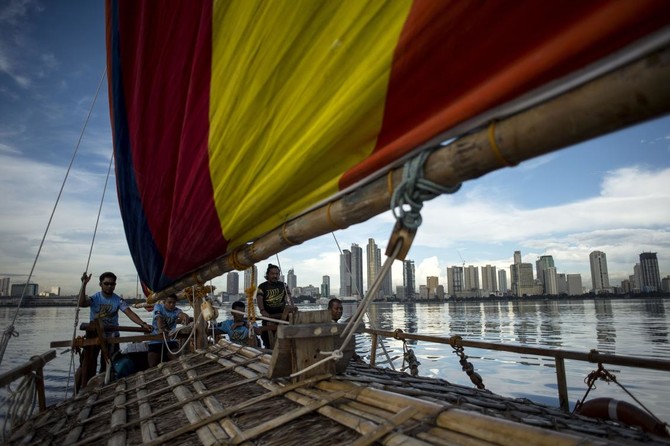
After conquering Everest, Philippine adventurer sets sail for China on an ancient boat




Rixos Obhur Jeddah sets new benchmark for all-inclusive luxury in Saudi Arabia
- This resort is an impressive contribution to the Kingdom’s global tourism ambitions
JEDDAH: From the moment you arrive at Rixos Obhur Jeddah, it’s clear this is not just another beachfront resort — it’s a statement. Billed as the first all-inclusive luxury experience “of its kind” in Jeddah, Rixos Obhur signals a shift in how hospitality is being represented in Saudi Arabia. It is a breath of fresh air — both literally and conceptually — introducing a global resort model while remaining rooted in regional culture.
The Kingdom has long been associated mainly with business travel and domestic tourism. But it is now positioning itself as a lifestyle destination for international travelers. Rixos Obhur actively contributes to that change, offering an experience that competes confidently with established upmarket resort destinations around the world. During my stay, it was impossible not to notice the wide range of international visitors alongside Saudi families and regional travelers.
The property is expansive, polished, and unmistakably luxurious. I stayed in a three-bedroom villa designed to accommodate up to six guests. The attention to detail throughout the space was immediately noticeable.

The interiors are modern, sleek, and thoughtfully designed, striking a balance between contemporary aesthetics and warm, welcoming comfort. Everything feels new, curated, and intentional — from the furniture selection to the lighting and layout.
What truly stands out, though, is just how elevated even the smallest details feel. The bathroom amenities, including the shampoo and personal care products, are of exceptional quality — a small but telling detail that separates a luxury resort from a standard beachfront chalet experience. This is not the kind of stay where you feel you’ve “settled” for convenience; it’s one where indulgence is built into every element.
Rixos Obhur Jeddah also excels in its culinary and entertainment offerings, which are central to the all-inclusive concept. One of the highlights of my stay was the dinner and live show experience. Guests are treated to an open buffet that goes far beyond expectations, featuring premium cuts of steak, rich Turkish specialties, Arabic classics, and indulgent desserts — including Turkish Delights that live up to the brand’s heritage.
The food selection is impressively diverse, catering to an international audience while still celebrating regional flavors. This thoughtful balance ensures that every guest, regardless of background, finds something familiar and something new to enjoy. The live entertainment — including dancers and a live band — adds an energetic, celebratory atmosphere that transforms dinner into a full evening experience rather than just a meal, while the range of expertly crafted mocktails on offer further enhances the resort’s appeal.

Service throughout the property is warm, attentive, and polished, creating an environment where guests feel genuinely welcomed rather than simply accommodated.
Another standout feature of the resort is how seamlessly outdoor spaces are integrated into the overall experience. Even during warmer weather, the presence of outdoor air-conditioning allows guests to enjoy open spaces comfortably — a thoughtful adaptation to the local climate. The beach, too, is immaculately clean, well-maintained, and clearly designed with families in mind.
Rixos Obhur Jeddah offers a vision of Saudi Arabia as a competitive global tourism destination, capable of delivering world-class hospitality experiences without compromise. It successfully highlights what an all-inclusive resort can look like in the Kingdom, blending international standards with regional identity in a way that feels authentic and forward-looking.
If this resort is a glimpse of where Saudi tourism is headed, the future looks both exciting and impressively refined.