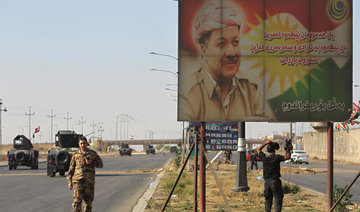
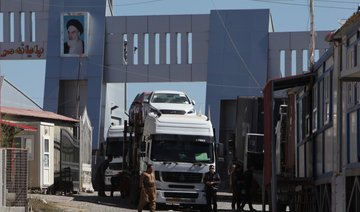
BAGHDAD: Iraqi forces and Kurdish Peshmerga fighters on Sunday started a second round of talks to resolve a conflict over control of the Kurdistan region’s border crossings, Iraqi state TV said.
Iraqi Prime Minister Haider Al-Abadi on Friday ordered a 24-hour suspension of military operations against Kurdish forces in northern Iraq. The two sides held a first round of talks on Friday and Saturday.
Al-Abadi said the talks are meant to prepare for the peaceful deployment of Iraqi troops at the border crossings with Turkey, Iran and Syria in Iraq’s Kurdistan region.
Clashes broke out between the two sides after Iraqi forces captured the oil-rich city of Kirkuk from the Peshmerga, in a surprise offensive ordered by Al-Abadi after the Kurds held an independence referendum in northern Iraq on Sept. 25.
Kirkuk is part of so-called disputed areas, claimed by both the Iraqi central government and the Kurdistan Regional Government (KRG) in northern Iraq.
“The second round of talks about deploying federal troops in the disputed areas has started,” State TV said, giving no further details.
Al-Abadi wants to take control of the disputed areas and the border crossings, including one in the Fish-Khabur area through which an oil export pipeline crosses into Turkey, carrying Iraqi and Kurdish crude oil. The KRG on Wednesday proposed an immediate cease-fire, a suspension of the referendum result and “starting an open dialogue with the federal government based on the Iraqi constitution” — a call rejected by Baghdad.
US-backed Iraqi government forces, Iranian-backed paramilitaries and Kurdish fighters fought alongside each other to defeat Daesh, but the alliance has faltered with the militants largely defeated in the country.
The multi-ethnic city of Kirkuk, which lies outside the KRG’s official boundaries, fell to Iraqi forces without much resistance on Oct. 16.
But the Peshmerga began to fight back as they withdrew closer to the core of the Kurdish region.
The fall of Kirkuk, considered by many Kurds the heart of their fatherland, was a major symbolic and financial blow to the Kurdish drive for independence championed by KRG President Masoud Barzani, since it halved the region’s oil export revenue.
The most violent clashes happened in the northwestern corner as the Peshmerga fought back offensives toward Fish-Khabur and south of their capital, Irbil, leaving dozens of casualties on both sides.
Speaking in Geneva on Thursday, US Secretary of State Rex Tillerson said he was “disappointed that the parties have been unable to reach an entirely peaceful resolution” and that he had encouraged Abadi to accept the KRG “overtures for talks on the basis of the Iraqi constitution.”
Al-Abadi demanded on Thursday that the Kurds declare their referendum void, rejecting the KRG offer to suspend its independence push to resolve a crisis through talks.
“We won’t accept anything but its cancelation and the respect of the constitution,” he said in a statement during a visit to Tehran.