Iran re-opens border crossing with Iraqi Kurdistan region

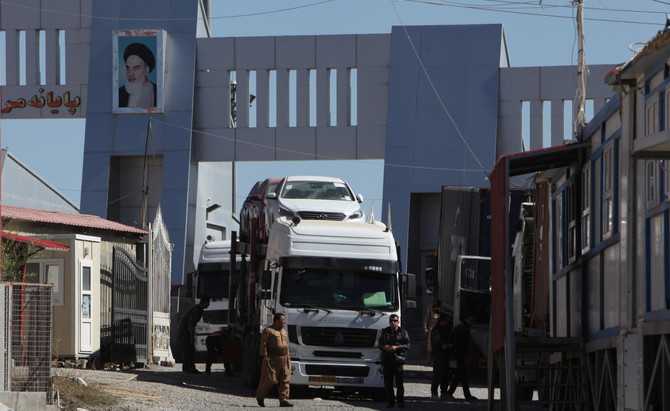
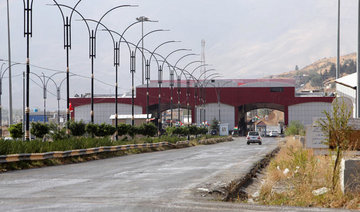
A view of Hajj Omran border between Iran and Kurdistan, Iraq October 14, 2017. Picture taken October 14, 2017. (REUTERS)
Updated 25 October 2017
Follow

Iran re-opens border crossing with Iraqi Kurdistan region

BEIRUT: Iran opened a border crossing with the Kurdistan region of Iraq Wednesday after having closed it following last month’s vote in favor of independence in the Kurdish area, Iranian state media reported.
Iran backs the Shi’ite-led central government in Baghdad in its opposition to Kurdish secession, and Iranian-backed militias assisted government forces when they seized a number of Kurdish cities last week.
The decision comes on the same day as the Kurdish Regional Government offered to put their independence drive on hold, stepping up efforts to resolve a crisis in relations with Baghdad via dialogue rather than military means.
“After the referendum and changes within the Kurdistan region our borders with the Kurdistan region of Iraq were closed... today the Bashmagh border is open,” Jahangir Bakhshi, the head of customs for the border crossing, said, according to the Islamic Republic of Iran Broadcasting (IRIB) news agency.
The report made no mention the KRG’s offer for resolving the dispute through talks.
The Bashmagh border crossing is located approximately 50 kilometers (31 miles) east of the city of Sulaimaniya in Iraqi Kurdistan.
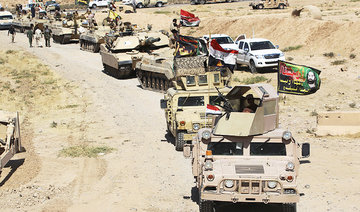
Last week, Iraqi security forces took control of several cities, including the oil-rich Kirkuk, from Kurdish forces in a lightning assault. Shi’ite fighters from the Popular Mobilization Forces (PMF), many of whom have been armed and trained by Iran, took part in the military action.
Prior to the assault, Maj. Gen. Qassem Soleimani, commander of foreign operations for Iran’s elite Revolutionary Guards, traveled to Iraq’s Kurdistan region to encourage Kurdish leaders to withdraw their forces, known as Peshmerga, from Kirkuk.
Peshmerga commanders have accused Iran of orchestrating the operation, a charge Iranian officials have denied.
Bakshi said on Wednesday that it was not clear when the other borders points between Iran and the Kurdistan region of Iraq would reopen.
There are approximately 20 billion dollars of annual cross-border trade through the Bashmagh border point Bakhshi said, according to IRIB.


Arab Coalition announces ‘limited’ airstrike targeting two ships that smuggled weapons to Yemen

Updated 48 min 26 sec ago
Follow

Arab Coalition announces ‘limited’ airstrike targeting two ships that smuggled weapons to Yemen

  • Coalition urges evacuation of the Port of Mukalla, signaling that a major military operation to force an STC withdrawal could be imminent
  • Spokesman says the two ships transported weapons from the UAE port of Fujairah to Mukalla without getting permission from Coalition command

RIYADH: The Coalition to Support Legitimacy in Yemen on Tuesday said it conducted a “limited” airstrike targeting two ships that smuggled weapons and other military hardware into Mukalla in southern Yemen.

In a statement carried by the Saudi Press Agency (SPA), the Coalition Forces spokesman, Major General Turki Al-Maliki, said that two ships coming from the port of Fujairah in the United Arab Emirates entered the Port of Mukalla in Hadramaut without obtaining official permits from the Joint Forces Command of the Coalition. 

“The crews of the two ships disabled the tracking systems of the two ships and unloaded a large quantity of weapons and combat vehicles to support the Southern Transitional Council forces in the eastern governorates of Yemen (Hadramawt, Al-Mahra) with the aim of fueling the conflict. This is a clear violation of imposing a truce and reaching a peaceful solution, as well as a violation of UN Security Council Resolution No. (2216) of 2015 AD,” said the spokesman.

The coalition urged civilians and fishermen to evacuate the Port of Mukalla, signaling that a major military operation to force an STC withdrawal could be imminent.

Google map showing the location of Mukalla in southern Yemen

Al-Maliki said the Coalition Forces acted on a request by Rashad Al-Alimi, the president of the Yemeni Presidential Leadership Council, “to take all necessary military measures to protect civilians in the governorates of Hadramawt and Al-Mahra.”

Al-Alimi, the president of the Yemeni Presidential Leadership Council, warned last week that unilateral actions by the STC were pushing the country toward a dangerous tipping point.

“Given the danger and escalation posed by these weapons, which threaten security and stability, the Coalition Air Forces conducted a limited military operation this morning targeting weapons and combat vehicles unloaded from the two ships at the port of Al-Mukalla. This was done after documenting the unloading, and the military operation was carried out in accordance with international humanitarian law and its customary rules, ensuring no collateral damage occurred,”  spokesman Al-Maliki said on Tuesday.


READ MORE: Analysis: The risks of carving up Yemen


He affirmed the Coalition’s "continued commitment to de-escalation and enforcing calm in the governorates of Hadramawt and Al-Mahra, and to prevent any military support from any country to any Yemeni faction without coordination with the legitimate Yemeni government and the Coalition. This is aimed at ensuring the success of the Kingdom and the Coalition’s efforts to achieve security and stability and prevent the conflict from spreading.”

Disregarding previous agreements with the Coalition, the group calling itself Southern Transitional Council, or STC, launched a sweeping military campaign early in December, seizing the governorates of Hadramaut along the Saudi border and the eastern governorate of Al-Mahra in Yemen’s border with Oman.

The UAE-backed STC forces captured the city of Seiyun, including its international airport and the presidential palace. They also took control of the strategic PetroMasila oilfields, which account for a massive portion of Yemen’s remaining oil wealth.

CaptioYemenis members of the Sabahiha tribes of Lahj, who live along the strip between the south and north of the country, gather during a rally in the coastal port city of Aden on December 14, 2025, to show their support for the UAE-backed Southern Transitional Council (STC), which wants to revive an independent South Yemen. (AFP)

This prompted Saudi Arabia to issue a firm demand for the STC to withdraw and hand over the seized areas to the National Shield Forces, a Saudi-backed unit.

The coalition warned that any military movements undermining de-escalation efforts would be dealt with immediately to protect civilians, according to the Saudi Press Agency.

On Dec. 26, the UAE issued a statement welcoming Saudi Arabia’s efforts to support security and stability in Yemen.

The statement carried by state news agency WAM praised Saudi Arabia’s constructive role in advancing the interests of the Yemeni people and supporting their legitimate aspirations for stability and prosperity.