NEW DELHI: Environmental pollution — from filthy air to contaminated water — is killing more people every year than all war and violence in the world. More than smoking, hunger or natural disasters. More than AIDS, tuberculosis and malaria combined.
One out of every six premature deaths in the world in 2015 — about 9 million — could be attributed to disease from toxic exposure, according to a major study released Thursday in the Lancet medical journal. The financial cost from pollution-related death, sickness and welfare is equally massive, the report says, costing some $4.6 trillion in annual losses — or about 6.2 percent of the global economy.
“There’s been a lot of study of pollution, but it’s never received the resources or level of attention as, say, AIDS or climate change,” said epidemiologist Philip Landrigan, dean of global health at the Icahn School of Medicine at Mount Sinai, New York, and the lead author on the report.
The report marks the first attempt to pull together data on disease and death caused by all forms of pollution combined.
“Pollution is a massive problem that people aren’t seeing because they’re looking at scattered bits of it,” Landrigan said.
Experts say the 9 million premature deaths the study found was just a partial estimate, and the number of people killed by pollution is undoubtedly higher and will be quantified once more research is done and new methods of assessing harmful impacts are developed.
Areas like Sub-Saharan Africa have yet to even set up air pollution monitoring systems. Soil pollution has received scant attention. And there are still plenty of potential toxins still being ignored, with less than half of the 5,000 new chemicals widely dispersed throughout the environment since 1950 having been tested for safety or toxicity.
“In the West, we got the lead out of the gasoline, so we thought lead was handled. We got rid of the burning rivers, cleaned up the worst of the toxic sites. And then all of those discussions went into the background” just as industry began booming in developing nations, said Richard Fuller, head of the global toxic watchdog Pure Earth and one of the 47 scientists, policy makers and public health experts who contributed to the 51-page report.
“To some extent these countries look to the West for examples and discussion, and we’d dropped it,” Fuller said.
Asia and Africa are the regions putting the most people at risk, the study found, while India tops the list of individual countries.
One out of every four premature deaths in India in 2015, or some 2.5 million, was attributed to pollution. China’s environment was the second deadliest, with more than 1.8 million premature deaths, or one in five, blamed on pollution-related illness, the study found.
Several other countries such Bangladesh, Pakistan, North Korea, South Sudan and Haiti also see nearly a fifth of their premature deaths caused by pollution.
Still, many poorer countries have yet to make pollution control a priority, experts say. India has taken some recent actions, such as tightening vehicle and factory emission standards and occasionally limiting the number of cars on New Delhi’s roads. But they have done little about crop burning, garbage fires, construction dust or rampant use of the dirtiest fossil fuels.
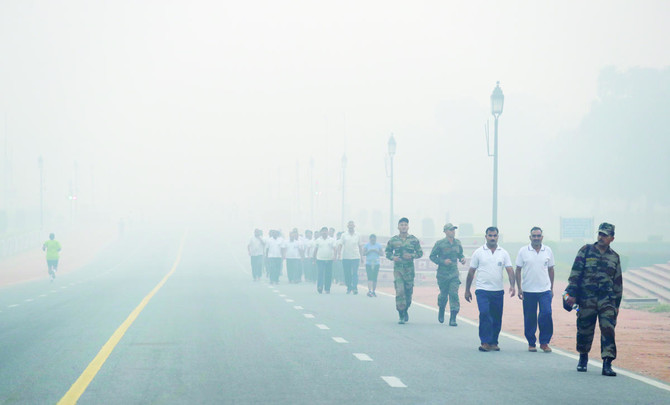
A court ban on firework sales before the Diwali festival did not stop New Delhi residents from firing rockets and lighting crackers throughout Thursday night. They awoke Friday morning to acrid, smoke-filled skies and levels of dangerous, lung-clogging particulate matter known as PM2.5 that went beyond 900 parts per million — 90 times the recommended limit by the World Health Organization (WHO) and 22 times higher than India’s own limits.
“Even though better pollution norms are coming in, still the pollution levels are continuously increasing,” said Shambhavi Shukla, a research associate with the Delhi-based Center for Science and Environment, which was not involved in the Lancet study.
To reach its figures on the overall global pollution burden, the study’s authors used methods outlined by the US Environmental Protection Agency for assessing field data from soil tests, as well as with air and water pollution data from the Global Burden of Disease, an ongoing study run by institutions including WHO and the Institute for Health Metrics and Evaluation at the University of Washington.


![]()
Pollution is deadlier than war, disaster, hunger: Report
Pollution is deadlier than war, disaster, hunger: Report


Latest updates




© 2026 SAUDI RESEARCH & PUBLISHING COMPANY, All Rights Reserved And subject to Terms of Use Agreement.