ZURICH: Swiss food giant Nestle expects organic sales growth to stay muted in the fourth quarter and is speeding up its restructuring program as it seeks to improve profit margins.
Makers of packaged foods are under pressure to review their business models and brand portfolios to satisfy consumers’ appetite for fresh, healthy, local foods, while at the same time improving returns to address increasingly vocal activist investors.
The maker of KitKat chocolate bars said on Thursday it expected its 2017 operating margin to slip by 0.4 to 0.6 percentage points as restructuring costs could reach 1 billion Swiss francs (SR3.82 billion), double the initial plan, while maintaining guidance for overall charges of up to 2.5 billion francs until 2020.
It said, however, that its underlying trading operating margin, which strips out restructuring costs, was set to improve by at least 0.2 percentage points in constant currency this year.
Under pressure from activist investor Third Point to improve near-term returns, Nestle last month set a target for this margin to reach 17.5-18.5 percent by 2020, up from 16.0 percent in 2016.
Organic sales growth accelerated to 3.1 percent in the third quarter from 2.3 percent in the first and 2.4 percent in the second, in line with expectations in a Reuters poll of analysts, helped by improved trading in Europe and Asia.
Nestle, also known for Nescafe instant coffee and Gerber baby food, said it expected organic growth for the full year to be in line with the 2.6 percent seen in the nine-month period, implying a slowdown in the fourth quarter from 2.9 percent in the year-ago period.
Chief Finance Officer Francois-Xavier Roger told reporters this was also due to seasonal factors such as the leap year last year and the timing of the Chinese New Year, with expected underlying growth in the final quarter “closer to 3 percent.”
He cautioned that the Europe, Middle East and North Africa zone and Asia might not be able to repeat the good performance over the final three months.
Roger confirmed Nestle’s goal of returning to mid-single-digit organic growth by 2020, citing a turnaround at its Chinese Yinlu business and a strategic review of its US candy business that would likely be completed by the end of the year.
Chief Executive Mark Schneider said last month about 10 percent of the group’s more than $90 billion in group sales could be under review.
Nestle shares, up almost 15 percent this year, were down 0.5 percent at 0752 GMT, broadly in line with the European sector .
“The stock has been strong year to date, but we see nothing in this reporting to push it further,” Bernstein analyst Andrew Wood wrote. He said the Americas lagged expectations and nutrition disappointed compared to Danone’s “fantastic performance.”
Danone reported a 4.7 percent rise in underlying third-quarter sales, helped by strong baby food sales in China. Peer Unilever reported a 2.6 percent rise in underlying quarterly sales, blaming poor weather in Europe and natural disasters in the Americas.


![]()
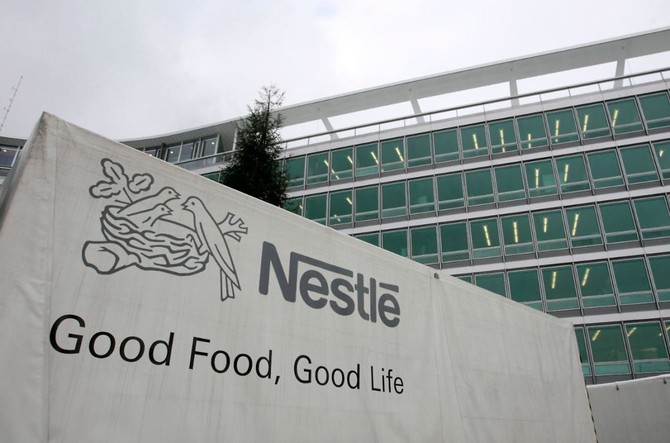
Nestle accelerates restructuring as sales growth stays tepid
Nestle accelerates restructuring as sales growth stays tepid
Latest updates


Recommended


© 2026 SAUDI RESEARCH & PUBLISHING COMPANY, All Rights Reserved And subject to Terms of Use Agreement.