What America thinks of Saudi Aramco

Updated 13 October 2017
Follow

What America thinks of Saudi Aramco

DUBAI: As Saudi Aramco ponders the venue for what will be the biggest share offering in history — the planned $100 billion of equity due to be listed in a $2 trillion valued company — it has had no shortage of offers.
At least five leading stock exchanges around the world, from Toronto to Hong Kong and Singapore, have shown an interest in being Aramco’s host, alongside the Tadawul in Riyadh.
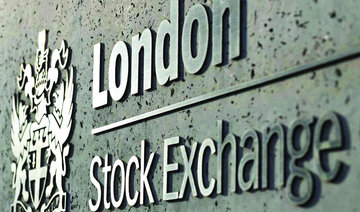
The leading two contenders are thought to be the New York Stock Exchange (NYSE), and the London Stock Exchange (LSE).
New York, by virtue of its size, prestige and closer ties between Saudi Arabia and the US under President Trump, is generally reckoned to be in pole position. But there have been suggestions that some advisers to Aramco have warned against an NYSE listing, mainly on grounds of risk to Saudi assets in the highly-litigious New York legal community.
In the course of a recent US visit, Arab News tested the nature of informed American opinion regarding Aramco with three of the most prominent thought leaders in the area of US-Saudi business relations.
The idea was to gauge how Aramco is viewed by the key constituencies it will have to deal with in the course of an NYSE listing: The American political establishment; its peer groups and partners in the global oil industry; and the professional investing community on Wall Street.
The overall lesson is that, while there may be some regulatory and legal risks to a New York listing, Americans at virtually every level would welcome the Saudi oil giant to the NYSE and would look forward to closer business ties with the Kingdom.
Ellen Wald is an historian and journalist who specializes in Middle East energy policy. She teaches at the Jacksonville University in Florida and her forthcoming book “Saudi, Inc.” will be published next year.
On official policymakers’ attitude to Aramco, she said: “Aramco has long had interests in the United States, including ownership of the largest refinery, and no policymakers have made an issue of it. The most significant time that Aramco drew the ire of US policymakers was in the 1970s, when it was still a predominantly American company and legislators called US executives to Washington DC to answer for the oil shocks.”
Wald does however warn of the possibility of lawsuits under the Justice Against Sponsors of Terrorism Act passed under the Obama administration. “It’s still an open question of whether an NYSE listing would expose Aramco to liability under JASTA. In a more long-term stance, policymakers may take an interest in Aramco after it goes pubic, if it lists on the NYSE,” she said.
Washington-based Jean Francois Seznec is a political scientist specializing in business and finance in the Middle East, and an adjunct professor at three prestigious East Coast universities.
“I think the relationship with the American political community is good. People with long memories in America recall that when Aramco was nationalized by the Saudi government the shareholders were paid compensation, unlike in some other parts of the world. The Democrats see Aramco as a force toward modernization and progress in Saudi Arabia; the Republicans see it as a good commercial partner,” he said.
Jim Krane, an award winning journalist and author, currently fellow for energy studies at Rice University’s Baker Institute in Houston, Texas, said Aramco currently keeps a “low profile” in the US.
“Aramco’s Motiva affiliate is one of the biggest US refiners and suppliers of gasoline. Motiva owns the biggest refinery in the country, in Port Arthur, Texas, but most Americans have never heard of it. When Americans fill up with Motiva gasoline, they buy it at their local Shell station.
Very few Americans realize that Shell gasoline — at least in some states — is refined by a Saudi company largely from Saudi crude oil,” he said.
On Aramco’s standing with its peers in the oil business, Seznec said Aramco was regarded as “respected competition.”
He added: “It’s regarded as a well-managed company that can handle its own market, and certainly not seen as a pushover. Oil services companies like Halliburton and Schlumberger are extremely happy with Aramco because they get a lot of business from them. Companies like Exxon might say they’re not as good or as efficient as we are, but they have to respect them, not least because they are so big and want to be bigger.”
On how American energy companies would see an Aramco IPO on the NYSE, Wald said: “It’s an interesting event for them because for the first time they will be able to see the financials of this major competitor. It’s also important to remember that Aramco is positioned differently from the independent oil companies (IOCs) — Aramco has proven oil reserves that vastly outnumber any of the IOCs by several orders of magnitude.”
Krane agreed. “Aramco is a respected name in oil and gas — period. Our research puts it at the top of the list of state-owned oil companies in terms of revenue efficiency. Peer companies understand the sophisticated engineering and strategy research that Aramco brings.
“They know Aramco is unlike most other national oil companies (NOCs), which find their host government undermining their business models. Instead, the Saudi government has ring-fenced Aramco from most government interference,” he added.
Political clout and peer-group respect are essential, but if and when the bell rings on an Aramco IPO on the NYSE it will be the reaction of professional investors that will decide its fate.
Krane said: “Many investors seem to be excited, though some are quite skeptical because they tend to not know much about Saudi Arabia or Aramco, until now a private company. For exchange-traded funds and mutual funds, Aramco will be a necessary purchase because it can be a bell-wether for the oil industry and the movements of OPEC.
“Also, in as far as Aramco will be included in developing country funds, its size will automatically make it an important component. There is a segment of Wall Street that will be uninterested in Aramco, particularly activist investors who will have no real say in the company because the Saudi government will still own 95 percent,” he added.
Seznec agreed that the appeal would vary according to the type of investor. “The big US pension funds will like it. They see it as a traditional oil company but also one which is diversifying into other areas.
“The hedge funds will probably like it less. It will not be a stock where they can make millions just trading in and out of it, it will be less volatile. So the big NY financiers may not be as happy as the more staid pension fund managers,” he added.
Wald said there was another reason for US interest in the IPO. “Wall Street is intrigued, but I’m not sure whether investors are more excited by the prospect of owning a piece of the world’s biggest company, or by the forthcoming trove of data on Saudi reserves. Probably both,” she said.
The three experts agreed, however, that the JASTA legislation was a potential negative that had to be factored into any calculations on an NYSE listing.
“I’m not sure JASTA is an enormous risk. Aramco and other Saudis already have large investments in the US and they have not been targeted. But it is still there as a risk,” Seznec said.


MENA startups land fresh capital, deals, and momentum 

Updated 01 February 2026
Follow

MENA startups land fresh capital, deals, and momentum 

  • Mega-rounds and strategic deals signaling investors’ continued appetite

RIYADH: Capital kept moving across the Middle East and North Africa as January came to an end, with mega-rounds, record local fundraises, and strategic deals signaling investors’ continued appetite for scalable platforms, from property and wealth tech to insurance tech, mobility, and Arabic-first artificial intelligence. 

Saudi Arabia-based wealthtech Vennre raised $9.6 million in a pre-series A round structured through a mix of equity and debt. 

The round was co-led by Vision Ventures and anb seed Fund, with participation from Sanabil 500, Ace & Co, Plus VC, and a group of strategic individual investors. 

Founded in 2021 by Ziad Mabsout, Anas Halabi, and Abdulrahman Al-Malik, Vennre focuses on providing high earners with Shariah-compliant access to private market investments. 

The company said the new capital will be used to expand its client base, roll out new platform features, and deepen its presence in Saudi Arabia in line with Vision 2030 and the growth of the local fintech sector. 

Vennre founders Ziad Mabsout, Anas Halabi, and Abdulrahman Al-Malik. (Supplied)

Property Finder secures $170m

UAE-based property tech Property Finder has raised $170 million in new funding led by Mubadala Investment Company, alongside another UAE sovereign wealth fund and BECO Capital. 

Under the transaction, Mubadala and the second sovereign investor will each invest $75 million, while BECO Capital will commit $20 million from its recently launched $250 million Growth Fund I. 

Founded in 2007 by Michael Lahyani and Renan Bourdeau, Property Finder operates a marketplace that enables users to search for properties to buy or rent using advanced filtering tools. 

The investment follows a $525 million round in 2025 led by Permira, with significant participation from Blackstone Growth, bringing total equity raised to nearly $700 million. 

The company has also secured $250 million in debt financing from Ares Management and HSBC, making it one of the largest funding stories in MENA tech. 

Property Finder said the fresh capital will support its ambition to build the region’s leading real estate operating system, focused on transparency, trust, and data-driven decision-making. 

Yakeey sees record Moroccan series A round

Beltone Venture Capital has made a strategic equity investment in Moroccan proptech Yakeey as part of the startup’s $15 million series A round, the largest completed in Morocco to date. 

The round also includes IFC, Enza Capital, and 212 Founders. Founded to modernize Morocco’s fragmented real estate sector, Yakeey is building an end-to-end digital platform that integrates property search, valuation, brokerage, and financing. 

The company said its early scalability and growing broker network position it for regional expansion as demand rises for transparent, digitised real estate services across North Africa. 

Enakl develops technology to design and manage flexible shared transport networks for companies and public-sector actors. (SUpplied)

Enakl closes $2.3m seed round 

Startup Enakl has closed a $2.3 million seed funding round, finalized in December, following an initial $1.4 million round completed at the end of 2024. 

The round brought in new Moroccan investors Azur Innovation Fund, Witamax, and MFounders, alongside reinvestment from Catalyst Fund and Digital Africa. 

Founded in 2022 by Samir Bennani and Charles Pommarede, Enakl develops technology to design and manage flexible shared transport networks for companies and public-sector actors. 

The company said the funds will be used to strengthen commercial teams, launch the first version of its Software-as-a-Service product, and test new development models for ridepooling fleets, following its first pilot public contract with the Casablanca–Settat Region. 

Glamera Holding signs MoU to acquire Bookr Group 

Middle East–based lifestyle technology platform Glamera Holding has signed a memorandum of understanding to acquire Bookr Group, a multi-market operator active across Kuwait, Bahrain, and Saudi Arabia. 

Founded in 2022 by Mohamed Hassan Hijazi and Omar Fathy, Glamera operates a technology platform for the beauty and wellness sector and has processed transactions exceeding SR4 billion ($1.07 billion), supporting more than 4,500 service providers. 

Bookr Group runs a service-provider management platform and consumer booking application. (SUpplied)

Bookr Group runs a service-provider management platform and consumer booking application with more than 300,000 users. 

Glamera said the acquisition will strengthen its regional footprint and support its ambition to build a unified, AI-powered ecosystem for service providers and end users, with the combined platform expected to serve millions across the Middle East. 

Mantas raises $1.77m seed 

UAE-based insurance tech Mantas has emerged from stealth with a $1.77 million seed funding round to launch parametric insurance products covering cloud outages and digital downtime. 

The round includes Nuwa Capital, Suhail Ventures, and Plus VC, as well as OQAL Angel Syndicate, and a group of angel investors. 

Mantas founder Basil Mimi. (Supplied)

Founded in 2024 by Basil Mimi, Mantas combines cloud outage insurance with real-time risk monitoring, targeting digital-first businesses such as fintechs, airlines, e-commerce platforms, SaaS providers, and regulated enterprises. 

The company said the funds will support product development, risk modelling, and early customer deployments across MENA and North America. 

Juthor raises $500k pre-seed 

Saudi Arabia-based e-commerce startup Juthor has raised $500,000 in a pre-seed round led by Flat6Labs, with participation from angel investors. 

Juthor founders Lolwah Binsaedan and Irfan Khan. (Supplied)

Founded in 2025 by Lolwah Binsaedan and Irfan Khan, Juthor is building a cloud-based platform to help retailers manage sales across multiple online marketplaces through real-time stock synchronization and AI-driven customer insights. 

The company said the capital will be used to build scalable infrastructure and accelerate product development in Saudi Arabia and beyond. 

Yozo.ai secures $1.7 million pre-seed 

UAE-based e-commerce AI startup Yozo.ai has raised $1.7 million in pre-seed funding, with the round co-led by Access Bridge Ventures and Disruptech Ventures, with participation from Arzan VC, Oraseya Capital, and Plus VC, as well as Suhail Ventures, Glint Ventures, and M-Empire Angels. 

Founded in early 2025, Yozo builds an AI-native revenue engine designed to automate e-commerce growth and retention marketing. 

The company said the funding will support product development and international expansion beyond MENA. 

Abwaab operates a digital tutoring platform across Jordan, Egypt, and Pakistan. (Supplied)

Abwaab acquires Apex Education 

Jordan-based education tech platform Abwaab has acquired Egypt-based college admissions advisory Apex Education for an undisclosed amount. 

Founded in 2019, Apex Education provides personalized admissions guidance to students applying to leading global universities, while Abwaab operates a digital tutoring platform across Jordan, Egypt, and Pakistan. 

Abwaab said the acquisition strengthens its end-to-end offering, extending from tutoring through to international university admissions. 

Arabic.AI collaborates with Stanford University 

Arabic.AI has announced a collaboration with Stanford University’s Center for Research on Foundation Models to establish the first holistic benchmark for evaluating Arabic large language models. 

The initiative will extend Stanford’s HELM framework into Arabic, providing a transparent and reproducible reference for assessing model performance and risk. 

Arabic.AI said the collaboration supports its mission to advance Arabic-first AI models while contributing a public research asset for the wider AI and enterprise ecosystem.