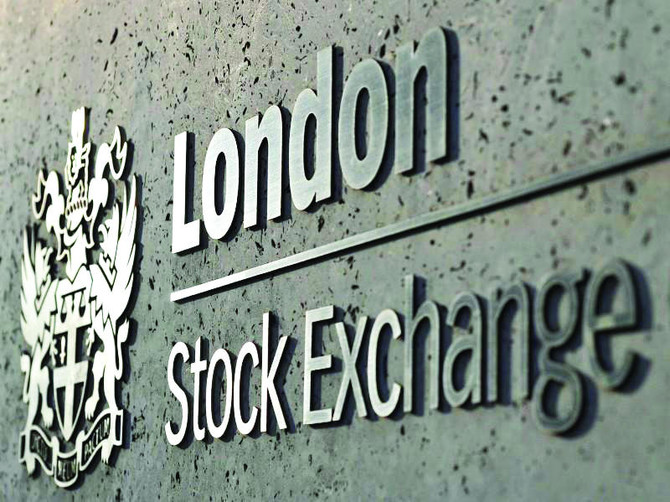
London ‘venue of choice’ for Middle East listings

Two UAE health companies, NMC Health and Al Noor, conducted successful IPOs in London in 2013. (Reuters)
Updated 22 July 2017
Follow

London ‘venue of choice’ for Middle East listings

LONDON: The London Stock Exchange (LSE) regards itself as the “undisputed overseas listing venue of choice” for companies from the Middle East, according to senior officials.
The presence of its chief executive Xavier Rolet on a high-level state visit to Saudi Arabia earlier this year was the clearest sign yet that the LSE wants to be one of the markets on which shares in Saudi Aramco are listed next year.
Ibukun Adebayo, the LSE’s head of Middle East, Africa and south Asia in the LSE’s international markets unit, said: “The LSE provides companies from the region with very significant opportunities, and access to our pools of dedicated investors from the US and Europe, and some of the largest pension and insurance houses, professional investment managers and sovereign wealth funds.”
Although no details of Rolet’s visit were disclosed when he visited the Saudi Stock Exchange — known as the Tadawul — with British Prime Minister Theresa May in the spring, one person who accompanies the party said: “Of course, he made it apparent that LSE would like to be a home for Saudi Aramco. He told them it would be good for Saudi Arabia and for London to form the Western venue for the listing.”
In addition to the Tadawul, Aramco is believed to be considering at least one other venue in Western markets, with the New York Stock Exchange (NYSE) another obvious contender.
It is also thought to be looking at an Asian market, with Tokyo and Hong Kong as top rivals for a chunk of the IPO, which is expected to be worth around $100 billion if 5 percent of the company is floated at the official valuation of $2 trillion.
Aramco would be the first Saudi company to have a “premium” listing on the LSE were it to list on that market. Kingdom Hotel Investments had a secondary listing there, and the LSE says there are 37 companies from the Middle East and North Africa with an LSE listing of some sort, for a total combined market capitalization of $65 billion.
Earlier this year, Dubai-based oil and gas production services company ADES International Holding raised $170 million via a listing on the LSE main market. Two UAE health companies, NMC Health and Al Noor, have also conducted successful IPOs in London.
Listing on the London exchange has not always been a smooth ride for Arabian Gulf companies. DP World, the Dubai-based ports operator, had a dual listing in London and the UAE for some time, before canceling the London listing because of a lack of investor interest.
Damac, the Dubai based real estate developer, carried out a London IPO of shares in global depository receipt (GDR) form, before delisting and moving all its share trading to the Dubai Financial Market.
The LSE has been broadening its range of product offerings for corporates in the Middle East and Africa. Earlier this year it listed the first ever “green bond” — an instrument to invest in environmentally sound projects — with a $587 million issue on behalf of National Bank of Abu Dhabi.
It was also the venue for a $1.25 billion sukuk, or Shariah-compliant bond, issued by the Islamic Development Bank last April.


G7 countries to release oil reserves as IEA agrees to largest ever market intervention

Updated 11 March 2026
Follow

G7 countries to release oil reserves as IEA agrees to largest ever market intervention

  • IEA recommends release of 400 million barrels

RIYADH: Germany, Japan and Austria will release part of their oil reserves after the International Energy Agency recommended the release of 400 million barrels of oil ‌from stockpiles, the largest ‌such move in IEA ​history.

In a statement, IEA Executive Director Fatih Birol said the flow of oil, gas and other commodities through the Strait of Hormuz have all but stopped, leading global energy supply to fall by around 20 percent.

Ahead of the confirmation of the move — a larger intervention than the 182.7 million barrels that were released in 2022 by in response to Russia’s invasion of Ukraine — several countries began setting out plans to bring their reserves into play as countries grapple with ​soaring crude prices amid ​the US-Israeli war with Iran. 

Birol said: “I can now announce that IEA countries have decided to launch the largest ever release of emergency oil stocks in our agency's history. 

“IEA countries will be making 400 million barrels of oil available to the market to offset the supply lost through the effective closure of the strait.

“This is a major action aiming to alleviate the immediate impacts of the disruption in markets.”

Germany’s Economy ⁠Minister ​Katherina Reiche ⁠confirmed on Wednesday her government plans to limit petrol price increases at filling stations to once a day and to introduce more stringent antitrust regulation of the sector.

She did not ⁠give an exact timing for ‌those measures, but added that ‌the US and ​Japan would be the ‌largest contributors to the release of the ‌oil reserves.

The US has not confirmed it would do so, but its Interior Secretary Doug Burgum told Fox News on Wednesday that “these are the kinds of moments that these reserves are used for.”

The announcements did not stop oil prices rising, with Brent crude up 3.26 percent to $90.66 a barrel at 4:29 p.m Saudi time, and West Texas Intermediate up 3.12 percent to $86.05. Both were some way below the $119 a barrel seen earlier in the week.

“The situation regarding oil supplies is tense, as the Strait of Hormuz is currently virtually impassable,” Germany’s Reiche said.

“We will comply with this request and ‌contribute our share, because Germany stands behind the IEA’s most important principle: mutual ⁠solidarity,” Reiche ⁠said about the IEA’s request.

According to a statement by Reiche’s ministry, Germany will contribute 2.64 million tonnes of oil. This corresponds to 19.51 million barrels.

Reiche stressed there was no supply shortage in the country, which has a legally mandated reserve of oil and oil products intended to cover 90 days’ demand.

South Korea will release 22.46 million ​barrels of oil, which represents 5.6 percent of the total IEA ask, the ⁠country's industry ministry said.

“The government will consult with the IEA ⁠secretariat on details, such ‌as ‌the ​timing ‌and amount, from ‌the perspective of national interests in accordance with domestic conditions,” ‌the ministry said in a statement.

The ⁠ministry ⁠said it would continue to coordinate closely with major countries in responding to high oil prices to minimise any domestic ​impact.

Austrian Economy Minister Wolfgang Hattmannsdorfer said his country was releasing part of the emergency oil reserve and extending the national strategic gas reserve, adding: “One thing is clear: in a crisis, there must be no crisis winners at the expense of commuters and businesses.”

Acting ahead of the IEA move, G7 ​member Japan announced plans to release 15 days' worth of ‌private-sector oil reserves and one month's worth of state oil reserves.

“Rather than wait for formal IEA approval ‌of a coordinated international reserve release, Japan will act first to ease global energy market supply and demand, releasing reserves as early as the 16th of this month,” Prime Minister Sanae Takaichi said in a broadcast statement.

Following a meeting with the IEA on Wednesday, G7 energy ministers said: “In principle, we support the implementation of proactive measures to address the situation, including the use of strategic reserves.”

All IEA member countries are required to keep 90 days’ worth of their nation’s oil use in reserve in case of global disruption.