Iraq ‘has no regrets’ about getting tough with Kurds

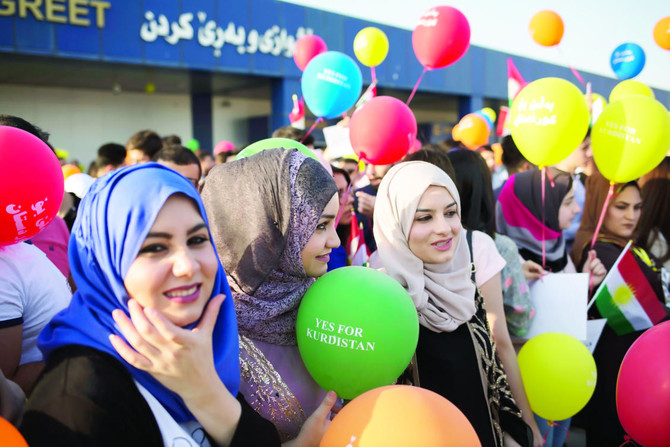
Kurdish women protest outside Irbil airport on Sept. 29 against the flight ban issued by the Iraqi federal government. (AP)
Updated 12 October 2017
Follow

Iraq ‘has no regrets’ about getting tough with Kurds

BAGHDAD: Iraq issued arrest warrants on Wednesday for the chairman of the Kurdistan Region’s referendum commission and two aides over last month’s vote for Kurdish independence.
A spokesman for the Supreme Judicial Council said the warrants for Hendreen Mohammed and his assistants were issued by a Baghdad court for “violating a valid court ruling which considered the independence vote invalid.”
A Justice Ministry official in the Kurdistan Regional Government (KRG) dismissed the decision as “politically motivated.” He said the KRG’s judiciary was independent of Baghdad and did not recognize its legal rulings.
The Iraqi central government has taken punitive measures over the independence vote. It imposed an international flight ban, stopped financial transactions with the region, and filed formal requests to Turkey and Iran to stop trade with the KRG and deal exclusively with Baghdad on oil exports.
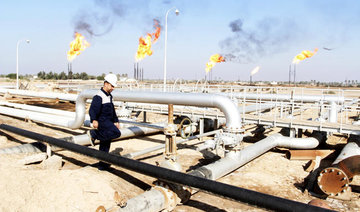
On Tuesday, the oil ministry ordered state oil companies to begin restoring the crude oil pipeline from Kirkuk to the Mediterranean port of Ceyhan in Turkey, bypassing Kurdistan. The pipeline has been out of commission since it was blown up by militants in 2014.
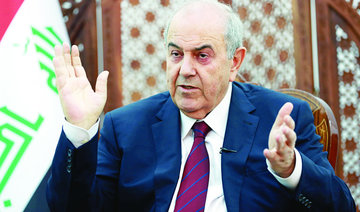
“The Iraqi government is serious … and has no regrets relative to its position,” Ali Al-Alaq, a Shiite member of parliament and one of Prime Minister Haider Al-Abadi’s political advisers, told Arab News.
“The government has become more assertive in dealing with many matters such as the financial violations, the smuggling of oil, airports, and the land border crossings.”
Baghdad sent special military units and federal Border Patrol officers to Turkey and Iran this month for deployment near the joint crossings. The three countries established a joint operations room to discuss related details; senior security officials have exchanged visits since the referendum took place. Iraqi officials said a senior Turkish official would visit Iraq today to discuss alternatives to the crossings.
“It is not easy for Turkey or Iran to shut down the crossings, despite the threats that the referendum represents to their national security,” a senior Iraqi federal official involved in talks told Arab News.
“The sessions are continuing and all sides are looking to find appropriate alternatives, so we can move to either shut down the crossings or regain control of them. We have to be pragmatic, and finding appropriate alternatives to these crossings needs time.”
Iraqi Kurdistan region has two official crossings with Turkey and Iran, Ebrahim Al-Khalil in Dehuk and Hajj Omran in Sulaimaniya. Kurdistan has refused to hand over control of the crossings, but the KRG has said nothing about creating new ones outside Kurdistan.
“There have been many attempts, but nothing so far but talks,” Lt. Gen. Jabar Yaour, general secretary of the Peshmerga Ministry in the KRG, told Arab News. “Opening new crossings needs a long time.
“Up to now, the crossing ports in Kurdistan are working and the export of oil has not stopped.”


Iran president confirms talks with US

Updated 7 sec ago
Follow

Iran president confirms talks with US

  • No official confirmation from Tehran on where the talks would be held

Iran’s president confirmed on Tuesday that he had ordered the start of talks with the US following requests “from friendly governments.”

There has been no official confirmation from Iran on where the talks would be held, but an Arab official, speaking on condition of anonymity, told AFP a meeting was likely to take place in Turkiye on Friday, following diplomatic interventions by Ankara, as well as Egypt, Oman and Qatar.
US President Donald Trump  has spoken of potential military action and sent an aircraft carrier group to the Middle East following anti-government protests in Iran that were met with a deadly crackdown last month.

FASTFACT

On Tuesday, Qatar’s Foreign Ministry said diplomacy with Iran was ‘continuing very intensively,’ in ‘tandem with all our neighbors.’

Trump has maintained he is hopeful that Washington will “work something out” with Tehran, but also warned that “bad things would happen” if a deal was not agreed.
Tehran has insisted it wants diplomacy, while promising a decisive response to any aggression.
“I have instructed my Minister of Foreign Affairs, provided that a suitable environment exists — one free from threats and unreasonable expectations — to pursue fair and equitable negotiations,” President Masoud Pezeshkian wrote in a post on X.
He added that the talks followed requests “from friendly governments.”
On Tuesday, Qatar’s Foreign Ministry said diplomacy with Iran was “continuing very intensively,” in “tandem with all our neighbors.”
Earlier, a senior official from the UAE said Iran needed to reach a deal and “rebuild their relationship with the  US.”

I have instructed my Minister of Foreign Affairs, provided that a suitable environment exists to pursue fair and equitable negotiations.

President, Masoud Pezeshkian

“I would like to see direct Iranian-American negotiations leading to understandings so that we don’t have these issues every other day,” said presidential adviser Anwar Gargash.
Iran has repeatedly stressed that any talks should remain focused solely on the nuclear issue, rejecting the possibility of negotiations over its missile program or defense capabilities.
In an interview with CNN broadcast on Monday, Iranian Foreign Minister Abbas Araghchi said Tehran had lost trust in Washington as a negotiating partner but a deal on the nuclear issue remained achievable.
“So I see the possibility of another talk if the US negotiation team follows what President Trump said: to come to a fair and equitable deal to ensure that there is no nuclear weapons,” he said.
Since his return to office in January last year, Trump has reinstated his “maximum pressure” policy of sanctions against Iran, piling additional pain on a floundering economy.
Protests against the rising cost of living broke out in Tehran in December before evolving into wider nationwide anti-government demonstrations that triggered a deadly crackdown by the authorities.
Iranian officials have acknowledged more than 3,000 deaths during the unrest, but insist that most were members of the security forces and innocent bystanders, attributing the violence to “terrorist acts.”
The Human Rights Activists News Agency, a US-based NGO, says it has confirmed 6,854 deaths, mostly protesters killed by security forces, with other rights groups warning the figure is likely far higher.
On Tuesday, the NGO said it had counted at least 50,235 arrests linked to the protests, with further detentions ongoing.
Meanwhile, local media reported that the authorities had detained 139 foreign nationals in central parts of the country during the protests.