BAGHDAD: Baghdad on Tuesday began rehabilitating the oil pipeline to Turkey’s Ceyhan port that bypasses Iraqi Kurdistan, after a suspension of nearly three years, the Iraqi oil minister and lawmakers said.
The 970-km-long pipeline, which extends from the northern city of Kirkuk to Ceyhan, is Iraq’s second-largest, crossing Salahuddin and Mosul provinces.
Exports through the pipeline were suspended in June 2014 when Daesh overran the two provinces.
Resuming oil exports while bypassing Iraqi Kurdistan is the latest in a series of economic sanctions by Baghdad against the Kurdistan Regional Government (KRG), which held a referendum on independence last month.
“After the liberation of Nineveh, Salahuddin and Hawija” from Daesh, “a major campaign to repair the pipeline has been launched by the Oil Ministry to resume exports,” ministry spokesman Assam Jihad told Arab News.
Iraq used to export between 250,000 and 400,000 barrels per day through the pipeline, mainly from Kirkuk’s oilfields.
Following Daesh’s advances, a replacement pipeline was built to link Kirkuk’s oilfields to Ceyhan via Iraqi Kurdistan.
“The rehabilitation of the (original) pipeline is a priority for the Oil Ministry to resume exports and boost income for the federal Iraqi budget,” Jihad said.
A deal between Baghdad and the KRG to export 550,000 barrels per day via the replacement pipeline was approved by the federal Parliament in December 2014 — 400,000 barrels from Kirkuk and the rest from oilfields in Kurdistan.
In return, the KRG was supposed to hand the revenues to the state oil company for the federal budget. But Baghdad has not received any revenues.
“The Kurds totally took control over both the export process and getting back the revenues,” a senior federal oil official told Arab News on condition of anonymity.
“We have no idea how much they’re exporting. For the last three years, they kept refusing to give us any information about exports, and to hand over the revenues.”
The federal parliamentary oil and gas committee is backing Baghdad. “Controlling oil and gas resources are exclusive responsibilities of the federal government, and exports by any other side are legally recognized as smuggling,” committee member Awad Al-Awadi told Arab News.
“The federal government has to gain back control over oil exports as they belong to all Iraqis. No one has the right to control them but the federal government.” The pipeline will be repaired in no more than three months, Al-Awadi said.
Baghdad says revenues from oil exported by the KRG goes directly to bank accounts in a neighboring country that are registered in the names of Kurdish leaders.
Meanwhile, Prime Minister Haider Al-Abadi said in his weekly press conference that Iraqi oil is for all Iraqis and not for a limited number of (Kurdish) officials who put the money (revenues) in their bank accounts.”
He added: “This money has to go to the people… we allocate money from (the oil revenues) to pay the employees in Kurdistan.”


![]()
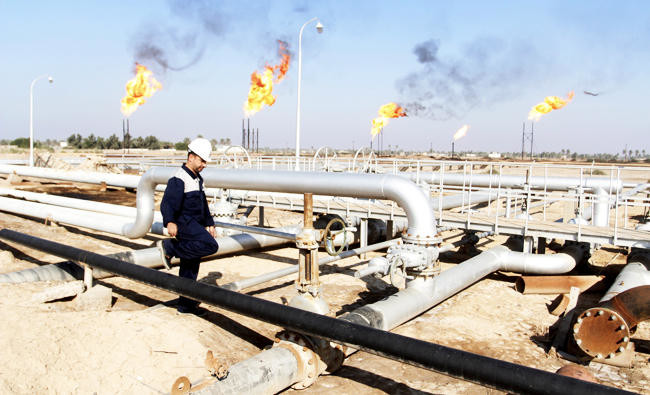
Baghdad to bypass Iraqi Kurdistan with oil exports
Baghdad to bypass Iraqi Kurdistan with oil exports


Latest updates


© 2026 SAUDI RESEARCH & PUBLISHING COMPANY, All Rights Reserved And subject to Terms of Use Agreement.