MONTREAL, Canada: The flight of banks and big businesses from Catalonia after the region of Spain voted for independence is familiar to many in Quebec who once suffered similar economic turmoil while flirting with secession from Canada.
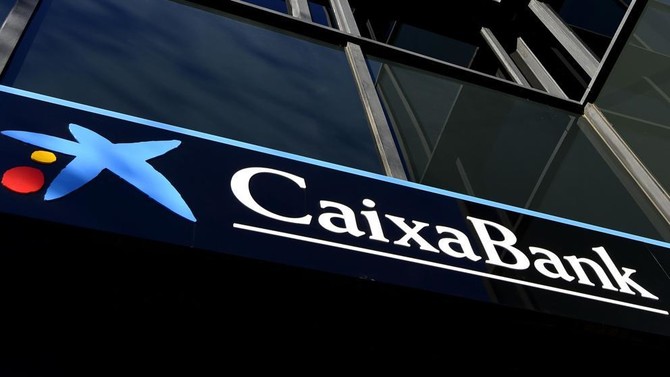
Several companies with headquarters in Catalonia including banks Sabadell and CaixaBank, as well as real estate business Colonial and toll-road company Abertis, recently moved their registered headquarters to other parts of Spain, saying they feared being cut off from the massive European market in the event of a breakup.
There are similarities between the situation in Catalonia and Quebec when it twice voted in 1980 and 1995 on whether to split from the rest of Canada, said University of Quebec professor Mario Polese.
“Business people rarely support this kind of secession, in part because they worry it will harm their bottom line,” he explained.
The sudden rise of the separatist Parti Quebecois, which swept to power in the Canadian province in 1976, spooked many in its English-speaking minority, which held undue control of Quebec’s top corporations.
“For anglophones, it was a huge shock to see a small party that was born only seven years earlier suddenly take power and promise to hold a referendum on Quebec independence,” he said.
A year later, the secessionists imposed a law mandating French be used in business, as elsewhere in the daily lives of a majority of Quebecers.
Panic-stricken, “some 200,000 anglophones” left the province before and after the 1980 referendum, fearing Quebec would be isolated in North America and as linguistic tensions continued even after independence was rejected.
In 1977 and 1978, 263 head offices also left Montreal, according to the Quebec Employers Council, an association of the province’s largest companies.
Among them, Sun Life, a giant in Montreal’s financial sector, caused the biggest shock when it announced it was leaving its birth city for greener pastures in Toronto, taking with it some 800 employees.
Others such as Bank of Montreal kept their headquarters in the Quebec metropolis, but moved their operations to Toronto.
Until then, the port city of Montreal had been the economic capital of Canada, but all of these corporate relocations helped turn Toronto into what is now the country’s economic hub.
Although Quebecers would reject splitting from the rest of Canada in both referenda, the damage was done.
The Montreal Stock Exchange’s amalgamation with the larger Toronto Stock Exchange and its subsequently reduced role in capital markets following the 1995 Quebec referendum, which was narrowly lost by the separatists, was the final nail in the coffin.
In comparing Quebec and Catalonia, Polese noted a few key differences, explaining that Quebec had felt that it was in a “semi-colonial situation.”
“Even though two-thirds of Montrealers spoke French, it wasn’t obvious that this was a French city at the time. Most of the signs were in English, business was conducted in English and the economy was dominated by an anglophone minority,” he said.
“The big difference between Catalonia and Quebec is that here, even in the worst moments, a head office of a francophone company would never have thought of leaving the province, even if most of their executives were hostile to independence.”
This was especially the case in 1995 during the second referendum.
Since then a new generation of French-speaking Quebec executives have taken over, and the province has bounced back.
Today Quebec’s growth is among the best in Canada, its unemployment rate is at a 40-year low, and several Quebec companies have grown into multinationals.
It has also become a cultural and political powerhouse within the federation.


![]()
Flight of head offices from Catalonia: Quebec went through it
Flight of head offices from Catalonia: Quebec went through it


Latest updates


Recommended


© 2026 SAUDI RESEARCH & PUBLISHING COMPANY, All Rights Reserved And subject to Terms of Use Agreement.