

Cultural week brings the spirit of Saudi Arabia to Moscow

1 / 5
2 / 5
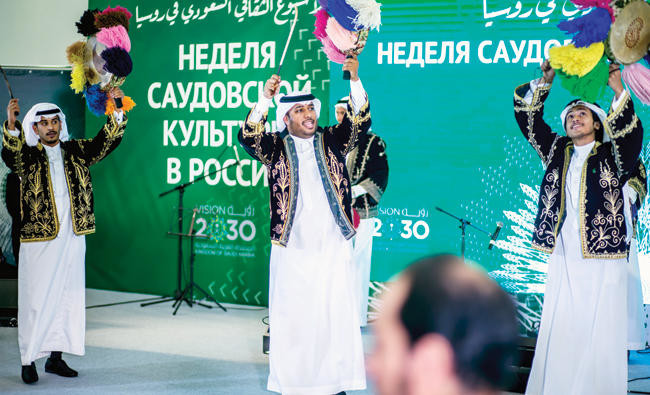
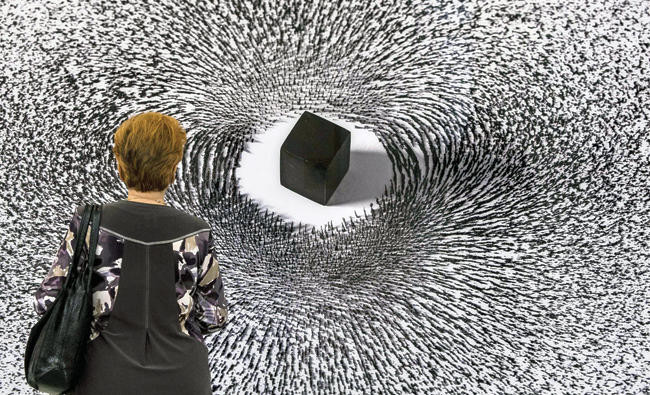
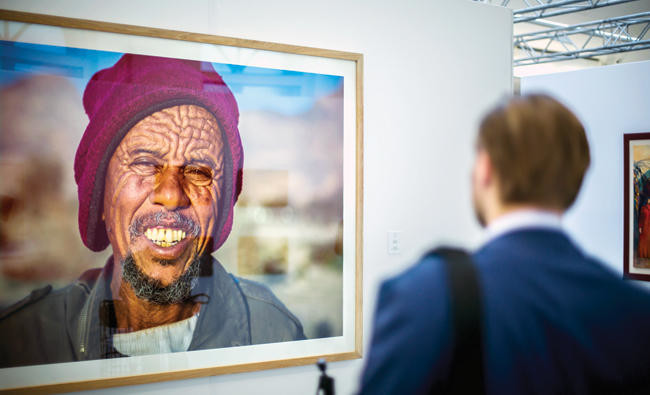
As part of Saudi Cultural Week, various events were organized in Moscow showcasing the rich heritage of Saudi Arabia. (AN photo by Konstantin Shnurov, AFP)
3 / 5
4 / 5
5 / 5
Updated 06 October 2017
Follow

Cultural week brings the spirit of Saudi Arabia to Moscow

MOSCOW: The Saudi Cultural Week takes place in Moscow on Oct. 2-8, bringing the Kingdom’s warm spirit to a cold and rainy autumn in Russia’s capital.
The cultural week aims to inform the Russian public about Saudi Arabia’s rich cultural heritage, and to engage in cultural dialogue between the two countries.
Though it started on Monday, the official opening took place on Thursday, after King Salman and his delegation arrived in Moscow.
Russian guests were excited to see Saudis in traditional dress, and journalists were eager to interview officials. Both countries’ culture ministers gave speeches during the opening ceremony.
Saudi Minister of Culture and Information Awwad Al-Awwad said the king’s visit is historic, and both countries are interested in cooperation.
Russia and Saudi Arabia have much to do together in the cultural field, Al-Awwad added, expressing hope that the visit will upgrade bilateral relations. Events such as the cultural week enable bridges to be built between the two nations, he said.

View more image in our gallery

Russian Culture Minister Vladimir Medinsky called Saudi Arabia a cradle of Arab civilization, and a spiritual and cultural center of the Arab world. He lamented that Russians only know about the Kingdom’s history, not its modern life.
Medinsky praised the cultural week for enabling Russians to see Saudi Arabia through the eyes of its artists. He also declared that both countries’ culture ministries signed an agreement on cooperation.
Medinsky used virtual reality devices, which are offered to visitors of the cultural week, to see Saudi landmarks, and expressed his willingness to see them first-hand.
The cultural week presents a wide range of works by modern Saudi artists — painters, photographers, sculptors and film directors.
Entry is free, and every 30 minutes a guide makes a tour for anyone who wants to learn more about the works.
The official opening concluded with a performance of Saudi music and traditional dance with swords and drums. The guests also enjoyed traditional Saudi cuisine.

‘Cake not hate’ campaign becomes ‘Dates not hate’ in Madinah

“The Joshie-Man” and his father Dan Harris in the courtyard of the Prophet’s Mosque in Madinah. (Supplied)
Updated 02 February 2026
Follow

‘Cake not hate’ campaign becomes ‘Dates not hate’ in Madinah

  • Dan said he was very impressed by Saudi hospitality and that his family was warmly welcomed
  • He said being in Madinah exposed him to the true diversity of Islam

LONDON: A British autistic and non-verbal boy who has been visiting UK mosques and distributing cakes to promote solidarity amid an increase in far-right support in the country has taken his message of love to Madinah.

Joshua Harris, or “The Joshie-Man” as the 12-year-old is known to his social media fans, has handed out hundreds of his baked goods to worshipers at mosques in major British cities over the last few months.

The “Cake not hate” campaign came about after an Islamophobic attack on a mosque in his home city of Peterborough in October 2025.

Harris and his father visited Masjid Darassalaam, the mosque that was targeted, with cakes that the boy had baked and distributed them to the congregation soon after the attack. Since then, Harris has visited dozens of mosques in the UK.

On a recent trip to the Middle East, he and his father visited Madinah. In a local twist that pays tribute to the holy city’s famous date varieties including ajwa and ambar, Harris handed out dates to people in the courtyard of the Prophet’s Mosque. The “Cake not hate” campaign became “Dates not hate” for Saudi Arabia.

“He was greeted really, really warmly. There were some really touching moments where people were kissing his hands and his head. It was really lovely,” his father, Dan Harris, said.

Dan, the founder of global charity Neurodiversity in Business, said being in Madinah exposed him to the true diversity of Islam.

“We met people from all around the world. It was amazing. It’s like the United Nations there, you get people from different countries and it just goes to show you that the Muslim community, or the Ummah more generally, is not a homogeneous group,” he said.

“We saw people from Tajikistan and Uzbekistan and it was really interesting for us.”

Dan said his visit to Madinah, considered the second holiest city in Islam after Makkah for Muslims, was “profound and life-changing.”

He added: “I would say it’s my favourite city in the world due to the peace and tranquillity I felt there.”

Dan added that he was very impressed by Saudi hospitality: “Everywhere we went, people were taking down my number and insisting that we come for dinner, insisting they pick us up from the location. They were extremely attentive to Joshie as well, making sure his needs were met. We felt a great sense of welcome, something Saudi Arabia is known for.”