LONDON: Britain’s biggest retailer Tesco said it would pay a dividend for the first time in three years, signalling further progress in its recovery from crisis under CEO Dave Lewis.
The supermarket group also reported a 27 percent rise in first half profit and a seventh straight quarter of underlying sales growth in its home market as it successfully navigated an inflationary environment.
However, after an initial rise Tesco’s shares were flat by mid-morning and are down 8 percent so far this year reflecting lingering concerns over the merits of its £3.7 billion ($4.90 billion) agreed bid for wholesaler Booker and a need to increase contributions to cut its pension deficit.
Lewis has been leading the fightback after Tesco’s sales and profit were hammered by changing shopping habits, the rise of the German discounters Aldi and Lidl and a 2014 accounting scandal which plunged the firm into its worst crisis in its near 100-year history.
Lewis, who joined just before the scandal was uncovered, said paying the 1 pence interim dividend was a key moment.
“It’s a significant milestone in the recovery of the business and one which demonstrates the confidence we and the board have in our plans,” he told reporters.
Fund manager Ed Meier at Old Mutual Global Investors, a top-40 investor, according to Thomson Reuters data, said he expected a 3 pence dividend for the full year.
“While we anticipated this return to the dividend list, we still consider this a strong indication from the company that it is indeed on track for a full recovery.”
Lewis first stabilized Tesco then got it growing again with a focus on more competative prices, new and streamlined product ranges, better customer service and improved supplier relationships.
Tesco remains the largest of Britain’s supermarket groups by a clear margin, having a market share of almost 28 percent according to the latest industry figures.
By purchasing a tighter range of goods and working more closely with its suppliers, Tesco is able to exploit its huge buying scale.
It made operating profit before one off items of £759 million ($1.01 billion) for the six months to Aug. 26 — ahead of analysts’ forecasts and £596 million in the same period last year. Sales increased 3.3 percent to £25.2 billion.
UK like-for-like sales rose 2.1 percent in the second quarter, reflecting strong fresh food volume growth. That was, however, a slight slowdown from growth of 2.3 percent in the first quarter.
“Sales are up, profits are up, cash generation continues to strengthen and net debt levels are less than half what they were when we started our turnaround three years ago,” Lewis said.
Net debt was down 25 percent year-on-year to £3.3 billion.
Tesco said its pension deficit had reduced to £2.4 billion but it would still increase annual contributions by £15 million to £285 million from April 2018.
Despite its progress, the discounters remain a major threat to Tesco and its traditional rivals. Aldi said last week it was pressing on with its aggressive expansion in Britain despite a third straight year of falling profits.


![]()
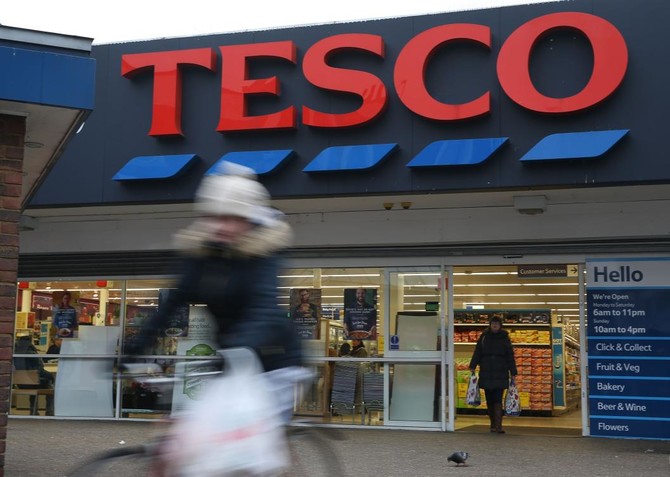
Tesco’s first dividend since 2014 crisis cements recovery
Tesco’s first dividend since 2014 crisis cements recovery
Latest updates


© 2026 SAUDI RESEARCH & PUBLISHING COMPANY, All Rights Reserved And subject to Terms of Use Agreement.