AMMAN: Hamas is determined to reconcile with Fatah and end the decade-long Palestinian division, the group’s new leader Ismael Haniyeh told Palestinian President Mahmoud Abbas on Tuesday.
“We are serious about carrying out the needed steps to end the split with a strong will, and unify Palestinian efforts with the single goal of confronting the challenges facing our cause,” Haniyeh said in a phone call to New York, where Abbas is attending the UN General Assembly.
The Palestinian leadership has welcomed the new moves by the Islamist group that governs Gaza.
“The current political environment represented by Hamas’ moves are well received and viewed positively, with the hope that Egypt will continue to sponsor and guarantee these steps,” Fatah spokesman Naser Kidwwa, a former Palestinian Liberation Organization (PLO) ambassador to the UN, told Arab News.
“After their statement dissolving the administrative committee, we will need to see the national accords government hold a cabinet meeting in Gaza, followed by talks between Fatah and Hamas in the presence of our Egyptian brothers, then much wider talks involving all Palestinian factions and independent personalities.
“We seem to be on the right path, but this is a difficult and long journey that requires goodwill from all.”
Dr. Naji Sharab, a professor of political science at Al-Azhar University in Gaza, said there was optimism among politicians but people in Gaza were still skeptical because there had been so many reconciliation false alarms in the past.
“The road ahead is difficult because the years of the division have left their marks in the areas of security, economy and public order,” he told Arab News.
Sharab, however, believes the current effort is serious. “Egypt is playing a major role this time and is pressing both sides.”
He also believes disunity and schism have become more of a liability than an asset to both sides.
“There are many worries and concerns because we are facing a long-term problem in order to merge a system built almost exclusively on one party being in power and negating all others, to a system of national unity and power sharing.”
One of the fears being expressed in both Gaza and the West Bank is that Hamas could turn into the Gaza equivalent of Hezbollah in Lebanon.
Fadi Abu Baker, a PLO employee and a Fatah local leader in Al-Bireh, told Arab News that Hamas’ move toward reconciliation was no more than a clever maneuver.
“Unless they give up the security system they established, we will not have total national unity, and we will be seeing a situation similar to the vast powers that Hezbollah has in Lebanon, without necessarily having armed men on the streets.”


![]()
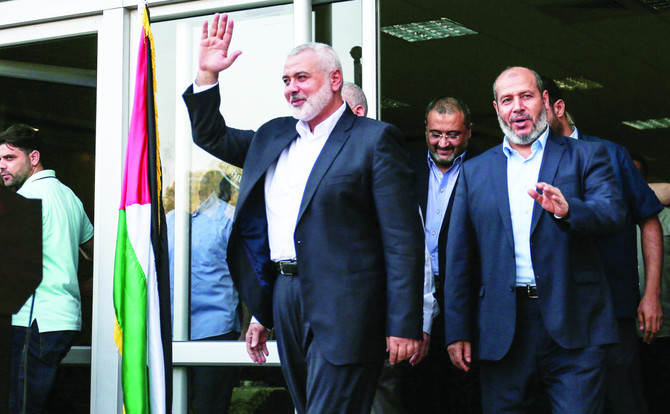
We are serious about unity, Hamas chief tells Abbas
We are serious about unity, Hamas chief tells Abbas


Latest updates


© 2026 SAUDI RESEARCH & PUBLISHING COMPANY, All Rights Reserved And subject to Terms of Use Agreement.