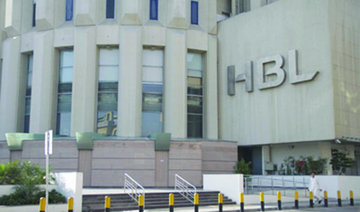
NEW YORK: US banking regulators ordered Pakistan’s Habib Bank to shutter its New York office after nearly 40 years, for repeatedly failing to heed concerns over possible terrorist financing and money laundering, officials said Thursday.
Habib, Pakistan’s largest private bank, neglected to watch for compliance problems and red flags on transactions that potentially could have promoted terrorism, money laundering or other illicit ends, New York banking officials said.
The state’s Department of Financial Services, which regulates foreign banks, also slapped a $225 million fine on the bank, although that is much smaller than the $629.6 million penalty initially proposed.
Habib has operated in the United States since 1978, and in 2006 was ordered to tighten its oversight of potentially illegal transactions but failed to comply.
New York regulators said Habib facilitated billions of dollars of transactions with a Mideast private bank, which reportedly has links to Al-Qaeda, and failed to do enough to ensure that the funds were not laundered or used for terrorism.
“DFS will not tolerate inadequate risk and compliance functions that open the door to the financing of terrorist activities that pose a grave threat to the people of this State and the financial system as a whole,” DFS Superintendent Maria Vullo said in a news release.
“The bank has repeatedly been given more than sufficient opportunity to correct its glaring deficiencies, yet it has failed to do so.”
Habib permitted at least 13,000 transactions that were not sufficiently screened to ensure they did not involve sanctioned countries, the agency said.
And the bank improperly used a “good guy” list to rubber stamp at least $250 million in transactions, including those by an identified terrorist and an international arms dealer, regulators said.
In an August letter to the Pakistan Stock Exchange, Habib company secretary Nausheen Ahmad called the proposed fine of $629.6 million “outrageous” and “capricious” and said the bank had decided to close its New York operations “in an orderly manner.”
But DFS said Habib will have to surrender its license after it meets the agency’s requirements.
“DFS will not stand by and let Habib Bank sneak out of the United States,” Vullo said.


![]()

US shuts down Pakistani bank over terror-financing and money laundering concerns
US shuts down Pakistani bank over terror-financing and money laundering concerns
Latest updates


Recommended



© 2026 SAUDI RESEARCH & PUBLISHING COMPANY, All Rights Reserved And subject to Terms of Use Agreement.