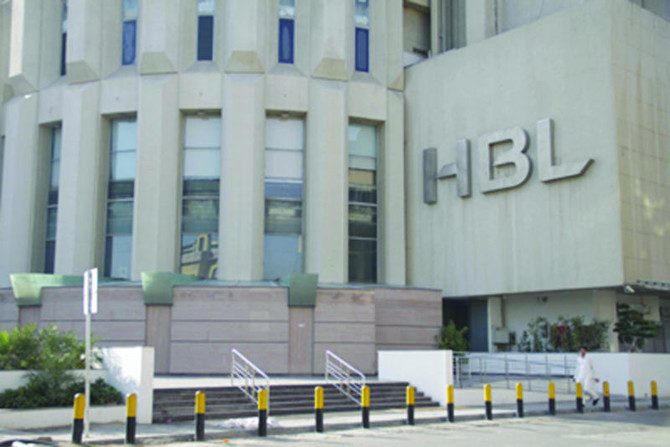
Pakistan gets $1.2bn offers for HBL shares

Updated 10 April 2015
Follow

Pakistan gets $1.2bn offers for HBL shares

KARACHI: The Pakistani government has had offers of more than $1.2 billion for its remaining stake in the country's largest private bank HBL, exceeding expectations, a minister said Friday.
The deal to offload the government's 41.5 percent share in HBL, likely to be approved on Saturday, would be the country's largest privatization deal in the past decade.
HBL, formerly known as Habib Bank Limited, was part-privatized in 2003, with the Agha Khan Foundation buying the bulk of the shares.
The government Privatization Commission recommended divesting the remaining shares earlier this year and offerings were made at stock markets in London, New York, Singapore and Dubai.
"This is an absolutely outstanding response from international investors and it was beyond our expectations," Mohammad Zubair, Pakistan's minister for privatization told AFP by telephone from London.
The government had planned to offer 250 million base shares, with an option of selling 390 million more depending on the response.
The minister said the cabinet committee on privatization would meet to approve the share price and green-shoe sale on Saturday in Islamabad.
Analyst Mohammad Sohail, the head of Topline Securities, said he was surprised by the level of international interest.
"The offers are quite astounding and that shows that international investors are keen to invest in Pakistan — not only in the stock market but other sectors as well," he told AFP.
HBL, which opened in 1947, has 1,425 branches in Pakistan. Its foreign network is spread over 26 countries.


Marine insurance companies are considering canceling, repricing policies in the Middle East

Updated 6 sec ago
Follow

Marine insurance companies are considering canceling, repricing policies in the Middle East

RIYADH: Marine insurance companies are considering canceling or repricing policies in the Middle East, according to the Financial Times

This comes after the US and Israeli strikes on targets inside Iran, followed by missile attacks and retaliatory military actions in several countries in the region.

Marine brokers expect insurance premiums for ships to rise by up to 50 percent, given the region’s classification as a “war zone.”

Ship owners are considering rerouting their vessels to avoid the Strait of Hormuz and reduce risks to crews and cargo.

20% of the global oil supply passes through the Strait of Hormuz.

Regarding oil prices, a rise is expected as 20 percent of global oil supply passes through the Strait of Hormuz, amid concerns about continued tensions in the region.

Air traffic in the Middle East was severely disrupted after several countries closed their airspace completely or partially, while regional and international airlines suspended or rescheduled flights.

On the morning of March 1st,  the Iranian capital, Tehran, witnessed several large explosions following Israel's announcement of what it described as a “preemptive strike.”

Flights to countries in the region suspended due to attacks

In a video message, US President Donald Trump announced that the US had begun “major combat operations” in Iran, asserting that the goal was to defend the American people by neutralizing what he described as the “imminent threat” from the Iranian regime.

Several regional and international airlines announced the suspension of their flights to some countries in the region due to the attacks.

These military developments come at a time when major shipping companies had already avoided the Red Sea and Suez Canal routes due to security tensions, reverting to the Cape of Good Hope route, which increases shipping costs and puts pressure on global supply chains.

With the closure of airspace in several countries in the region, the risk of disruption to air traffic and trade is increasing, while oil markets are watching closely for any signs of potential supply disruptions from a region that is one of the world's most important energy production hubs.