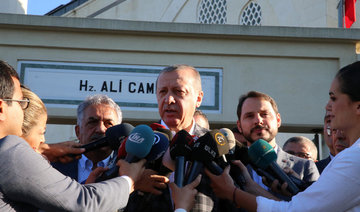
ISTANBUL: Turkish President Recep Tayyip Erdogan on Tuesday condemned escalating human rights violations targeting the Rohingya Muslim minority during a phone call with Myanmar’s civilian leader Aung San Suu Kyi, Turkish presidential sources said.
Erdogan told the Myanmarese leader that violence against Rohingyas was of deep concern to the Muslim world, and will send his foreign minister to neighboring Bangladesh to discuss the fighting.
Erdogan, who has said that the violence against Rohingya Muslims constitutes genocide, told Suu Kyi that it was a violation of human rights, the sources said.
In the phone call with Suu Kyi, a former political prisoner of Myanmar’s junta, Erdogan also discussed potential solutions to the fighting and means to deliver humanitarian aid to the region.
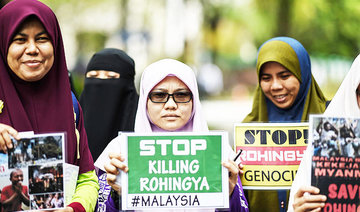
The latest violence, which began last October when a small Rohingya militant group ambushed border posts, is the worst Rakhine has witnessed in years, with Erdogan last week accusing Myanmar of “genocide” against the Rohingya Muslim minority.
Erdogan has stepped up diplomacy and spoke on the phone with Muslim leaders during the Eid Al-Adha festival, seeking ways to solve the humanitarian crisis in Myanmar. He also spoke with UN Secretary-General Antonio Guterres.
Turkish Foreign Minister Mevlut Cavusoglu will visit Bangladesh on Wednesday, the state-run Anadolu news agency reported.
Suu Kyi has come under fire over her perceived unwillingness to speak out against the treatment of the Rohingya or chastise the military.
Erdogan said Turkey “condemns terror and operations against innocent civilians,” adding that the developments in Myanmar had turned into a “serious humanitarian crisis which caused worry and resentment.”
The Turkish leader had previously said he would bring up the issue at the next UN General Assembly in New York later this month.
Guterres on Friday said he was “deeply concerned” by the situation in Myanmar and called for “restraint and calm to avoid a humanitarian catastrophe.”
Foreign Minister Mevlut Cavusoglu will travel to Bangladesh on Wednesday evening and hold meetings on Thursday, the Turkish sources said.


![]()

In call to Suu Kyi, Erdogan slams rising human rights violations repression
In call to Suu Kyi, Erdogan slams rising human rights violations repression
Related


Latest updates


© 2026 SAUDI RESEARCH & PUBLISHING COMPANY, All Rights Reserved And subject to Terms of Use Agreement.