DHAKA: "For last two days I did not get anything to eat. This one-month-old baby is not even getting proper breastfeeding," said Saleha Khatun, a 26-year-old woman who narrowly escaped with her life from the atrocities of the Myanmar Army and law enforcing agencies in the Rakhine province of Myanmar, and has now taken shelter in a Rohingya camp at Teknaf under Cox's Bazar district of Bangladesh.
In the past week, more than 20,000 Rohingyas took shelter in different camps and areas of Cox's Bazar District. Most of them are facing an acute crisis of food and shelter, sitting under the open sky. Bangladesh is facing extreme trouble in coping with this refugee crisis
Nearly half a million Rohingya refugees are already living in the bordering areas of Bangladesh for many years. International Organization for Migration (IOM) is working with the Bangladesh government to provide food and other basic necessities for the refugees, but the efforts still fall short to meet the need.
"Although Bangladesh is a small country … and a developing nation with limited resources, it is putting its best effort to maintain the Rohingyas,” said former ambassador Mohammad Zamir, who is one of the senior foreign policy makers of the ruling party Bangladesh Awami League.
“Despite few odd incidents of pushing back the Rohingyas to Myanmar,” he said, “the Bangladeshi government as well as our people are always very kind and sympathetic to the Rohingya Muslims. But the world community should play a more active role to resolve the crisis and implement the UN (Kofi) Annan Commission's report on the issue. Moreover, the UN General Assembly session is scheduled to be held in September that should raise a strong voice to ensure equal rights and opportunities for all the people living within the land of Myanmar since their birth."
"This refugee crisis is no more a bilateral issue between Bangladesh and Myanmar," said Barrister Rumin Farhana, political affairs secretary for the Bangladesh Nationalist Party. She urged the prime minister to build diplomatic pressure on the international community to stop the atrocities by the Myanmar government so that the Rohingyas can live peacefully in their country.
Rohingyas received international attention after the 2012 Rakhine State riots which resulted in the Rohingya refugee crisis of 2015 and a subsequent military crackdown between 2016 and 2017. A large number of Rohingya fled to the bordering areas with Thailand, Bangladesh, and Pakistan's port city of Karachi. Nearly 100,000 Rohingyas are estimated to live in camps established for internally displaced persons inside Myanmar. The Rohingyas are not recognized by Myanmar as native ethnic minority and are often denied citizenship and basic rights.
"It is a systematic genocide committed by the Myanmar law enforcing agencies," said Ameena Mohsin, who is a professor of international relations at Dhaka University. Expressing her frustration over the situation she said: "The Organization of Islamic Cooperation (OIC) should play an effective role to save the Rohingya Muslims."


![]()
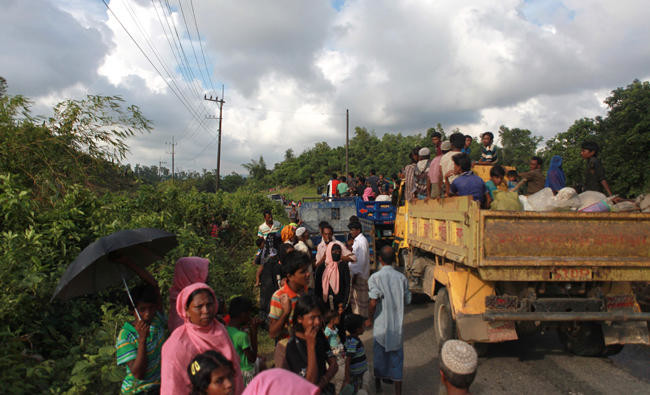
Bangladeshi PM urged to put pressure on world community to stop Myanmar atrocities on Rohingyas
Bangladeshi PM urged to put pressure on world community to stop Myanmar atrocities on Rohingyas
Latest updates



Recommended


© 2026 SAUDI RESEARCH & PUBLISHING COMPANY, All Rights Reserved And subject to Terms of Use Agreement.