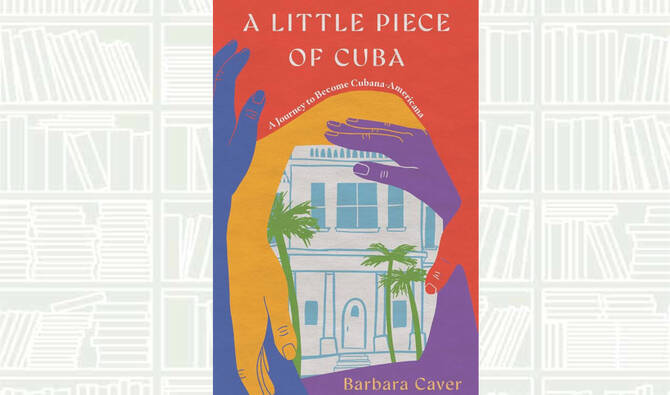

Author: Barbara Caver
I had to immediately read the first chapter of Barbara Caver’s 2025 book “A Little Piece of Cuba: A Journey to Become Cubana-Americana” — described as part memoir, part travel story — twice.
As an avid traveler and person on a similar quest to come to terms with my somewhat dormant multicultural identity, I disagreed with the very first line in the book. But I kept reading, and I’m glad I did.
I was transported to Caver’s adventures — and perhaps, misadventures — which mirrored my own in more ways than one. Her story is personal and specific, yet I found parallels in our lives and our upbringing.
She always had a deep sense of belonging to her non-dominant half of her heritage, via scent, tiles, good food and coffee — but this was different.
Born to a fully Cuban mother and non-Cuban father and raised in a land which was very much not Cuba, Caver’s quest for identity and a sense of unwavering but slightly reluctant belonging to her mother’s homeland hit hard.
At 37-years-old, she went to discover that side of her when she booked a five-day trip in 2017 to Cuba for the very first time, with her non-Cuban husband.
Her anecdotes are comical, relatable and universal. Her acute attention to detail made the stories come to life — I felt like I was right there with her as she went on that trip. An emotional journey anyone with a similar migration story to us could identify with.
But one thing that struck me and made me curious was why she opted out of using her first name on the book cover.
She lovingly mentioned how, as the first granddaughter in her family, her first and middle names are those of her grandmothers as per her official government name: Carmelina Barbara, an equal homage to both of sides. In fact, her Cuban side came first.
She proudly spoke about both of those women. However, on the book cover, she stuck with only the more conventional middle name, Barbara. Her first name disappeared entirely as the author. Why was Carmelina eliminated?
To me, some of the book felt slight too “Dear Diary,” at times, mostly centered on the white gaze, reiterating how white she is, how little Spanish she mastered and her stubborn insistence on having some Spanglish slang sprinkled in.
She perhaps tried too hard to explain and re-explain herself — definitely a trait that is prevalent in the “no sabo kid” (a US-born Hispanic who is not fluent in Spanish) community. I recognize that all too well. I do the same.
The ending sums it best: “In the rearview mirror are the excuses, the qualifiers, the belief that I am not Cuban enough,” she said of her journey. “In front of me is the choice to explore, to learn, and to proudly claim and tell my story.”
While deeply personal to her, it is also my story, and the story of any second-generation kid trying to reclaim the complicated yet beautiful narrative, by holding on to the roots of our mothers while creating our own.