Qatar unveils sixth FIFA World Cup 2022 stadium design

The stadium is due to hold 40,000 fans during the tournament itself, but will be reduced to a 20,000-seat venue once the tournament is over.
Updated 20 August 2017
Follow

Qatar unveils sixth FIFA World Cup 2022 stadium design

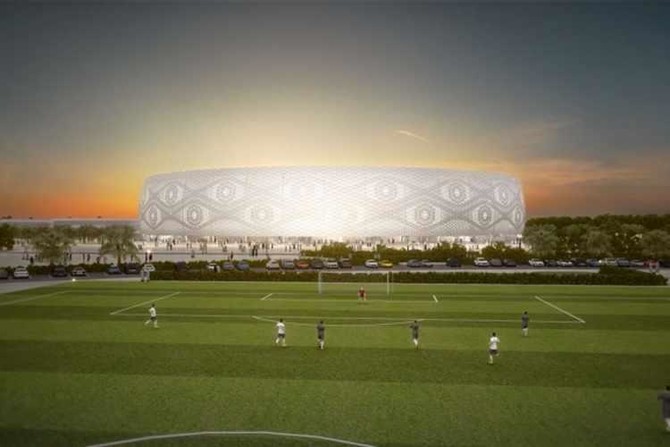
DUBAI: The authority responsible for delivering Qatar’s World Cup stadiums has revealed designs for the Al-Thumama Stadium – the sixth proposed 2022 FIFA World Cup venue.
The stadium has been designed by Qatari architect Ibrahim Jaidah, who is the chief architect of Arab Engineering Bureau (AEB) and is based on the traditional ‘gahfiya’ headdress.
A contract has already been awarded for the stadium’s construction by the Supreme Committee for Delivery and Legacy (SC) to a joint venture between Qatar-based contractor Al-Jaber Engineering and Turkey’s Tekfen Construction. It was awarded in February.
The stadium is due to hold 40,000 fans during the tournament itself, but will be reduced to a 20,000-seat venue once the tournament is over, with the excess seating donated to a country in need of sporting infrastructure, SC said in its statement.
It will be built on pitches currently used by the Qatar Football Association in the Al-Thumama district, which is located in the south of Doha, about 12 kilometers from Hamad International Airport.

Hassan Al-Thawadi, SC Secretary General, said: “We’ve always been very careful to combine the past with the future in our designs. The gahfiya is a continuation of that theme. It’s a blend of our heritage and culture, and a commitment to the future.”
He also described Jaidah as “a well-known architect in Qatar”.
“Our vision with this World Cup was always to complement and assist in developing local talent,” Al-Thawadi said.
Jaidah described his design as “a nod to the past, while offering an exciting glimpse into Qatar’s tomorrow”.
“In Qatari culture, the gahfiya forms an important part of every young boy’s pathway to adulthood,” he said. “This rite of passage inspired my vision for the stadium’s design. It is an arena that symbolizes Qatar’s youth and its emergence as a major player on the global sporting scene.”
Once the tournament is complete, the surrounding site will undergo a conversion to house a boutique hotel and a sports clinic, while the surrounding precinct will have facilities for other sports including handball, tennis and swimming.

MESIF 2026 lands in Riyadh, driving future of sports investment

Updated 8 sec ago
Follow

MESIF 2026 lands in Riyadh, driving future of sports investment

  • Senior sports leaders to gather in capital as 2-day Middle East Sports Investment Forum focuses on performance, football, long-term sporting legacy

RIYADH: Riyadh will host the Middle East Sports Investment Forum on Jan. 27-28, bringing together senior decision-makers from across football, major events, infrastructure, media and investment as the region sharpens its focus on high-performance sport and long-term legacy.

The forum will examine how the Middle East’s rapidly expanding sports sector is shifting from headline events to sustainable systems, with discussions set to cover elite facilities, athlete pathways, commercial growth and fan engagement.

Confirmed speakers include Abdullah Al-Rasheed, director of investment enablement at the Saudi Ministry of Sport; Hani Ballan, CEO of the Qatar Stars League; Nader Nasser Hamood Al-Rawahy, operations excellence lead at Oman Vision 2040; Nasser Al‑Khori, executive director of the Generation Amazing Foundation; Haya Sawan, managing partner at Motion Academy; and Marwan Albazie, deputy CEO of the Islamic Solidarity Games Local Organizing Committee.

These leaders bring expertise in government policy, league development, social impact, and investment strategy, offering insights into both the commercial and societal potential of sport across the Middle East.

Football is expected to feature prominently, with a dedicated session on the future of the game in the region exploring performance, engagement and commercial strategy as Saudi Arabia continues to build its global sporting profile.

Infrastructure and major events will also be in focus, as industry leaders assess how world-class venues and international competitions can drive economic impact while supporting athlete development and community participation.

The forum concludes with a tour of Kingdom Arena, underlining Riyadh’s ambition to position its venues as year-round performance hubs rather than event-only destinations.