LONDON: Major Western contractors for the Fifa World Cup 2022 in Qatar are working on departure plans as its continuing dispute with Gulf neighbors could delay the country’s £160 billion construction program.
A World Cup supplier, who declined to be named citing client sensitivities, warned fresh sanctions threatened by the UAE last week could shift the dial in favor of companies leaving, the British newspaper Telegraph reported.
“We have a team working on contingency planning,” the source said. “Should further sanctions come in companies will have to reassess their investment and their presence in Qatar. If the risk profile changes we would take evasive action to protect our investments and our people.”
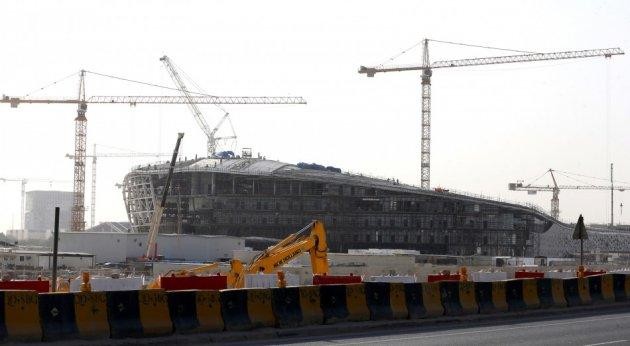
Qatar is entering into a crucial phase of its build up for the Fifa tournament, with British and American firms, including star architects Foster + Partners, Zaha Hadid Architects, engineer Arup and US program managers CH2M and Aecom, playing leading roles on World Cup stadium projects.
FTSE 250-listed contractors Interserve and Carillion, consultants Turner & Townsend, Gleeds and RLB also have a presence in Qatar.
Qatar has not confirmed the number of World Cup 2020 stadiums, which it plans to build on a staggered basis over a three-year period from 2018-2021, although it is expected to construct eight.
The country however has began cutting some of the peripheral projects for the football tournament as declining gas prices have put pressure on the government budget.
The Telegraph also said that another contractor viewed Qatar’s row with fellow Gulf Arab states as a “difference of principle that is unlikely to go away for months, maybe a year”.
Although the company was not itself working on contingency plans, it added: “I’ve spoken to competitors who are saying we work in Doha and Abu Dhabi, we are going to have to choose one or the other.”
A lawyer working with the Qatari government however downplayed the talk of contingency planning as an ‘over-reaction by weak bosses in boardrooms’ and claimed Qatar’s ally Turkey could step in to help build projects.
The trade and travel blockades have already interrupted or stopped smaller projects in Qatar as contractors struggle to source the materials and labor they need.
Most of the materials required for building World Cup stadiums had been coming by land route through Saudi Arabia, which is now blocked.
However, Ghanim Al-Kuwari, executive director at the Qatari committee overseeing preparations for the World Cup, said that the blockades did not have an effect on World Cup 2022 preparations.
“We have actually organized alternative sources from other areas in order that the work on the project is not impacted,” he said, adding while some goods had come by land, most materials were coming by sea and some other materials are sourced locally.


![]()
Major World Cup 2022 contractors draw up plans to leave Qatar amid Gulf row
Major World Cup 2022 contractors draw up plans to leave Qatar amid Gulf row

Latest updates


Recommended


© 2026 SAUDI RESEARCH & PUBLISHING COMPANY, All Rights Reserved And subject to Terms of Use Agreement.