TUNIS: Muslim religious leaders in Tunisia have voiced opposition to President Beji Caid Essebsi’s plan to introduce legislation granting equal inheritance rights to women, contrary to Islamic precepts.
Essebsi has announced the formation of a commission to examine “individual liberties” and “equality in all domains,” including inheritance rights.
As laid down in Holy Qur’an, daughters in the Islamic world inherit half the shares of sons.
Touching another raw nerve in Tunisian political and religious debate, Essebsi called for the government to scrap a 1973 circular that prevents Muslim women from marrying non-Muslims.
The proposals amount to “a flagrant violent of the precepts” of Islam, prayer leaders from across the North African state said in a statement issued jointly with experts in Shariah Islamic laws.
“Inheritance in Islam is clearly explained in the Holy Qur’an... it can neither be modified nor interpreted,” said Noureddine Khadmi, a former religious affairs minister.
A former Tunisian mufti, or highest religious leader, Hamda Said, criticized what he termed proposals that would put an end to “a 1,400-year consensus.”
“It’s like saying God has been unjust with women, something that is completely false as there are many cases of women inheriting more than men,” said Fatma Chakout, a female lecturer at the Islamic University of Ez-Zitouna.
Sheikh Abdullah El-Oussif, a doctor in Islamic sciences, said the president’s proposals posed a “danger” because they risked dividing society in post-revolutionary Tunisia at a time when the country needed unity.
Tunisia, which adopted a 1956 Personal Status Code extending several rights to women and abolishing polygamy, is seen as a pioneer on women’s emancipation in the Arab world, although tensions often surface between conservatives and reformists.


![]()
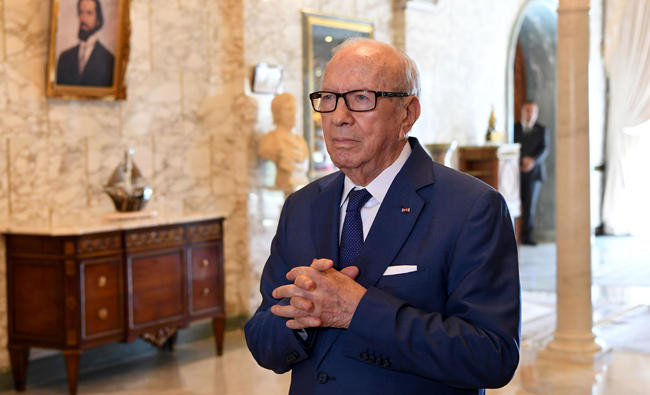
Tunisia religious leaders oppose equal inheritance rights for women
Tunisia religious leaders oppose equal inheritance rights for women



Latest updates


© 2026 SAUDI RESEARCH & PUBLISHING COMPANY, All Rights Reserved And subject to Terms of Use Agreement.