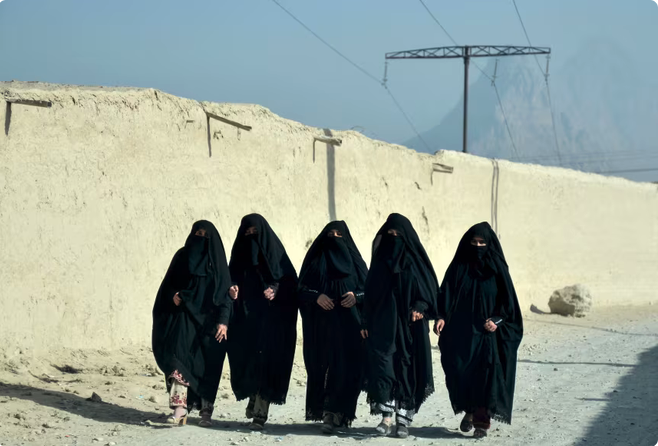

NEW YORK CITY: Five years after the Taliban seized control of Kabul for the second time, Afghan women and girls are trapped in what the UN’s top official responsible for the issue described as an unparalleled crisis of rights, which has been worsened by a collapse in international funding that is stripping away the last of the lifelines available to them.
Susan Ferguson, the special representative for UN Women in Afghanistan, said on Friday that the de facto authorities in the country have issued more than 100 decrees since August 2021 that systematically dismantled women’s rights.
Afghanistan is the only country in the world where women and girls face such sweeping restrictions on education, work, movement, public participation and legal equality, she added. The past year alone has brought new edicts that further restrict their access to justice and formally erase legal equality of women with men.
Under Decree Number 12, for example, a husband is only criminally liable for domestic violence if he causes severe, visible injuries, and his wife must prove this in court accompanied by a male guardian, who might be the very person who harmed her.
Under Decree Number 18, men retain the unilateral right to divorce, while women must obtain their husband’s permission or pursue a lengthy legal process; the decree also implicitly permits child marriage, Ferguson said.
Enforcement of the strict rules on women has intensified, she added, and thousands of officials now patrol the streets with broad powers of surveillance and detention. High schools remain closed to girls, universities are open only to men, and a growing shortage of female health workers, a direct consequence of education bans, is making it harder for women to access the care they need, particularly in communities where customs forbid treatment by male doctors.
Citing a survey of 3,200 Afghan women, Ferguson said more than half now left their homes only once or twice a month; nearly three-quarters felt unsafe leaving home without a male guardian, and more than half avoided public spaces such as markets and health facilities altogether.
Seven in 10 of the women surveyed described their mental health as bad or very bad, which Ferguson said amounted to a mental health crisis triggered by the systematic loss of rights and opportunities.
At the same time, she added, the funding that sustains women’s organizations in the country was being withdrawn. More than half of 74 such organizations surveyed by UN Women in April said they were likely to suspend operations or close within a year because of aid cuts. Nearly three-quarters experienced funding cuts in 2025, two-thirds have six months or less of operating funds left, more than half have scaled back gender-based violence services, and two-thirds have cut education and income-support programs.
A separate survey in June of more than 100 nongovernmental organizations and UN entities found that more than half had been forced to lay off female Afghan staff as a result of funding shortfalls.
Ferguson said needs were rising even as resources shrink; every organization surveyed reported increased economic vulnerability and poverty among women, and more than 80 percent reported a rise in early and forced marriage.
Afghanistan’s exposure to natural disasters and climate shocks compounds the crisis, she added, with 10.7 million women and girls requiring humanitarian assistance this year and 4.9 million women and children expected to need treatment for malnutrition.
The overall humanitarian appeal for Afghanistan stands at $1.7 billion but only about a quarter of this has been funded so far, Ferguson said.
Asked by Arab News which countries should be leading the international response, and why the crisis matters beyond Afghanistan’s borders, she replied that regional states carry particular weight.
“Afghanistan is part of a region, so I think regional countries are very important and we really are very pleased to be able to rely on some of the countries, like, for example, Qatar and the UAE and Saudi; these kinds of countries are very important,” she said, adding that “every country has still an interest in Afghanistan.”
Regarding the question of why the rest of the world should care about what is happening, she warned that the stakes extended far beyond Afghanistan itself.
“I think it sends a message that if we allow this to go on in Afghanistan, it can go on anywhere in the world,” she said.
“It’s really important that we do take a stand on women’s issues in Afghanistan … because if we normalize it, it shows that this can be normal in Afghanistan, it can be normal in other countries and around the world as well.”
Ferguson said nearly 6 million Afghans have returned to their home country from Iran and Pakistan in recent years, and about a quarter of the returnees from Iran were women and girls who require support to rebuild homes and livelihoods.
Fighting along the Afghanistan-Pakistan border has worsened conditions for women already displaced by earthquakes in the region, she added, and she highlighted livelihood projects run by women, including home-based businesses, as one of the few areas in which support remains possible.
Asked whether she felt a sense of guilt over the inability of the international community to reverse Taliban policy, Ferguson said the UN felt “a deep responsibility” toward Afghan women, while stressing the resilience of the women there who remain determined to contribute to their country’s future.
The UN continues to raise the issue of women’s rights directly with senior Taliban leadership, she added, noting that there were differing views on the issue within the de facto authorities that left open the possibility of positive influence over time.
“There was nothing normal about it five years ago, and there’s nothing normal about it today,” Ferguson said. “We must never allow it to become normal.”